Species · genus Sedum · Crassulaceae
Sedum griseum
Sedum griseum Praeger
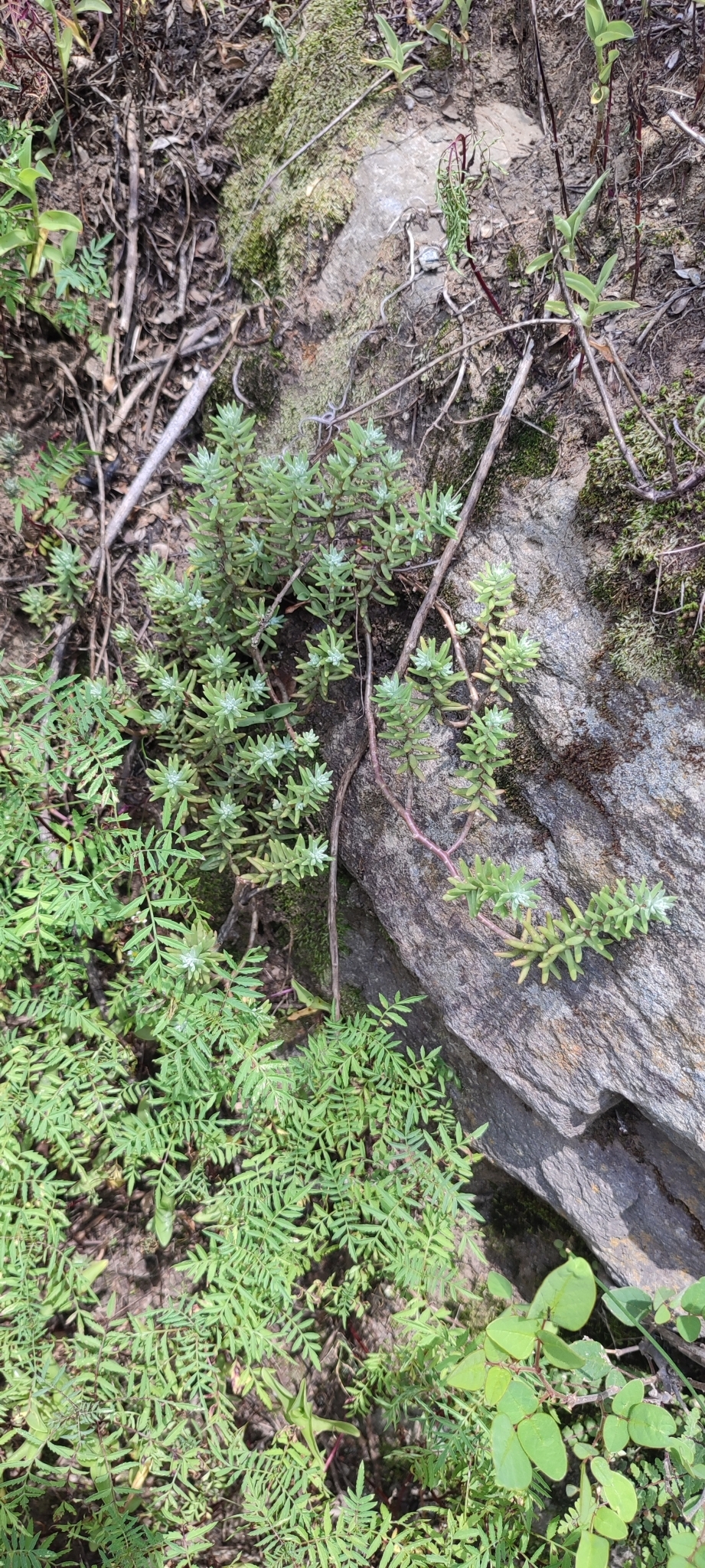
Cultivars of S. griseum
The named forms growers keep — each with its own page, each honest about how much we know.
No named cultivars catalogued under S. griseum yet. When growers document a stable, named form, it earns its own page here.
Guide
The species-level account. Cultivar pages build on this and say where they differ.
What Sedum Is
Sedum is a large genus of succulent perennials in the Crassulaceae, or stonecrop family, known for thick, fleshy leaves and clusters of small star-shaped flowers. They are generally modest plants rather than showstoppers, valued more as spillers, groundcovers, or rock-garden fillers than as focal specimens.
Source: Epic Gardening
A Wide, Tangled Lineage
Sedums hail from many parts of the world, and their long history includes as much use in the kitchen and herbal medicine as in the garden. Some species have been eaten in salads and soups across Asia, Europe, and North America, and one was even a favorite soup ingredient of the naturalist Alexander von Humboldt. Taxonomy has shifted over time too, so some plants still called sedum in conversation, like the upright 'Autumn Joy', now technically belong to the genus Hylotelephium. Sedum griseum itself is native to Mexico, from Querétaro to Michoacán, where it grows as a succulent subshrub in desert and dry shrubland, and it has also become established in Costa Rica.
Source: Kew
Sun, Drainage, Patience
Sedums want full sun, at least six to eight hours of direct light a day, though some will tolerate part sun if the soil drains well. They are built for dry conditions, with succulent leaves that store water, so soil should be fast-draining and on the lean side, since overly fertile ground tends to push them into leggy growth. Water sparingly and let the soil dry between waterings, since roots that sit wet for long stretches are the plant's real vulnerability, not drought.
Source: Epic Gardening
Easy From Cuttings
Sedum is easy to propagate by seed, leaf cuttings, or stem cuttings, and cuttings are by far the quickest and most reliable route. For stem cuttings, snip a healthy, non-flowering stem, strip the lower leaves, and either root it in water or plant it directly into loose, moist potting mix, keeping the bare nodes covered. Leaf cuttings are simpler still: press the base of a plucked leaf into moist mix and roots typically form within three to four weeks, with small offshoots following at the leaf's base. Seed is the slowest method, needing surface sowing, steady moisture, and up to a month to germinate.
Source: Epic Gardening
Stonecrop Traits
Sedums carry the family hallmark of simple, thick, succulent leaves often arranged in whorls, a build that suits their preference for rocky outcrops and shallow soils. Growth habits vary widely across the genus, from low mat-forming and creeping types to trailing forms and more upright, shrubby kinds. Many species shift color seasonally, taking on reddish or burgundy tones as the weather cools, and most produce their small star-shaped flowers in summer.
Source: Epic Gardening
Aphids, Mostly
Sedums are largely left alone by pests and disease when grown well. Aphids are the most likely visitor, and a forceful spray of water is usually enough to knock them off; a heavily infested plant may be better removed and destroyed. Pests are especially prone to appear on stem cuttings brought indoors, so it is worth checking any outdoor-grown material carefully before bringing it into the house.
Source: Epic Gardening
Rot Is the Risk
The main trouble sedums run into is root or crown rot, caused by fungal or bacterial pathogens that favor cool, wet conditions. The fix is preventive: plant in dry or well-draining soil, and lean on full sun to keep heavier clay soils from staying damp. A stressed plant is also more likely to fall to disease or pests, so keeping garden beds free of dead or decaying plant tissue helps keep problems down.
Source: Epic Gardening
Pinch and Tidy
If a sedum turns leggy or grows too rampant, pinching it back keeps it tidy. Many species die back in fall, and once that happens the old growth should be cleared away to keep the garden neat and to cut down on disease from lingering plant debris.
Source: Epic Gardening
Care recipe
The species record — the baseline every cultivar inherits unless it says otherwise.
Care notes are early — not yet verified
- Light
- ai:claude-opus-4-8
- Water
- ai:claude-opus-4-8 (range 10-21d)
- Humidity
- ai:claude-opus-4-8
- Soil
- ai:claude-fable-5
- Care
- ai:claude-fable-5
Direct sun
≈ every 21 days
Low — average room
10–27 °C
Gritty, fast-draining cactus and succulent mix
Leaf or stem cuttings rooted on dry mix
Light dilute succulent feed once or twice in the growing season
Slow
White star-shaped flowers, uncommon indoors
Not yet documented
This is where toxicity lives — every cultivar of this species inherits it and none can override it.
Reference images
Every image credited. Licenses link to their deeds.
PrimarySources: ai:claude-opus-4-8 · ai:claude-opus-4-8 (range 10-21d) · ai:claude-fable-5
Kept true by its growers
Every fact here carries its source. Grow Sedum griseum yourself? What you’ve observed — how it drinks, how it holds its color, a name that’s off — and a clear photo of your plant are exactly what keep this page honest. Contributions are reviewed before anything changes.
Sign in to add what you know →