Species · genus Sedum · Crassulaceae
Tree Stonecrop
Sedum dendroideum Moc. & Sessé ex DC.
Also known as: Greater Mexican-stonecrop
Cultivars of S. dendroideum
The named forms growers keep — each with its own page, each honest about how much we know.
No named cultivars catalogued under S. dendroideum yet. When growers document a stable, named form, it earns its own page here.
Guide
The species-level account. Cultivar pages build on this and say where they differ.
A Woody Mexican Stonecrop
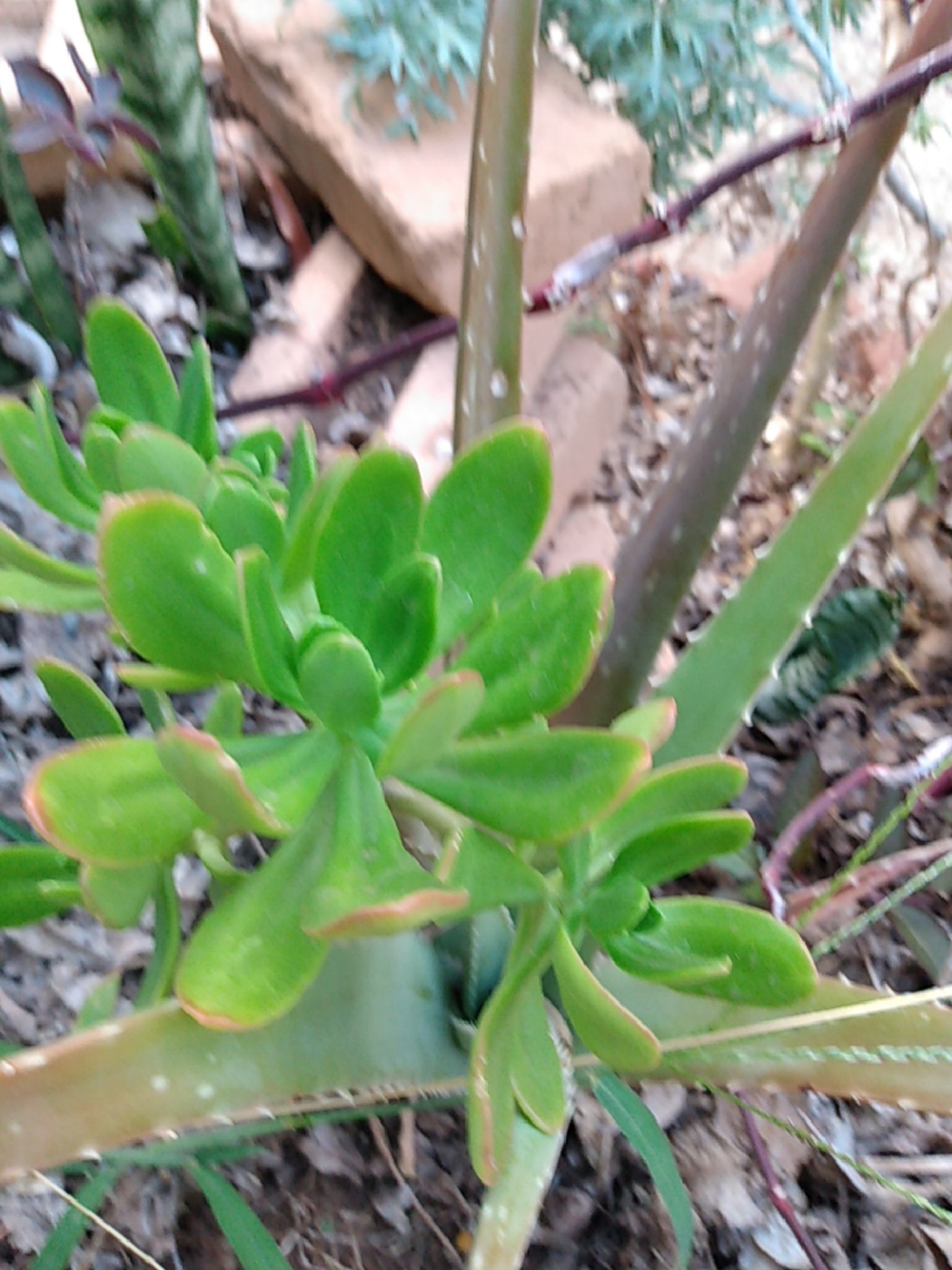
Sedum dendroideum is a succulent subshrub in the stonecrop family, grown here in its subsp. praealtum form under the name greater Mexican stonecrop. It builds grey-brown, woody-looking stems topped with fleshy, club-shaped leaves gathered into rosettes, and carries yellow star-shaped flowers in spring.
Source: RHS
From Mexico To Guatemala
This species is native across central, gulf, northeast, southeast and southwest Mexico and into Guatemala, where it grows as a succulent subshrub or sometimes an epiphyte in seasonally dry tropical country. It has since been introduced further afield, turning up in Costa Rica, Venezuela and France. It belongs to the family Crassulaceae and was first published by Mociño and Sessé, through De Candolle, in 1828.
Source: Kew
Sun, Drainage, Restraint
Grown under glass, this sedum wants a peat-free, loam-based compost with added perlite and a spot in bright, filtered light, though outdoors it takes full sun and does best on a south- or west-facing, sheltered position. Water it freely through the growing season, feeding monthly with a half-strength liquid fertiliser, then let it go sparingly dry through winter. Potted specimens can spend summer outside on the patio, and the soil should stay well-drained and on the alkaline or neutral side.
Source: RHS
Cuttings Root Readily
Increase this plant from softwood cuttings taken in early summer. Even a detached leaf will root readily on its own, making propagation an easy, low-fuss affair.
Source: RHS
Shrubby Habit, Rosette Leaves
The habit is spreading and branched, built on woody-like stems that can reach half a metre to a metre in height and spread. Its pale green, club-shaped, fleshy leaves cluster into rosettes, and it holds its foliage year-round as an evergreen.
Source: RHS
Slugs, Scale, Mealybugs
Watch for slugs, snails and vine weevil grubs, along with scale insects and mealybugs settling on the stems and leaf rosettes.
Source: RHS
Rot From Excess Water
This sedum can be susceptible to fungal and bacterial crown and root rots, a risk that tracks back to soil staying too wet, especially over winter when watering should be cut right back.
Source: RHS
Little Pruning Needed
No pruning is required for this plant, and under glass it takes two to five years to reach maturity. Its hardiness rating of H3 means it suits coastal and relatively mild parts of the UK but will not take a hard frost.
Source: RHS
Care recipe
The species record — the baseline every cultivar inherits unless it says otherwise.
Care notes are early — not yet verified
- Light
- ai:claude-opus-4-8
- Water
- ai:claude-opus-4-8 (range 10-21d)
- Humidity
- ai:claude-opus-4-8
- Soil
- ai:claude-fable-5
- Care
- ai:claude-fable-5
Bright, indirect
≈ every 21 days
Low — average room
10–29 °C
Gritty, fast-draining cactus and succulent mix
Stem cuttings allowed to callus then rooted
Dilute succulent feed once or twice in spring and summer
Moderate
Bright yellow flower clusters in spring on mature plants
Not yet documented
This is where toxicity lives — every cultivar of this species inherits it and none can override it.
Reference images
Every image credited. Licenses link to their deeds.
PrimarySources: ai:claude-opus-4-8 · ai:claude-opus-4-8 (range 10-21d) · ai:claude-fable-5
Kept true by its growers
Every fact here carries its source. Grow Tree Stonecrop yourself? What you’ve observed — how it drinks, how it holds its color, a name that’s off — and a clear photo of your plant are exactly what keep this page honest. Contributions are reviewed before anything changes.
Sign in to add what you know →