Species · genus Sedum · Crassulaceae
Baby Burro's Tail
Sedum burrito Moran
Cultivars of S. burrito
The named forms growers keep — each with its own page, each honest about how much we know.
No named cultivars catalogued under S. burrito yet. When growers document a stable, named form, it earns its own page here.
Guide
The species-level account. Cultivar pages build on this and say where they differ.
A Trailing Succulent
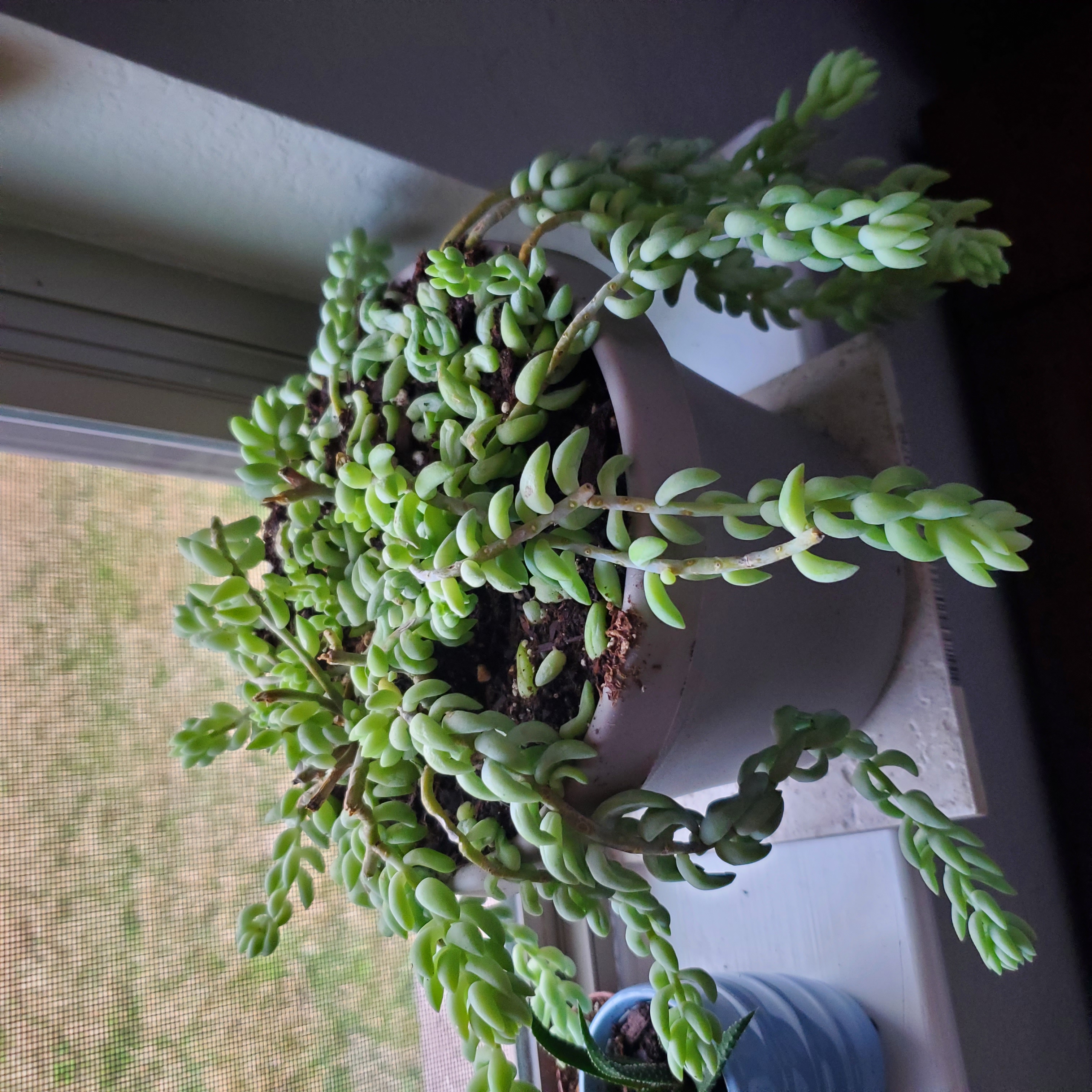
Sedum morganianum, known as burro's tail (and by names such as donkey's tail or lamb's tail), is an evergreen succulent perennial grown for its long trailing stems of overlapping, fleshy blue-green leaves. It carries the RHS Award of Garden Merit and is grown both as a houseplant and, in warm climates, outdoors.
Source: RHS
Cliffs Of Veracruz
The plant comes from cliffs in a pair of ravines in southeastern Mexico, where it was once put to medicinal use. It reached North America in 1935, when botanist Eric Walther found it in a Veracruz market and passed it to Dr Meredith Morgan, who identified its genus and gave the species her name.
Source: Epic Gardening
Sun, Sparing Water
Give it full sun to bright, filtered light, with some shelter from the harshest afternoon sun, and pot it in a loam-based, free-draining mix with added perlite or grit. Water freely through the growing season but let the soil dry between waterings, cutting right back in winter, and feed with a half-strength liquid fertiliser monthly during active growth. It prefers temperatures in a moderate range and does not need high humidity to do well.
Source: RHS
Leaves Root Readily
This species is easiest to increase from leaf or stem cuttings, since detached leaves root readily when laid on soil in bright light. Seed can also be sown at 15–18°C in early spring, or established clumps can be divided.
Source: RHS
Beaded, Trailing Rosettes
The stems can trail 30cm or more, densely set with small, lance-shaped, glaucous blue-green leaves arranged in an overlapping, almost beaded rosette pattern. In summer it can bear clusters of small, starry pink to reddish-purple flowers with bright yellow stamens, though indoor plants rarely flower for want of sufficient sun.
Source: RHS
Mealybugs And Scale
Watch for vine weevil grubs, scale insects and mealybugs, the latter recognisable by their white, cottony clusters and the sticky honeydew they leave behind. Left unchecked, mealybugs can draw down a plant's vigour and invite sooty mould on their residue.
Source: Epic Gardening
Overwatering Is The Risk
Overwatering is the main threat to this plant, and root and crown rots, whether fungal or bacterial, are the usual consequence of soil that stays wet too long. Insufficient light shows up as legginess, with leaves spaced further apart along bare stems, while excess sun can fade the leaf colour.
Source: RHS
Little Pruning Needed
No routine pruning is required, though trimming away dying or damaged growth with clean tools keeps the plant tidy and helps prevent disease entering through cuts. It tolerates being slightly pot-bound, so repotting every couple of years or so, timed for spring before flowering begins, is generally enough.
Source: Epic Gardening
Care recipe
The species record — the baseline every cultivar inherits unless it says otherwise.
Care notes are early — not yet verified
- Light
- ai:claude-opus-4-8
- Water
- ai:claude-opus-4-8 (range 10-21d)
- Humidity
- ai:claude-opus-4-8
- Soil
- ai:claude-fable-5
- Care
- ai:claude-fable-5
Direct sun
≈ every 21 days
Low — average room
10–27 °C
Gritty, fast-draining cactus and succulent mix
Individual leaves or stem tips laid on dry mix to root
Dilute succulent feed once or twice in spring and summer
Slow
Occasionally sends up pink flowers indoors
Not yet documented
This is where toxicity lives — every cultivar of this species inherits it and none can override it.
Reference images
Every image credited. Licenses link to their deeds.
PrimarySources: ai:claude-opus-4-8 · ai:claude-opus-4-8 (range 10-21d) · ai:claude-fable-5
Kept true by its growers
Every fact here carries its source. Grow Baby Burro's Tail yourself? What you’ve observed — how it drinks, how it holds its color, a name that’s off — and a clear photo of your plant are exactly what keep this page honest. Contributions are reviewed before anything changes.
Sign in to add what you know →