Species · genus Schefflera · Araliaceae
Dwarf Umbrella Tree
Schefflera arboricola Hayata, 1916
Also known as: Dwarf Schefflera · Umbrella Plant · Umbrella Tree · Dwarf Umbrella Plant · Hawaiian Schefflera · Hawaiian Umbrella Tree · Octopus Tree · Parasol Plant
Cultivars of S. arboricola
The named forms growers keep — each with its own page, each honest about how much we know.
No named cultivars catalogued under S. arboricola yet. When growers document a stable, named form, it earns its own page here.
Guide
The species-level account. Cultivar pages build on this and say where they differ.
The Umbrella Plant
Schefflera is a long-popular houseplant known for its glossy, hand-shaped leaves and easygoing nature. It goes by umbrella plant or arboricola, and tolerates a wide range of indoor conditions, which is much of why it has stayed a household staple for generations.
Source: Costa Farms
A Taiwanese Native
Schefflera arboricola comes from Taiwan and Hainan Province, where in the wild it can grow as an epiphyte on other trees and reach ten to twenty-five feet. The genus name honors J.C. Scheffler, a nineteenth-century botanist from Danzig, and the species name simply means tree-like. Grown as a houseplant in temperate climates, it stays far more modest, usually rising only three to six feet.
Source: Missouri Botanical Garden
An Easy Rhythm
Schefflera does best in high light but usually gets by fine in medium light, and indoors it can even take some direct sun on its leaves. Water it once the top of the potting mix has dried out; its tolerance for dry soil is part of why it has remained such a dependable houseplant. Feeding is light work too, just once or twice a year with a general-purpose houseplant fertilizer, though more frequent feeding will speed its growth.
Source: Costa Farms
Leaves Like Open Hands
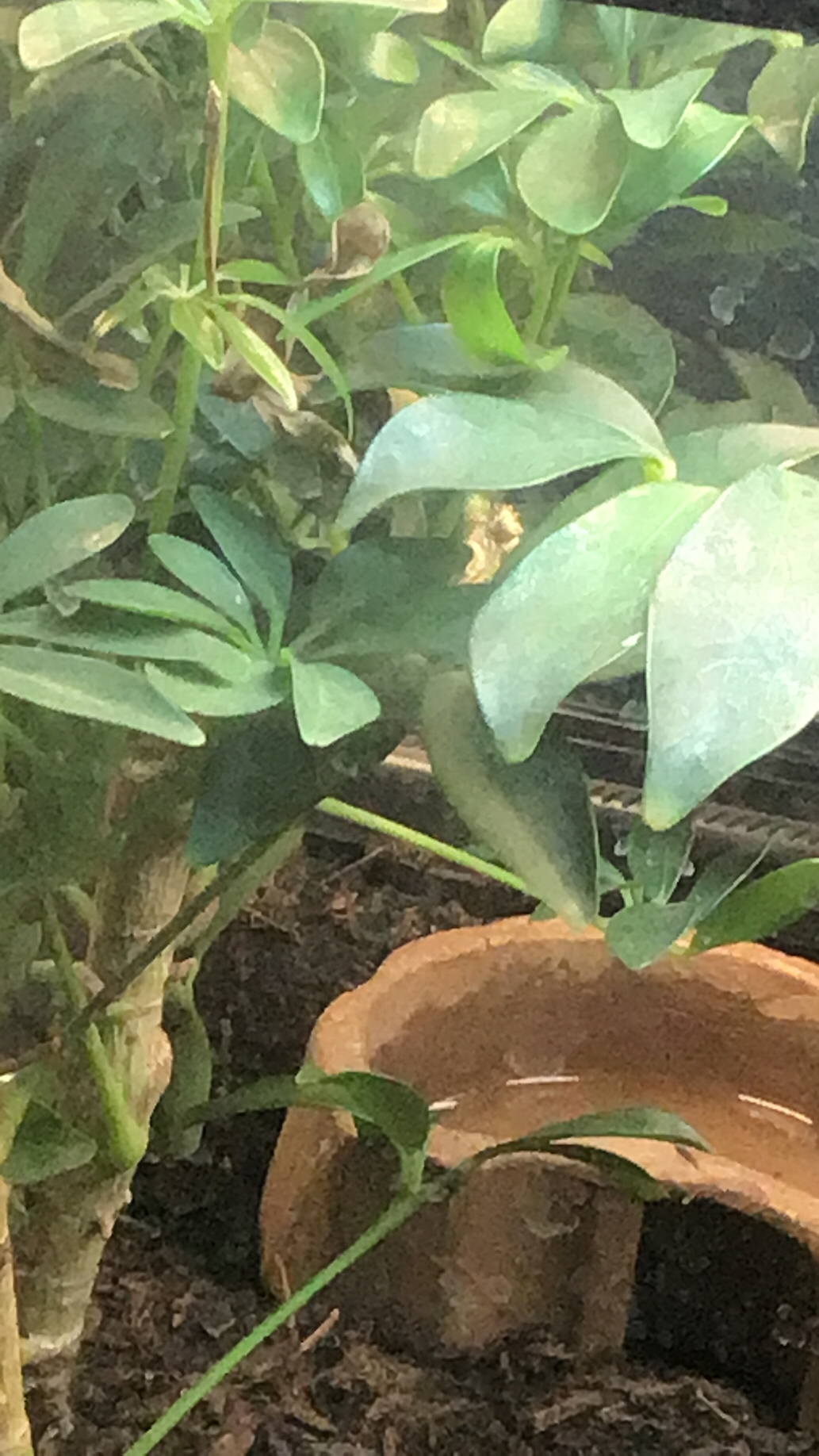
Each leaf is made of seven to nine glossy leaflets arranged in a circle at the end of a long stalk, giving the plant its umbrella-like look. Indoors it rarely flowers, though outdoors in its hardiness range it can produce small red flowers followed by orange fruit that darkens to black. Some varieties, like Gold Capella, carry dark green leaves streaked with golden yellow variegation.
Source: Missouri Botanical Garden
Watch for Small Pests
Mealybugs, aphids, and thrips may turn up on schefflera, and spider mites tend to become a problem specifically in dry indoor conditions.
Source: Missouri Botanical Garden
Leaf Drop and Yellowing
Leaves tend to drop when the soil swings too wet or too dry, so consistency matters more than any particular schedule. Yellow leaves should simply be removed as they appear rather than left on the plant.
Source: Missouri Botanical Garden
Pruning to Shape
If a schefflera outgrows its space, it can be pruned back at any time, and doing so encourages fuller, bushier growth. Beyond size control, pruning is really the main maintenance task this plant asks for.
Source: Costa Farms
Care recipe
The species record — the baseline every cultivar inherits unless it says otherwise.
Care notes are early — not yet verified
- Light
- ai:claude-opus-4-8
- Water
- ai:claude-opus-4-8 (range 7-12d)
- Humidity
- ai:claude-opus-4-8
- Soil
- ai:claude-fable-5
- Care
- ai:claude-fable-5
Bright, indirect
≈ every 12 days
Medium
15–27 °C
Standard well-draining potting mix
Stem cuttings, or air layering on woody stems
Balanced liquid feed monthly, spring through summer
Moderate
Rare indoors; spidery red umbels on outdoor plants
Toxic to cats & dogs & humans
Araliaceae contain insoluble calcium oxalate crystals and saponins that can irritate the mouth and digestive tract. This is where toxicity lives: every cultivar of this species inherits it and none can override it.
Reference images
Every image credited. Licenses link to their deeds.
PrimarySources: ai:claude-opus-4-8 · ai:claude-opus-4-8 (range 7-12d) · ai:claude-fable-5 · ai:claude-opus-4-8 (family inference)
Kept true by its growers
Every fact here carries its source. Grow Dwarf Umbrella Tree yourself? What you’ve observed — how it drinks, how it holds its color, a name that’s off — and a clear photo of your plant are exactly what keep this page honest. Contributions are reviewed before anything changes.
Sign in to add what you know →