Species · genus Saxifraga · Saxifragaceae
Strawberry Saxifrage
Saxifraga stolonifera Curtis
Also known as: Creeping Saxifrage · Mother Of Thousands · Strawberry Geranium · Aaron's Beard · Creeping Rockfoil
Cultivars of S. stolonifera
The named forms growers keep — each with its own page, each honest about how much we know.
No named cultivars catalogued under S. stolonifera yet. When growers document a stable, named form, it earns its own page here.
Guide
The species-level account. Cultivar pages build on this and say where they differ.
A Rosette That Runs
Saxifraga stolonifera is an evergreen, mat-forming perennial in the saxifrage family, grown for its rounded, silver-veined leaves as much as for its habit of throwing out long runners. It goes by strawberry begonia or strawberry geranium, though it is truly neither a begonia nor a geranium, and mother of thousands for the tiny plantlets that dangle from its stolon tips.
Source: Missouri Botanical Garden
Rocky Cliffs of Asia
This plant is native to China, Japan, and South Korea, where it takes hold in rocky, cliffside terrain. Its genus name nods to that habit: saxum for rock and frangere for to break, describing how some saxifrages wedge into stone fissures and slowly work them apart. The species name, stolonifera, simply means bearing stolons.
Source: Missouri Botanical Garden
Bright Shade, Even Moisture
Indoors this plant wants bright indirect light rather than direct sun, an east- or west-facing window with a sheer curtain is a fair description, since strong sun can scorch it even as a touch of gentle direct light will deepen the reddish leaf tones. Water when the soil surface just starts to feel dry, keeping moisture even but never soggy, and try to keep water off the leaves to avoid fungal trouble. It prefers things on the cool side, roughly 50 to 70°F, and appreciates a dilute liquid feed at each watering through spring and summer, tapering off in fall and winter.
Source: Costa Farms
Plantlets Do the Work
Propagation is straightforward: the plantlets that form at the ends of the stolons can simply be rooted in soil, or detached as individual rosettes. The RHS also notes it can be raised from seed, though the runner method is the easier path for a houseplant.
Source: RHS
Leaves, Runners, Flowers
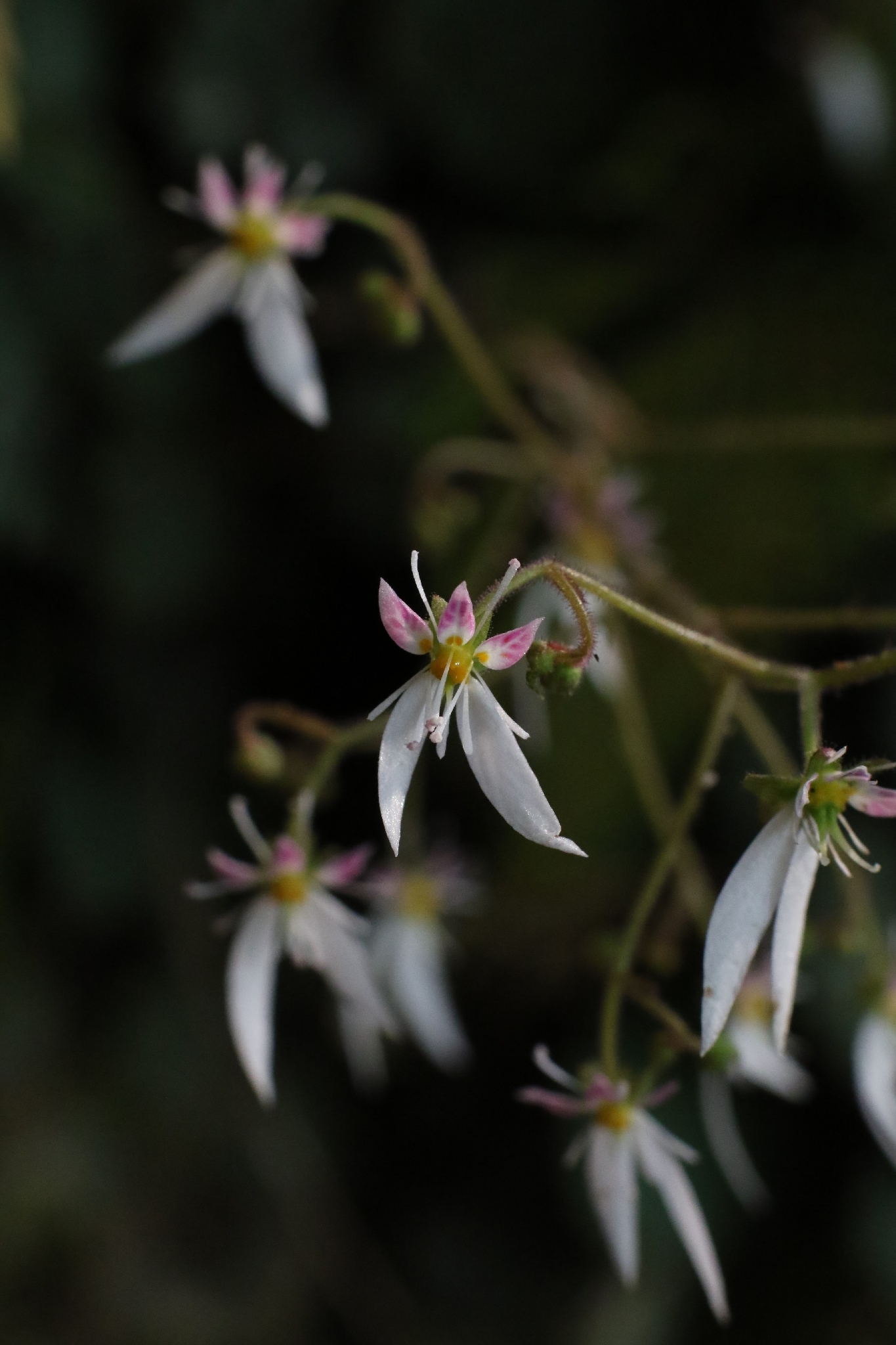
The rounded, hairy, dark green leaves carry silvery veining on top and a reddish underside, with red stems to match. From late spring into early summer the plant sends up airy flower stalks well above the foliage, each small white bloom oddly asymmetrical, with two larger lower petals and three or four smaller ones above. As the plant matures it spreads by thin, thread-like stolons that end in miniature plantlets, giving the whole plant a cascading, trailing habit well suited to hanging baskets.
Source: Costa Farms
Aphids, Slugs, Mites
This is a largely trouble-free plant, but aphids, slugs, and spider mites may turn up, and under glass it can also draw vine weevil. None of these are usually serious if caught early.
Source: RHS
Watch the Drainage
Disease pressure is generally low, but root rot can set in when the soil stays too wet or drains poorly. Choosing a well-drained mix and letting the surface dry slightly between waterings heads off most of the trouble.
Source: Missouri Botanical Garden
Care recipe
The species record — the baseline every cultivar inherits unless it says otherwise.
Care notes are early — not yet verified
- Light
- ai:claude-opus-4-8
- Water
- ai:claude-opus-4-8 (range 5-10d)
- Humidity
- ai:claude-opus-4-8
- Soil
- ai:claude-fable-5
- Care
- ai:claude-fable-5
Bright, indirect
≈ every 10 days
Medium
10–24 °C
Loose, well-draining humus-rich potting mix
Peg down the plantlets on its runners to root
Balanced liquid feed monthly in the growing season
Fast
Airy sprays of tiny white flowers in summer
Not yet documented
This is where toxicity lives — every cultivar of this species inherits it and none can override it.
Reference images
Every image credited. Licenses link to their deeds.
PrimarySources: ai:claude-opus-4-8 · ai:claude-opus-4-8 (range 5-10d) · ai:claude-fable-5
Kept true by its growers
Every fact here carries its source. Grow Strawberry Saxifrage yourself? What you’ve observed — how it drinks, how it holds its color, a name that’s off — and a clear photo of your plant are exactly what keep this page honest. Contributions are reviewed before anything changes.
Sign in to add what you know →