Species · genus Sarracenia · Sarraceniaceae
Huntsman's Cup
Sarracenia purpurea L.
Also known as: Pitcherplant · Pitcher Plant · Common Pitcherplant · Huntsman's Horn · Northern Pitcher Plant
Cultivars of S. purpurea
The named forms growers keep — each with its own page, each honest about how much we know.
No named cultivars catalogued under S. purpurea yet. When growers document a stable, named form, it earns its own page here.
Guide
The species-level account. Cultivar pages build on this and say where they differ.
The Common Pitcher Plant
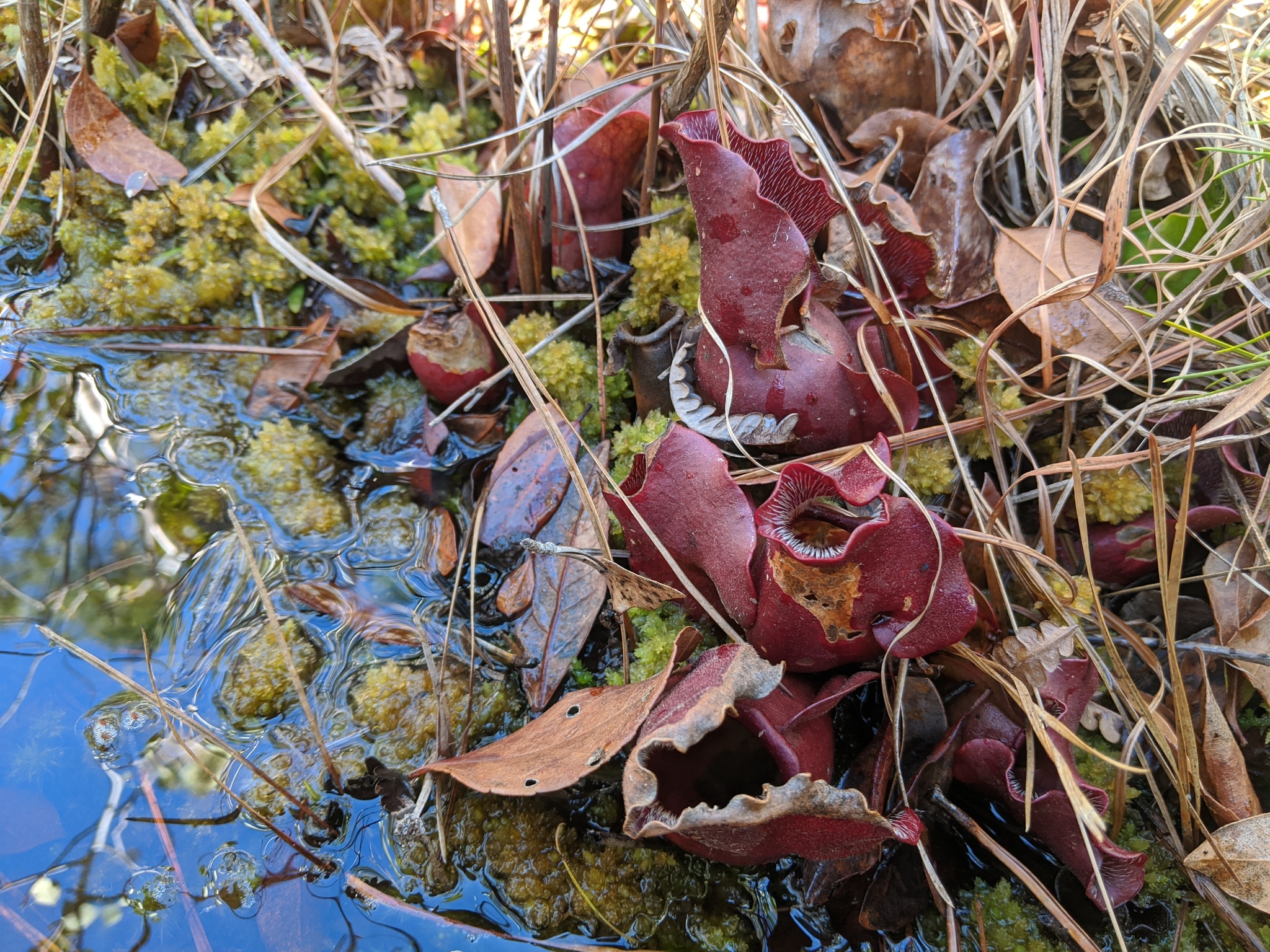
Sarracenia purpurea, known as the common pitcher plant, is an evergreen, semi-erect insectivorous perennial that grows to about 30cm tall. Its squat green pitchers, flushed and veined in purplish-red, are traps rather than ordinary leaves, and in spring it sends up purple, five-petalled flowers well above them.
Source: RHS
A Bog Native of North America
This species comes from Canada and the USA, where it grows in the wet, acid conditions of bogs. Its subspecies venosa, distinguished by more richly purple-veined pitchers and taller flower stems, hails instead from the south-eastern United States.
Source: RHS
Bog Conditions, Kept Damp
Grow this plant under glass in full light, sheltered from hot sun, keeping it consistently moist with lime-free water in an acidic, moss-based potting mix. In winter allow it to sit slightly drier and cooler with good ventilation, letting it pass through a natural dormancy in which it sheds some leaves. Where climate allows it can also be grown outdoors in full sun, sheltered from cold winds, in moist but sharply drained acid soil.
Source: RHS
By Seed or Division
Sarracenia purpurea can be propagated by seed or by division of established clumps.
Source: RHS
Traps, Lids and Colour
The pitchers are squat, around 15cm long, with a large lip and an erect, frilled lid, coloured and veined in purplish-red. Nodding, cup-shaped purple flowers appear singly in spring, held on stems above the foliage, and the plant forms clumps with a columnar, upright, mat-forming habit.
Source: RHS
Watch for Sap Feeders
This plant may be troubled by scale insects, mealybugs, aphids, and tortrix moth caterpillars.
Source: RHS
Minimal Pruning Needs
No routine pruning is required beyond removing dead leaves as they appear. The plant is generally free of disease.
Source: RHS
Care recipe
The species record — the baseline every cultivar inherits unless it says otherwise.
Care notes are early — not yet verified
- Light
- ai:claude-opus-4-8
- Water
- ai:claude-opus-4-8 (range 1-3d)
- Humidity
- ai:claude-opus-4-8
- Soil
- ai:claude-fable-5
- Care
- ai:claude-fable-5
Direct sun
≈ every 3 days
High
0–30 °C
Poor, acidic peat and sand mix
Division of established clumps or seed
None; relies on trapped insects for nutrients
Slow
Deep red spring flowers on a single tall stalk
Not yet documented
This is where toxicity lives — every cultivar of this species inherits it and none can override it.
Reference images
Every image credited. Licenses link to their deeds.
PrimarySources: ai:claude-opus-4-8 · ai:claude-opus-4-8 (range 1-3d) · ai:claude-fable-5
Kept true by its growers
Every fact here carries its source. Grow Huntsman's Cup yourself? What you’ve observed — how it drinks, how it holds its color, a name that’s off — and a clear photo of your plant are exactly what keep this page honest. Contributions are reviewed before anything changes.
Sign in to add what you know →