Species · genus Ruellia · Acanthaceae
Brazilian Petunia
Ruellia elegans Poir.
Also known as: Brazilian Ruellia
Cultivars of R. elegans
The named forms growers keep — each with its own page, each honest about how much we know.
No named cultivars catalogued under R. elegans yet. When growers document a stable, named form, it earns its own page here.
Guide
The species-level account. Cultivar pages build on this and say where they differ.
A Bold Brazilian Bloomer
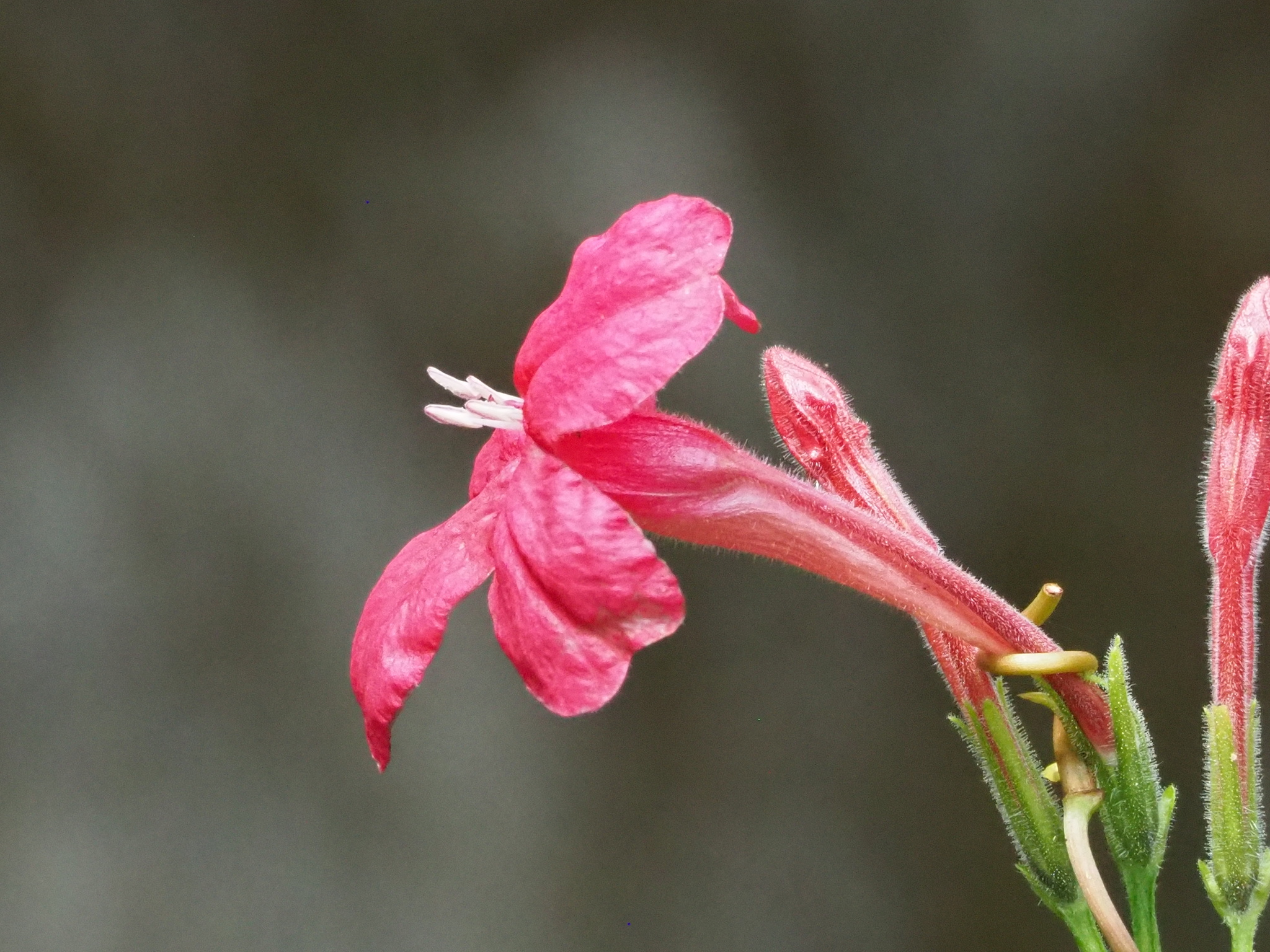
This is Ruellia elegans, a perennial or subshrub in the Acanthaceae family, known to gardeners under the common name of scarlet ruellia. It belongs to a large genus of ruellias that spans the tropics and subtropics, though this particular species keeps to its Brazilian roots.
Source: Kew
Rooted in Wet Brazil
Ruellia elegans is native to eastern and southern Brazil, where it grows in the wet tropical biome. It has since been introduced beyond its home range, turning up in the Andaman Islands, Jamaica, and Puerto Rico. The species carries a long list of historical synonyms, a sign of how often botanists have revisited and renamed it since Poiret first described it in 1816.
Source: Kew
Sun, Moisture, and Patience
Relatives of this ruellia grown as garden perennials do best in full sun or partial shade, and flower more sparingly when kept too shaded. They prefer rich soil kept slightly moist, so a layer of mulch helps steady conditions through hot, dry stretches. Where winters turn cold, such ruellias are often treated as annuals rather than overwintered outdoors.
Source: Costa Farms
Petunia-Like Summer Flowers
Closely related Mexican petunia types in this genus produce waves of blue, white, or pink flowers resembling petunias through the summer, held on plants that can reach around three feet, with dwarf forms staying shorter. The blooms draw butterflies readily, and some butterfly species even use the foliage as a host plant for their larvae.
Source: Costa Farms
A Tendency to Wander
Left to its own devices, this type of ruellia can self-sow and spread quickly once established, so it is worth siting where its spread can be watched or containing it in large pots. Some forms of the plant are considered invasive and restricted in certain areas, which is worth checking before planting.
Source: Costa Farms
Care recipe
The species record — the baseline every cultivar inherits unless it says otherwise.
Care notes are early — not yet verified
- Light
- ai:claude-opus-4-8
- Water
- ai:claude-opus-4-8 (range 5-10d)
- Humidity
- ai:claude-opus-4-8
- Soil
- ai:claude-fable-5
- Care
- ai:claude-fable-5
Bright, indirect
≈ every 10 days
Medium
15–29 °C
Rich, well-draining potting mix
Stem cuttings rooted in water or mix
Balanced feed every few weeks in the growing season
Moderate
Bright red blooms much of the year in good light
Not yet documented
This is where toxicity lives — every cultivar of this species inherits it and none can override it.
Reference images
Every image credited. Licenses link to their deeds.
PrimarySources: ai:claude-opus-4-8 · ai:claude-opus-4-8 (range 5-10d) · ai:claude-fable-5
Kept true by its growers
Every fact here carries its source. Grow Brazilian Petunia yourself? What you’ve observed — how it drinks, how it holds its color, a name that’s off — and a clear photo of your plant are exactly what keep this page honest. Contributions are reviewed before anything changes.
Sign in to add what you know →