Species · genus Rhapis · Arecaceae
Bamboo Palm
Rhapis excelsa (Thunb.) A.Henry
Also known as: Broadleaf Lady Palm · Fern Rhapis · Ground Rattan · Lady Palm · Little Lady Palm
Cultivars of R. excelsa
The named forms growers keep — each with its own page, each honest about how much we know.
No named cultivars catalogued under R. excelsa yet. When growers document a stable, named form, it earns its own page here.
Guide
The species-level account. Cultivar pages build on this and say where they differ.
A Cultivated Fan Palm
The lady palm, Rhapis excelsa, is a small fan palm valued as a houseplant for its toughness and tropical look. It does not occur in the wild; it is a plant of cultivation, shaped by growers rather than found in a forest. It belongs to the palm family, Arecaceae.
Source: Epic Gardening
From Chinese Gardens Outward
This palm was created by Chinese cultivators, and its native range runs from southern China into northern Vietnam. It first found favor in Japanese palaces before making its way to Europe in the 1770s and to America in the 1850s. Today it is grown widely as an indoor plant far from those origins.
Source: RHS
A Steady, Shaded Rhythm
Lady palm wants bright indirect light rather than harsh sun, with perhaps a little gentle morning exposure, since direct afternoon light can scorch the leaves. Keep the soil consistently moist, watering once the top inch or two has dried, and lean on a well-draining houseplant mix to keep root rot at bay. It favors warmth and humidity above roughly 50 percent, dislikes temperatures below 45°F (7°C), and asks for only light feeding during the growing season, as it is easily overfed.
Source: Epic Gardening
Division Over Seed
The easiest route is division: once the root system is thoroughly root-bound, the rhizomes can be split into two or three sections and repotted, and the plant tolerates the disturbance well. Growing from seed is possible but slow and best left to patient, experienced growers, since a seed-grown plant can take around seven years to reach nursery size.
Source: Epic Gardening
Slender Stems, Fan Leaves
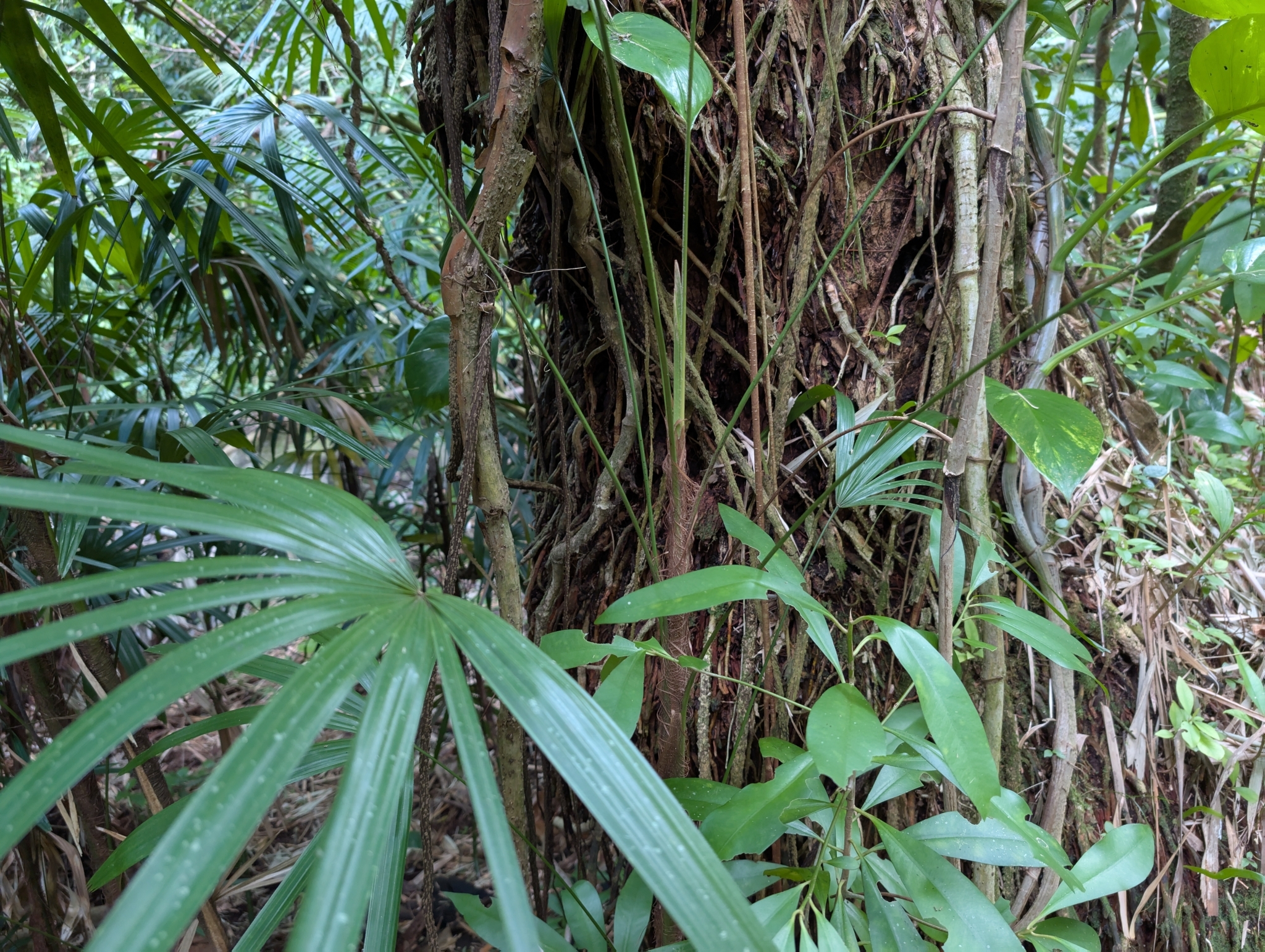
Lady palm forms a bushy clump of slender, upright, cane-like stems that can reach 4 metres given time, though it grows slowly. Its long-stalked, dark green leaves are divided into narrow oblong lobes, fan-like in effect. In summer it produces panicles of small yellow flowers tucked among the foliage, followed by small fruits. Growers generally divide the many named forms into green and variegated types, with a few variegated selections considered rare and collectible.
Source: RHS
Scale and Spider Mites
Scale insects are the more troublesome visitor, tending to hide beneath the leaves near the base, and are managed with insecticidal soap or neem oil applied every seven to ten days. Spider mites are harder to spot but do real damage; wiping them away with rubbing alcohol on a cotton swab, checking the whole plant, works well. The RHS also notes glasshouse red spider mite and scale insects as the pests most likely to trouble this palm under glass.
Source: Epic Gardening
Yellowing and Wilting
Yellow leaves usually point to too much light, though watering problems can also be the cause, so check the soil before moving the plant to shade. Wilting is typically a sign of underwatering, but if watering has been consistent, the plant may simply have outgrown its pot. Root rot is the more serious risk, caused by pathogens such as Fusarium, Pythium, Rhizoctonia, and Penicillium, and is best headed off by watching for early signs, avoiding standing water, and treating promptly with a fungicide suited to root disease.
Source: Epic Gardening
Thinning and Repotting
Trim away any discolored or dried leaves to keep air moving through the plant and lower the risk of disease; if new growth comes in brown or dead, cut the whole plant back to the soil to encourage a fresh start. Repotting every couple of years, in spring, into a container one or two sizes larger, keeps the soil fresh and the roots content. The RHS notes that no pruning is otherwise required.
Source: Epic Gardening
Care recipe
The species record — the baseline every cultivar inherits unless it says otherwise.
Care notes are early — not yet verified
- Light
- ai:claude-opus-4-8
- Water
- ai:claude-opus-4-8 (range 7-14d)
- Humidity
- ai:claude-opus-4-8
- Soil
- ai:claude-fable-5
- Care
- ai:claude-fable-5
Bright, indirect
≈ every 14 days
Medium
16–27 °C
Rich, well-draining potting mix
Division of clumps
Light balanced feed monthly in spring and summer
Slow
Rarely flowers indoors
Non-toxic to cats & dogs
Lady palm — ASPCA non-toxic to cats and dogs. This is where toxicity lives: every cultivar of this species inherits it and none can override it.
Reference images
Every image credited. Licenses link to their deeds.
Sources: ai:claude-opus-4-8 · ai:claude-opus-4-8 (range 7-14d) · ai:claude-fable-5 · ASPCA
Kept true by its growers
Every fact here carries its source. Grow Bamboo Palm yourself? What you’ve observed — how it drinks, how it holds its color, a name that’s off — and a clear photo of your plant are exactly what keep this page honest. Contributions are reviewed before anything changes.
Sign in to add what you know →