Species · genus Rhaphidophora · Araceae
Mini Monstera
Rhaphidophora tetrasperma Hook.f.
Cultivars of R. tetrasperma
The named forms growers keep — each with its own page, each honest about how much we know.
No named cultivars catalogued under R. tetrasperma yet. When growers document a stable, named form, it earns its own page here.
Guide
The species-level account. Cultivar pages build on this and say where they differ.
Not a True Monstera
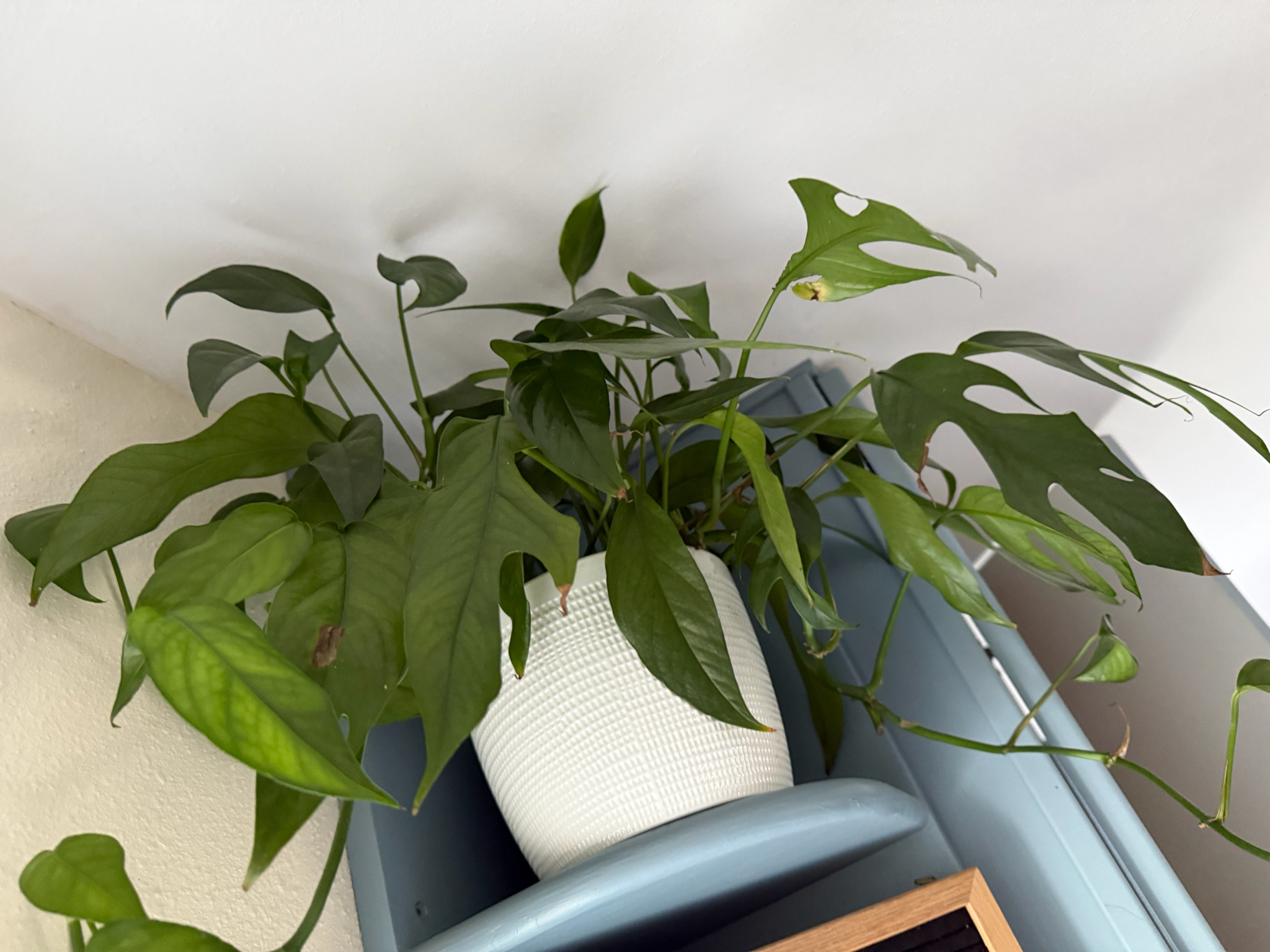
Rhaphidophora tetrasperma is a member of the Araceae family, prized for foliage that echoes Monstera deliciosa in miniature. It shares the split-leaf look but is a wholly separate species, with smaller leaves and no edible fruit. Gardeners also know it as mini monstera, Philodendron 'Piccolo', or ginny philodendron.
Source: Epic Gardening
Southeast Asian Understory Climber
This plant is native to the jungles of Malaysia and Southern Thailand, part of the wider rainforests of Southeast Asia. In the wild it is an evergreen vine, using aerial roots to latch onto trees and other supports as it climbs. Decreasing habitat has made it genuinely uncommon to encounter growing wild.
Source: Epic Gardening
Light, Water, and Feeding Rhythm
This plant wants bright, indirect light and resents strong direct sun, which can scorch its leaves; an eastern window or supplemental grow light suits it indoors. Water for even, consistent moisture rather than a fixed schedule, checking the soil with a fingertip and easing off in cooler months. Aim for humidity around 50-60 percent where possible, and feed through active growth with a balanced, slow-release organic fertilizer, since its roots are sensitive to burn from harsher chemical feeds.
Source: Epic Gardening
Rooting from Stem Cuttings
Propagation is straightforward: take a healthy stem cutting with at least a few leaf nodes and set it in water or moistened potting soil, keeping the lowest node submerged or buried. In water, refresh it daily and move the cutting to soil once roots reach an inch or two long. For cuttings started directly in soil, wait a few weeks, then tug gently; resistance means roots have taken hold.
Source: Epic Gardening
Fenestration in Miniature
Its leaves carry split lobes that can reach six inches, giving the window-like fenestration that draws comparisons to Monstera deliciosa, though on a far smaller scale. Notably, those splits appear at an earlier age here than in its larger cousin. Left to climb, it can reach heights beyond six feet, and as a houseplant is more often kept trained to around four to five feet of vine.
Source: Costa Farms
Watch for Spider Mites
Spider mites are the main pest concern, sucking sap from leaves and stems and leaving yellowed or speckled leaf surfaces, sometimes with scarring. They favor dry, dusty conditions, so keeping humidity up helps discourage them, and neem oil is a reasonable response once they appear.
Source: Epic Gardening
Legginess and Root Rot
Leggy growth usually signals insufficient light on one side of the plant; rotating it regularly and ensuring ample bright indirect light helps it fill out evenly. The other recurring issue is fungal root rot, brought on by overwatering and soggy soil, which is difficult to treat once established, so it is best avoided through even moisture and well-draining soil rather than cured after the fact.
Source: Epic Gardening
Support, Pruning, and Repotting
As a climber, it benefits from a trellis, moss pole, or stakes for its aerial roots to grip, with soft ties helping guide young growth onto the support. Pruning is mainly for removing damaged material or controlling size and legginess, and it is safest to take off no more than about a quarter of the plant at once. When repotting, handle the root ball gently, check for and trim any rot with sterilized tools, and move up to a pot only slightly wider than the last, since this plant's roots appreciate room to develop.
Source: Epic Gardening
Care recipe
The species record — the baseline every cultivar inherits unless it says otherwise.
Care notes are early — not yet verified
- Light
- ai:claude-opus-4-8
- Water
- ai:claude-opus-4-8 (range 7-12d)
- Humidity
- ai:claude-opus-4-8
- Soil
- ai:claude-fable-5
- Care
- ai:claude-fable-5
Bright, indirect
≈ every 12 days
Medium
18–29 °C
Chunky, well-draining aroid mix
Stem cuttings rooted at a node
Balanced liquid feed monthly in the growing season
Fast
Rarely flowers indoors
Toxic to cats & dogs & humans
Araceae contain insoluble calcium oxalate crystals This is where toxicity lives: every cultivar of this species inherits it and none can override it.
Reference images
Every image credited. Licenses link to their deeds.
PrimarySources: ai:claude-opus-4-8 · ai:claude-opus-4-8 (range 7-12d) · ai:claude-fable-5 · ai:claude-opus-4-8 (family inference)
Kept true by its growers
Every fact here carries its source. Grow Mini Monstera yourself? What you’ve observed — how it drinks, how it holds its color, a name that’s off — and a clear photo of your plant are exactly what keep this page honest. Contributions are reviewed before anything changes.
Sign in to add what you know →