Species · genus Rhaphidophora · Araceae
Creeping Philodendron
Rhaphidophora decursiva (Roxb.) Schott
Also known as: Dragon Tail Plant
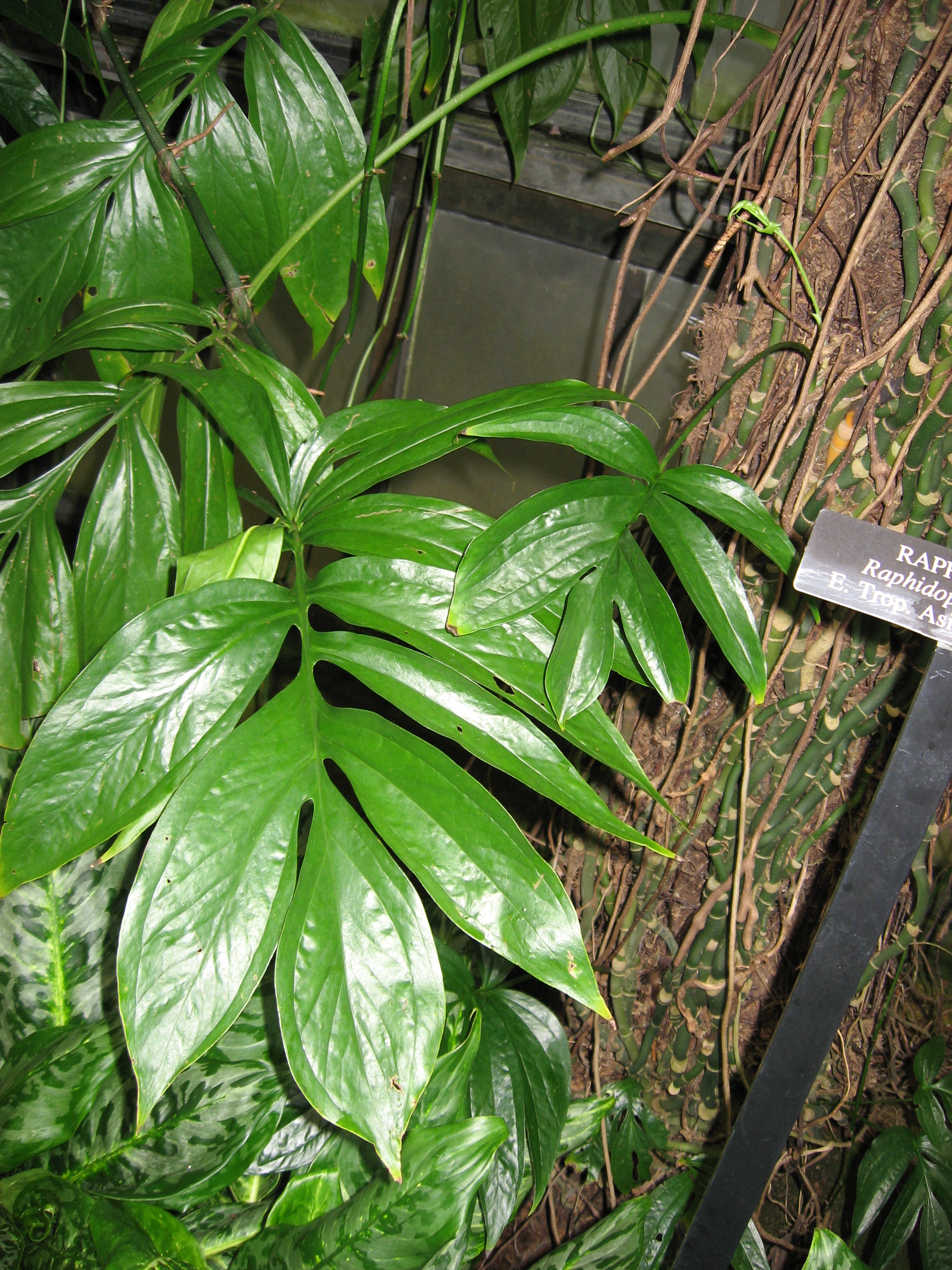
Cultivars of R. decursiva
The named forms growers keep — each with its own page, each honest about how much we know.
No named cultivars catalogued under R. decursiva yet. When growers document a stable, named form, it earns its own page here.
Guide
The species-level account. Cultivar pages build on this and say where they differ.
A Climbing Aroid
Rhaphidophora decursiva is a climbing member of the arum family, Araceae, first described from specimens collected under the genus Pothos before being placed here by Schott. Gardeners in Britain know it too by its common name, down-curved raphidophora.
Source: Kew
Native Range
This climber traces its natural range from the Indian Subcontinent across to South China and Indo-China, taking in places such as Assam, Bangladesh, Nepal, Sri Lanka, Myanmar, Thailand, Vietnam, and the Himalayan foothills. In the wild it grows within the wet tropical biome, scrambling upward in humid forest conditions typical of that belt.
Source: Kew
A Climbing Habit
True to its Araceae roots, this plant grows as a climber rather than a freestanding shrub, a habit shared with better-known aroid vines. Its species name, decursiva, and the synonym history under Monstera and Scindapsus hint at a family resemblance to those familiar climbing houseplants.
Source: Kew
Care recipe
The species record — the baseline every cultivar inherits unless it says otherwise.
Care notes are early — not yet verified
- Light
- ai:claude-opus-4-8
- Water
- ai:claude-opus-4-8 (range 7-12d)
- Humidity
- ai:claude-opus-4-8
- Soil
- ai:claude-fable-5
- Care
- ai:claude-fable-5
Bright, indirect
≈ every 12 days
High
18–29 °C
Chunky, well-draining aroid mix
Stem cuttings rooted at a node
Balanced liquid feed monthly in the growing season
Fast
Rarely flowers indoors
Toxic to cats & dogs & humans
Araceae typically contain insoluble calcium oxalate crystals that irritate mouth and digestive tract This is where toxicity lives: every cultivar of this species inherits it and none can override it.
Reference images
Every image credited. Licenses link to their deeds.
Sources: ai:claude-opus-4-8 · ai:claude-opus-4-8 (range 7-12d) · ai:claude-fable-5 · ai:claude-opus-4-8 (family inference)
Kept true by its growers
Every fact here carries its source. Grow Creeping Philodendron yourself? What you’ve observed — how it drinks, how it holds its color, a name that’s off — and a clear photo of your plant are exactly what keep this page honest. Contributions are reviewed before anything changes.
Sign in to add what you know →