Species · genus Portulacaria · Didiereaceae
Elephant Bush
Portulacaria afra Jacq.
Also known as: Elephant Food · Common Spekboom · Elephant's Food · Porkbush
Cultivars of P. afra
The named forms growers keep — each with its own page, each honest about how much we know.
No named cultivars catalogued under P. afra yet. When growers document a stable, named form, it earns its own page here.
Guide
The species-level account. Cultivar pages build on this and say where they differ.
A Miniature Jade Look-Alike
Elephant bush, Portulacaria afra, is a succulent shrub often mistaken for a small jade plant, though the two are not related. It is grown both as a modest houseplant and, in its native range, as a much larger landscape shrub, and it has drawn recent attention for how efficiently it draws carbon from the air.
Source: Epic Gardening
A South African Native
This plant comes from South Africa, where it grows wild as a shrub reaching up to fifteen feet, its foliage grazed by elephants, which is how it earned its common name. The leaves are also eaten by people, offering a sour flavor often used in salads. Botanically it sits in the Didieraceae family under the genus Portulacaria, though it is sometimes still associated with the purslane family.
Source: Epic Gardening
Sun, Sparing Water, Warmth
Give elephant bush bright but indirect light, with tolerance for full sun and a preference for gentler morning rays over harsh afternoon exposure. Water only once the soil has dried out, roughly weekly in the hottest months and tapering to monthly over winter, always in a very well-drained, gritty mix. It also appreciates more humidity than most succulents, around fifty percent, and steady warmth between 65 and 80°F, with feeding kept light: a diluted, low-nitrogen fertilizer once a month in spring and fall, a bit more often in summer, and none in winter.
Source: Epic Gardening
Easy From Stem Cuttings
Stem cuttings taken in spring or summer, from a healthy stem clipped just below a node and left to callus for a few days before planting, are the quickest and most reliable way to propagate this plant. Leaf cuttings work too, treated the same way, but they take longer and root less reliably than stems. The RHS route is similar in spirit: softwood cuttings of stem sections rooted with a bit of bottom heat in spring.
Source: Epic Gardening
Fleshy Leaves, Red Stems
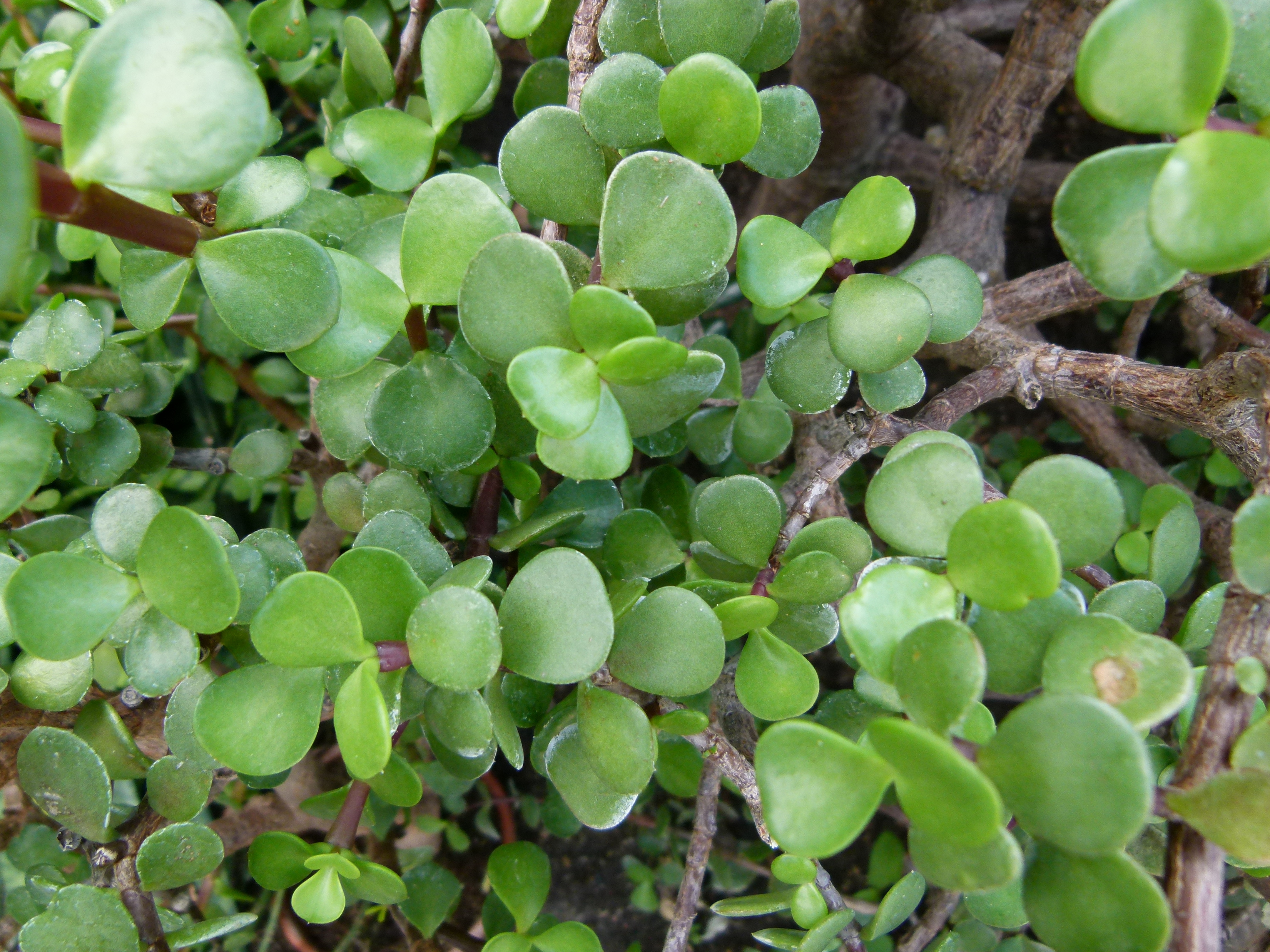
Elephant bush carries small, oval to round, fleshy green leaves, sometimes edged in purple, set against reddish stems that turn woody and grey-barked with age. In cultivation it is slow growing and evergreen, never dropping its leaves for a dormant spell, and can live for decades under good care. Clusters of tiny, star-shaped pale pink flowers appear at branch tips in summer, though indoors bloom is rare and tends to need a spell of dryness followed by rain to trigger it.
Source: RHS
Watch for Sap Suckers
Whiteflies, spider mites, and mealybugs are the pests most likely to trouble elephant bush, often arriving on new plants brought into the home. Whiteflies tend to follow excess nitrogen in the soil, spider mites give themselves away with fine webbing on leaf undersides, and mealybugs show up as waxy white clusters that resist easy removal. The RHS adds that scale insects can also be an occasional issue.
Source: Epic Gardening
Overwatering Is the Main Risk
The single biggest threat to elephant bush is overwatering, which leads to root rot from fungal breakdown in soggy soil. Cool, damp conditions can also invite botrytis (grey mold), while powdery mildew shows up as a chalky coating that stunts growth, most often when plants move between indoors and out. Southern blight is a soil-borne fungus that is hard to treat but rarely troubles potted specimens.
Source: Epic Gardening
Light Pruning, Careful Repotting
Because its root system is shallow and not much of an anchor, elephant bush suits hanging baskets or bonsai-style pots, and it needs little in the way of routine upkeep. Prune at the end of spring to shape the plant or keep its size in check, cutting stems back by about a third if restraint is the goal, and clearing any branches crossing through the interior. The RHS notes that overall it asks for only minimal pruning.
Source: Epic Gardening
Care recipe
The species record — the baseline every cultivar inherits unless it says otherwise.
Care notes are early — not yet verified
- Light
- ai:claude-opus-4-8
- Water
- ai:claude-opus-4-8 (range 10-21d)
- Humidity
- ai:claude-opus-4-8
- Soil
- ai:claude-fable-5
- Care
- ai:claude-fable-5
Direct sun
≈ every 21 days
Low — average room
10–29 °C
Gritty, fast-draining succulent or cactus mix
Stem cuttings left to callus, then rooted in dry mix
Dilute feed a few times through spring and summer
Moderate
Rarely flowers indoors
Not yet documented
This is where toxicity lives — every cultivar of this species inherits it and none can override it.
Reference images
Every image credited. Licenses link to their deeds.
PrimarySources: ai:claude-opus-4-8 · ai:claude-opus-4-8 (range 10-21d) · ai:claude-fable-5
Kept true by its growers
Every fact here carries its source. Grow Elephant Bush yourself? What you’ve observed — how it drinks, how it holds its color, a name that’s off — and a clear photo of your plant are exactly what keep this page honest. Contributions are reviewed before anything changes.
Sign in to add what you know →