Species · genus Polyscias · Araliaceae
Shield Aralia
Polyscias scutellaria (Burm.fil.) Fosberg
Also known as: Dinnerplate-aralia
Cultivars of P. scutellaria
The named forms growers keep — each with its own page, each honest about how much we know.
No named cultivars catalogued under P. scutellaria yet. When growers document a stable, named form, it earns its own page here.
Guide
The species-level account. Cultivar pages build on this and say where they differ.
A Variegated Milkwort
Polyscias scutellaria 'Marginata' is a tender, evergreen shrub grown for its rounded, glossy dark green leaves edged in irregular white margins. It carries a columnar, upright habit and is usually kept as a houseplant or in a warm conservatory rather than outdoors.
Source: RHS
A Pacific Cultigen
The species Polyscias scutellaria is known only as a cultigen, spreading from eastern Malesia into the south-west Pacific, with its native range including places such as Maluku, New Guinea, and the Solomon Islands. From there it has been carried further afield, introduced to islands and regions from the Caribbean to Thailand, and put to use as food, medicine, and animal fodder along the way.
Source: Kew
Warmth, Light, and Feeding
Under glass, this plant wants a peat-free, loam-based compost and a spot in full or bright, filtered light. While it is actively growing, water freely, mist daily, and feed monthly with a balanced liquid fertiliser, then ease off watering through winter. It favours a sheltered position and holds up to full sun or partial shade outdoors in summer, in soil that stays moist but well-drained.
Source: RHS
Cuttings With Heat
Propagate by taking greenwood cuttings in early summer, or by rooting leafless stem sections with the help of bottom heat during the summer months.
Source: RHS
Foliage and Family
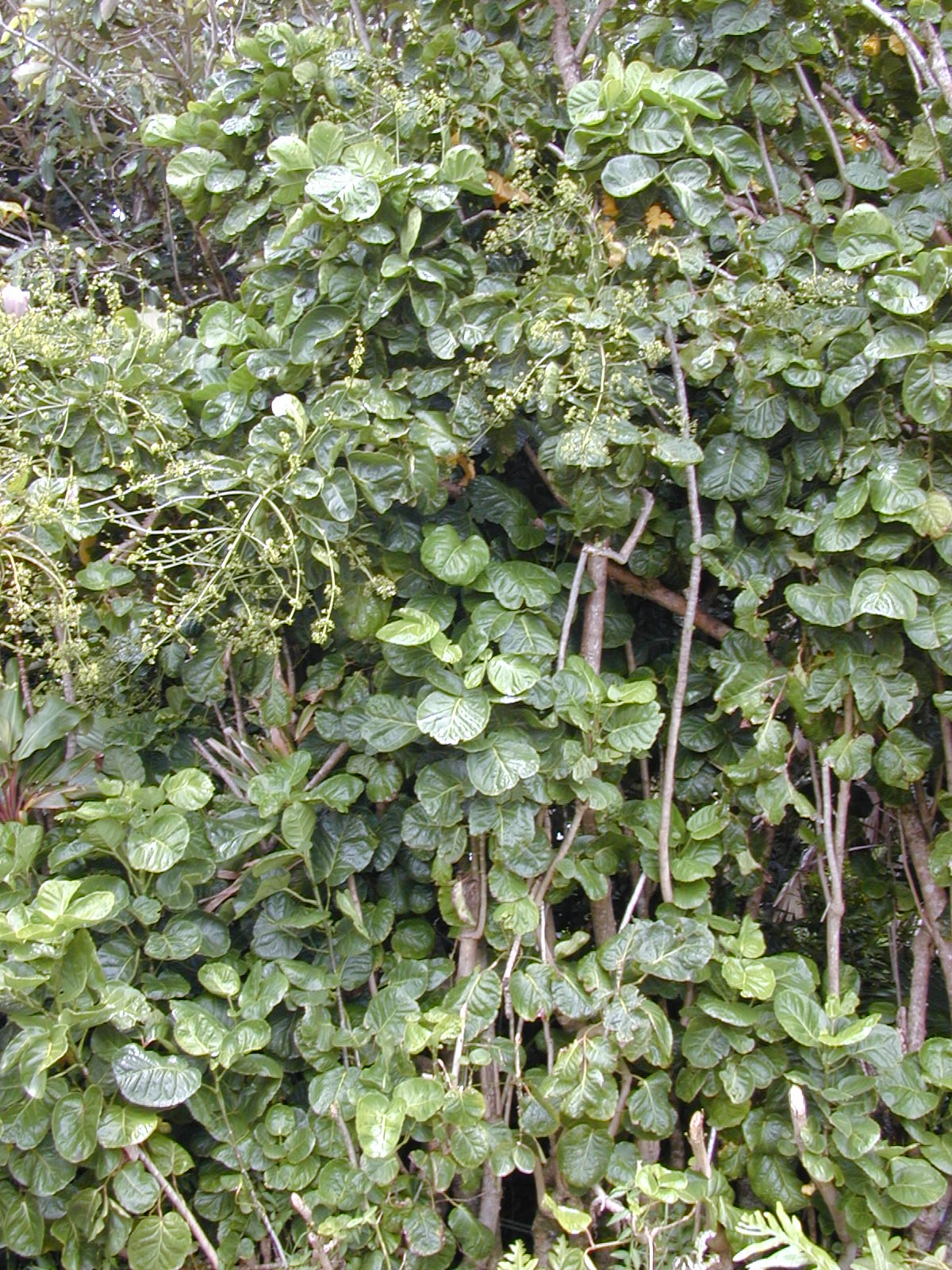
The rounded leaves are the main draw here, glossy and dark green with irregular white edging that gives the cultivar its 'Marginata' name. It belongs to Araliaceae, a family of evergreen shrubs and small trees whose small greenish flowers gather into umbels within panicles, sometimes followed by small black berries, though this variegated form is grown chiefly for foliage rather than bloom.
Source: RHS
Mites and Mealybugs
Under glass, watch for glasshouse red spider mite and mealybugs, the two pests most likely to trouble this plant.
Source: RHS
Light Pruning Only
This shrub falls into the light-pruning group, needing only modest trimming to keep its columnar shape tidy. It is otherwise considered generally free of disease.
Source: RHS
Care recipe
The species record — the baseline every cultivar inherits unless it says otherwise.
Care notes are early — not yet verified
- Light
- ai:claude-opus-4-8
- Water
- ai:claude-opus-4-8 (range 7-12d)
- Humidity
- ai:claude-opus-4-8
- Soil
- ai:claude-fable-5
- Care
- ai:claude-fable-5
Bright, indirect
≈ every 12 days
Medium
16–27 °C
Rich, well-draining peat-based potting mix
Stem cuttings rooted in warmth and humidity
Balanced liquid feed monthly through the growing season
Moderate
Rarely flowers indoors
Not yet documented
This is where toxicity lives — every cultivar of this species inherits it and none can override it.
Reference images
Every image credited. Licenses link to their deeds.
Sources: ai:claude-opus-4-8 · ai:claude-opus-4-8 (range 7-12d) · ai:claude-fable-5
Kept true by its growers
Every fact here carries its source. Grow Shield Aralia yourself? What you’ve observed — how it drinks, how it holds its color, a name that’s off — and a clear photo of your plant are exactly what keep this page honest. Contributions are reviewed before anything changes.
Sign in to add what you know →