Species · genus Podocarpus · Podocarpaceae
Plum Pine
Podocarpus elatus R.Br. ex Endl.
Also known as: Brown Pine · Yellow Pine · Illawarra Plum · Pencil-cedar · She-pine
Cultivars of P. elatus
The named forms growers keep — each with its own page, each honest about how much we know.
No named cultivars catalogued under P. elatus yet. When growers document a stable, named form, it earns its own page here.
Guide
The species-level account. Cultivar pages build on this and say where they differ.
A Slow, Steady Conifer
Podocarpus is a coniferous shrub or tree, unfussy and dense enough to serve as a hedge, noise filter, or privacy screen. It is not a showy plant, but its slow, steady habit and easy shaping make it a dependable backdrop in a landscape.
Source: Epic Gardening
A Southern Hemisphere Family
Podocarpus belongs to Podocarpaceae, a family of nineteen conifer genera found mainly in the Southern Hemisphere, across Australia, New Zealand, South America, Africa, and Asia, with Podocarpus itself reaching furthest north. Podocarpus elatus, one species in this genus, is native to northern and eastern Australia, found in New South Wales, Northern Territory, and Queensland, and has since been introduced to Ascension and Hawaii.
Source: Kew
Light, Water, and Feeding
Podocarpus tolerates nearly anything from full sun to deep shade, though full sun brings faster growth and paler foliage while shade slows growth and deepens the green. It prefers sandy or loamy soil that is rich, slightly acidic, and well drained but not left to dry out completely. Water deeply about every two weeks during the first establishing year, after which the plant rarely needs supplemental watering outside of extreme drought. Fertilizer is optional if soil is decent, but a light spring feeding suits gardeners who want a strong growth year, with a possible second summer application in poor soil and none in fall.
Source: Epic Gardening
Cuttings Over Seed
Podocarpus can be grown from seed or cuttings, but cuttings are the quicker and more common route. Seeds are slow, taking up to six months to germinate, though soaking them in salt water and chilling them near 50°F can help. Cuttings, by contrast, are taken from soft new wood three to four inches long, dipped in rooting hormone, and kept in moist, free-draining soil, typically rooting within about four months.
Source: Epic Gardening
Yew-Like Spiral Foliage
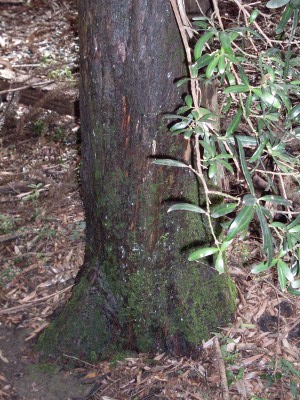
The foliage is dense, spirally arranged along the branches, flat and lance-shaped with simple edges, and often compared to Yew. Leaves that look stiff are actually soft and easy to shear, which is why the plant takes so well to hedge trimming. Grown in partial shade the leaves deepen in color, while full sun brings out a lighter green. The genus is largely dioecious, with male plants bearing pollen cones and female plants developing seed cones, and where both grow together, plum-shaped fleshy fruits can form.
Source: Epic Gardening
Aphids, Mites, and Scale
The Podocarpus aphid is the most notable pest, a small pale purple insect that lives its whole life on the plant and can cause curling leaves, stunted growth, and sooty mold from its honeydew if left unchecked, though light infestations are usually kept in check by natural predators. Spider mites favor hot, dry weather and reveal themselves through fine webbing on leaf undersides. Scale insects pierce leaves to feed on sap and leave a sticky residue, and their hard waxy coating responds best to horticultural oil.
Source: Epic Gardening
Root Rot and Fungal Trouble
Root rot in Podocarpus is almost always a matter of overwatering or poor drainage, so correcting the watering schedule or amending soil drainage is the fix. Leaf spot shows up as brown or yellow spotting from fungal pathogens and responds to removing affected foliage and a copper or sulfur-based fungicide. Fusarium wilt attacks the roots, causing yellowing, browning, and wilting, and spreads through water, so infected plants are best removed rather than treated. Botrytis blight causes wilting, decay, and browning of leaves and is managed by removing affected growth and thinning branches for better air circulation.
Source: Epic Gardening
Pruning for Shape
In its first year Podocarpus often wants to grow straight up, so pruning hard at the end of the first summer encourages back budding and a fuller, branching shrub. The plant tolerates hard pruning and shaping well and can be cut back year-round, with the one caution being to avoid pruning late in the season where winters bring freezing weather.
Source: Epic Gardening
Care recipe
The species record — the baseline every cultivar inherits unless it says otherwise.
Care notes are early — not yet verified
- Light
- ai:claude-opus-4-8
- Water
- ai:claude-opus-4-8 (range 7-14d)
- Humidity
- ai:claude-opus-4-8
- Soil
- ai:claude-fable-5
- Care
- ai:claude-fable-5
Bright, indirect
≈ every 14 days
Medium
12–27 °C
Well-draining, fertile potting mix
Fresh seed or semi-hardwood cuttings; slow to establish
Balanced feed monthly through the growing season
Slow
Non-flowering conifer; produces fleshy plum-like cones outdoors
Not yet documented
This is where toxicity lives — every cultivar of this species inherits it and none can override it.
Reference images
Every image credited. Licenses link to their deeds.
Sources: ai:claude-opus-4-8 · ai:claude-opus-4-8 (range 7-14d) · ai:claude-fable-5
Kept true by its growers
Every fact here carries its source. Grow Plum Pine yourself? What you’ve observed — how it drinks, how it holds its color, a name that’s off — and a clear photo of your plant are exactly what keep this page honest. Contributions are reviewed before anything changes.
Sign in to add what you know →