Species · genus Plerandra · Araliaceae
False Aralia
Plerandra elegantissima (H.J.Veitch ex Mast.) Lowry, G.M.Plunkett & Frodin
Cultivars of P. elegantissima
The named forms growers keep — each with its own page, each honest about how much we know.
No named cultivars catalogued under P. elegantissima yet. When growers document a stable, named form, it earns its own page here.
Guide
The species-level account. Cultivar pages build on this and say where they differ.
An Elegant, Feathery Houseplant
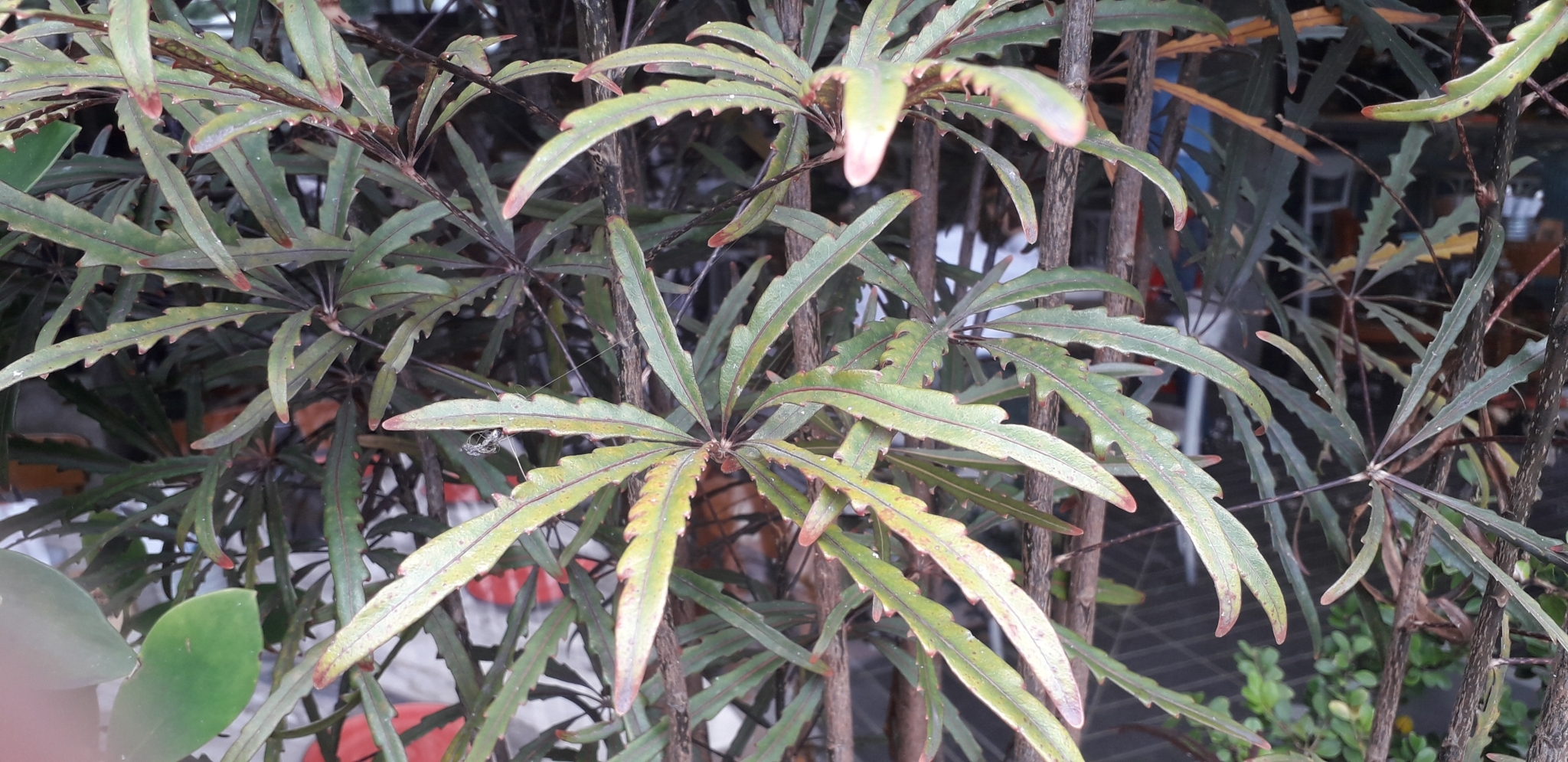
False aralia is grown for its finely divided, feathery leaves, which give it an airy, almost lacy presence indoors. It is a medium- to slow-growing plant and one of the better choices for a high-light spot in the home or office.
Source: Costa Farms
Light, Water, And Feeding
False aralia manages in medium light but grows fuller and faster with bright light, so a high-light spot suits it best. Let the soil begin to dry before watering, since this plant prefers to be on the dry side rather than overly wet, and it helps to check the mix with a moisture meter or a finger before adding more. Regular feeding is not essential; a couple of applications of a houseplant fertilizer a year will keep it going, though feeding more often will push faster growth.
Source: Costa Farms
Feathery Leaves, Woody Habit
The plant's charm lies in its deeply divided foliage, which reads as delicate and airy rather than solid or heavy. Young plants stay compact enough for a tabletop or desk, while older specimens develop woody trunks and can grow into small trees used as living screens or room dividers. It also goes by several other names in the trade, including Schefflera elegantissima and Dizygotheca elegantissima, alongside its current name Plerandra elegantissima.
Source: Costa Farms
Repotting Every Couple Years
As false aralia grows, it benefits from repotting roughly every couple of years. Spring and summer are the preferred windows for this, though autumn and winter repotting works fine as well.
Source: Costa Farms
Care recipe
The species record — the baseline every cultivar inherits unless it says otherwise.
Care notes are early — not yet verified
- Light
- ai:claude-opus-4-8
- Water
- ai:claude-opus-4-8 (range 7-12d)
- Humidity
- ai:claude-opus-4-8
- Soil
- ai:claude-fable-5
- Care
- ai:claude-fable-5
Bright, indirect
≈ every 12 days
Medium
16–27 °C
Rich, well-draining aroid-style or peat-based mix
Semi-hardwood cuttings or air layering (slow to root)
Balanced feed monthly in the growing season
Slow
Rarely flowers indoors; grown for its fine serrated foliage
Not yet documented
This is where toxicity lives — every cultivar of this species inherits it and none can override it.
Reference images
Every image credited. Licenses link to their deeds.
Sources: ai:claude-opus-4-8 · ai:claude-opus-4-8 (range 7-12d) · ai:claude-fable-5
Kept true by its growers
Every fact here carries its source. Grow False Aralia yourself? What you’ve observed — how it drinks, how it holds its color, a name that’s off — and a clear photo of your plant are exactly what keep this page honest. Contributions are reviewed before anything changes.
Sign in to add what you know →