Species · genus Plectranthus · Lamiaceae
Whorled Plectranthus
Plectranthus verticillatus (L.f.) Druce
Also known as: Gossip Spurflower · Swedish Ivy
Cultivars of P. verticillatus
The named forms growers keep — each with its own page, each honest about how much we know.
No named cultivars catalogued under P. verticillatus yet. When growers document a stable, named form, it earns its own page here.
Guide
The species-level account. Cultivar pages build on this and say where they differ.
A Trailing Mint Relative
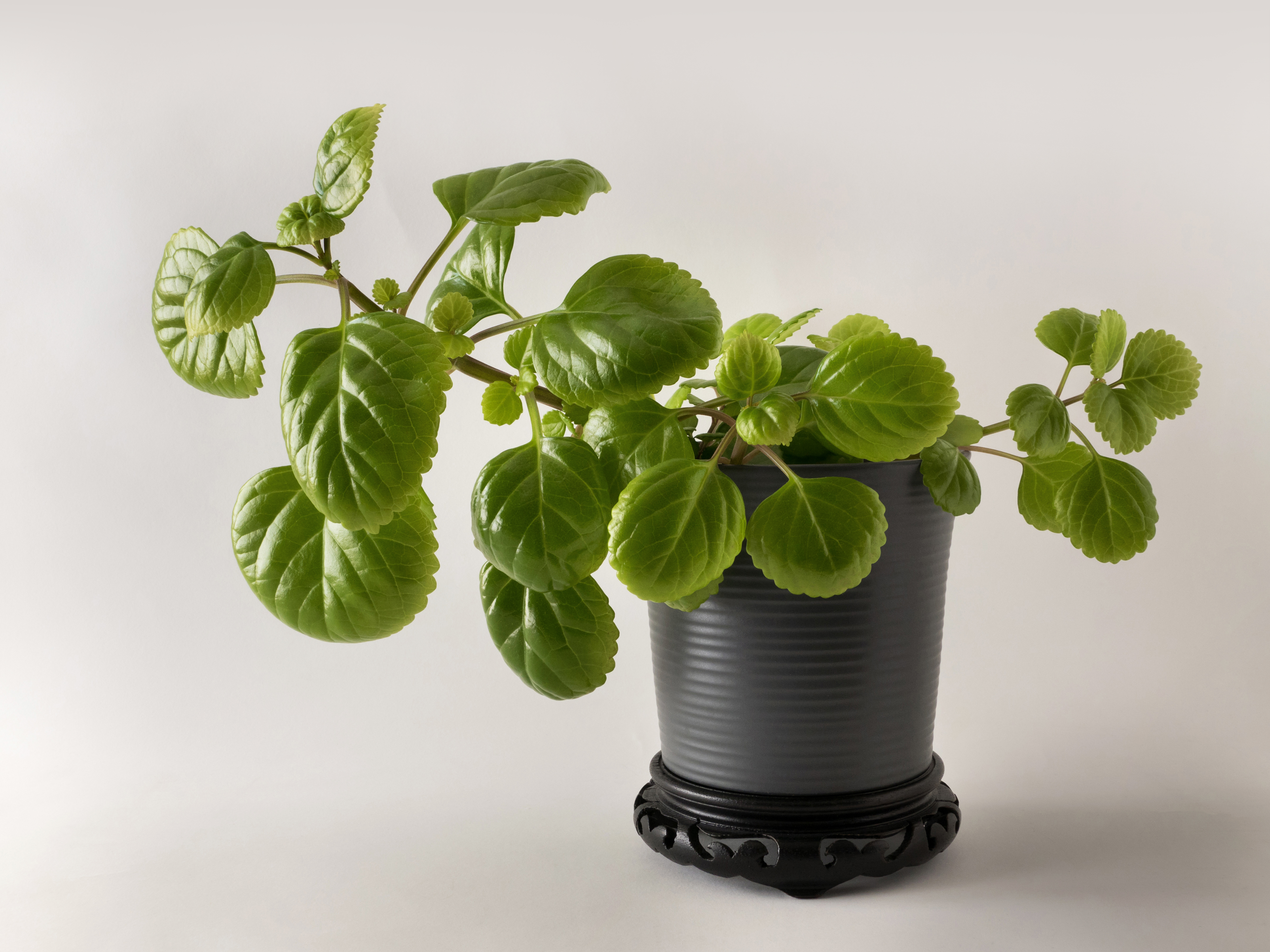
Swedish ivy, botanically Plectranthus verticillatus, is a mat-forming evergreen perennial grown mainly for its cascading stems and rounded, scalloped leaves. Despite the common name it is not an ivy at all, and it has no connection to Sweden either; it is in fact kin to the mints.
Source: Epic Gardening
Southern African Roots
This plant hails from southern Africa, where in the wild it spreads as ground cover and puts out its flowers in the winter months. Its English name traces back to wartime Sweden, where the botanist Vivi Laurent-Tackholm ran a flower club that popularised it among Swedish households, alongside pothos and other plectranthus types.
Source: Epic Gardening
Bright Shade and Steady Moisture
Give it partial shade rather than direct sun, and a well-drained, moisture-retentive soil; a loam or sandy mix suits it, and it tolerates acid, neutral, or alkaline conditions. Indoors this translates to four to six hours of bright indirect light, water once a week with the soil allowed to dry a little between drinks, and humidity kept at 60 percent or higher. Feed sparingly, if at all, favouring a low-nitrogen fertiliser in spring and summer if you want to encourage bloom, and holding off feeding through autumn and winter.
Source: Epic Gardening
Rooting Stem Tips
Propagation is straightforward from stem-tip cuttings taken at any time of year, or from seed sown at 19-24°C when fresh. In practice, cuttings taken just below a leaf node, stripped of their lower leaves and stood in water will typically root within about a month before being potted on.
Source: RHS
Coarse Leaves, Purple Beneath
It stays low, forming a mat to about 10cm tall while spreading half a metre to a metre wide. The rounded, coarsely toothed leaves are purple on their undersides, and in summer the plant sends up loose spikes of white flowers dotted with purple, each about 2cm long.
Source: RHS
Mealybugs and Mites
This is a fairly pest-resistant plant thanks to the scent of its flowers, but mealybugs and spider mites do turn up occasionally. Watch for pale leaves with cottony clumps on the undersides as a sign of mealybugs, and tiny holes or yellowish speckling with fine webbing as an early clue to spider mites.
Source: Epic Gardening
Sun Scorch and Soggy Roots
Most trouble traces back to too much direct sun or soil kept too wet. Excess light dulls and droops the foliage and can strip the white markings from variegated forms, while overly damp soil risks root rot, seen as mushy stems, wilting, and blackened roots; catching it early enough to trim back to firm white root tissue and repotting into dry soil offers the best chance of recovery.
Source: Epic Gardening
Pinch to Keep It Bushy
Prune young plants to encourage bushy rather than leggy growth, and once flowers fade, pinch back the stem tips to push out fresh growth; any cuttings gained this way can go straight into propagation. As the plant fills its pot, move it up one to two sizes in spring rather than letting it stay root bound.
Source: Epic Gardening
Care recipe
The species record — the baseline every cultivar inherits unless it says otherwise.
Care notes are early — not yet verified
- Light
- ai:claude-opus-4-8
- Water
- ai:claude-opus-4-8 (range 7-12d)
- Humidity
- ai:claude-opus-4-8
- Soil
- ai:claude-fable-5
- Care
- ai:claude-fable-5
Bright, indirect
≈ every 12 days
Medium
10–26 °C
Standard well-draining potting mix
Stem cuttings root almost effortlessly
Dilute balanced feed every 4 to 6 weeks in the growing season
Fast
Sprays of small white-and-purple flowers; easy trailing houseplant
Not yet documented
This is where toxicity lives — every cultivar of this species inherits it and none can override it.
Reference images
Every image credited. Licenses link to their deeds.
PrimarySources: ai:claude-opus-4-8 · ai:claude-opus-4-8 (range 7-12d) · ai:claude-fable-5
Kept true by its growers
Every fact here carries its source. Grow Whorled Plectranthus yourself? What you’ve observed — how it drinks, how it holds its color, a name that’s off — and a clear photo of your plant are exactly what keep this page honest. Contributions are reviewed before anything changes.
Sign in to add what you know →