Species · genus Plectranthus · Lamiaceae
Speckled Spur Flower
Plectranthus ciliatus E.Mey.
Also known as: Eyelash Spurflower
Cultivars of P. ciliatus
The named forms growers keep — each with its own page, each honest about how much we know.
No named cultivars catalogued under P. ciliatus yet. When growers document a stable, named form, it earns its own page here.
Guide
The species-level account. Cultivar pages build on this and say where they differ.
A Sprawling Foliage Plant
Plectranthus ciliatus, known as Indian borage, is a sprawling evergreen perennial in the Lamiaceae family, grown for its foliage in beds, containers, hanging baskets or under glass. Cultivars such as 'Easy Gold' and 'Richard' are bushy in habit and stay modest in size, reaching only 0.1 to 0.5 metres in height with a spread of 0.5 to 1 metres.
Source: RHS
Light, Soil And Shelter
Give this plant partial shade and a well-drained loam or sandy soil, whether that's moist but well-drained or simply well-drained, with an acid, alkaline or neutral pH suiting it fine. It can take an east, south or west aspect but wants a sheltered spot, and if grown under glass it still needs shading from hot sun. Frost is the one thing to guard against, as this plant is not reliably hardy outdoors through a UK winter.
Source: RHS
Cuttings Do The Work
Propagation is by semi-hardwood cuttings, the straightforward route for increasing stock of this plant.
Source: RHS
Leaf Colour And Bloom
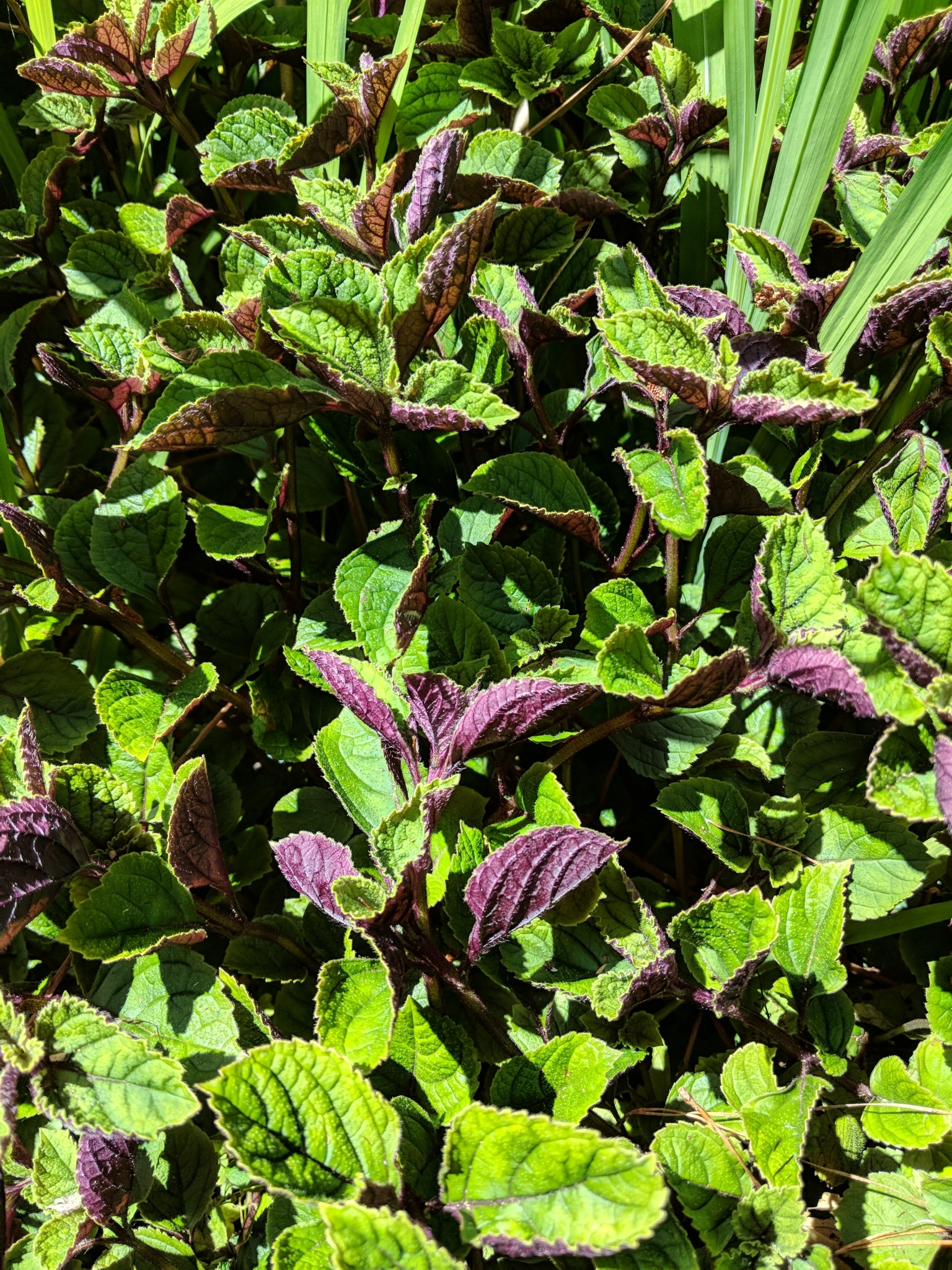
The leaves are rounded and the real interest lies in their colouring: 'Easy Gold' shows yellow upper leaves with green veins and a green central splash, with dark red-purple undersides, while 'Richard' carries heavily veined dark green to maroon-purple foliage that releases a scent when crushed. From spring to autumn both send up spikes of small, tubular, two-lipped flowers, pale purple in 'Easy Gold' and mauve-pink in 'Richard'.
Source: RHS
Largely Trouble Free
This plant is generally described as pest-free and disease-free, which counts among its more understated virtues.
Source: RHS
Little Pruning Needed
For the most part no pruning is required. The exception is 'Richard', which if caught by frost can be cut back by about a third at the end of winter to encourage fresh growth.
Source: RHS
Care recipe
The species record — the baseline every cultivar inherits unless it says otherwise.
Care notes are early — not yet verified
- Light
- ai:claude-opus-4-8
- Water
- ai:claude-opus-4-8 (range 5-9d)
- Humidity
- ai:claude-opus-4-8
- Soil
- ai:claude-fable-5
- Care
- ai:claude-fable-5
Bright, indirect
≈ every 9 days
Medium
10–25 °C
Well-draining general potting mix
Softwood stem cuttings root easily
Balanced liquid feed monthly in spring and summer
Fast
Spikes of small white-to-mauve flowers in late summer
Not yet documented
This is where toxicity lives — every cultivar of this species inherits it and none can override it.
Reference images
Every image credited. Licenses link to their deeds.
PrimarySources: ai:claude-opus-4-8 · ai:claude-opus-4-8 (range 5-9d) · ai:claude-fable-5
Kept true by its growers
Every fact here carries its source. Grow Speckled Spur Flower yourself? What you’ve observed — how it drinks, how it holds its color, a name that’s off — and a clear photo of your plant are exactly what keep this page honest. Contributions are reviewed before anything changes.
Sign in to add what you know →