Species · genus Platycerium · Polypodiaceae
Elkhorn Fern
Platycerium bifurcatum (Cav.) C.Chr.
Also known as: Common Staghorn Fern · Staghorn Fern
Cultivars of P. bifurcatum
The named forms growers keep — each with its own page, each honest about how much we know.
No named cultivars catalogued under P. bifurcatum yet. When growers document a stable, named form, it earns its own page here.
Guide
The species-level account. Cultivar pages build on this and say where they differ.
An Antlered Epiphyte
Platycerium bifurcatum, the common staghorn fern, is an evergreen epiphytic fern grown for its distinctive forked fronds. It carries the common names elkhorn and staghorn fern, and antelope ears, in a nod to the branched shape of its fertile foliage.
Source: RHS
Forests of the Pacific
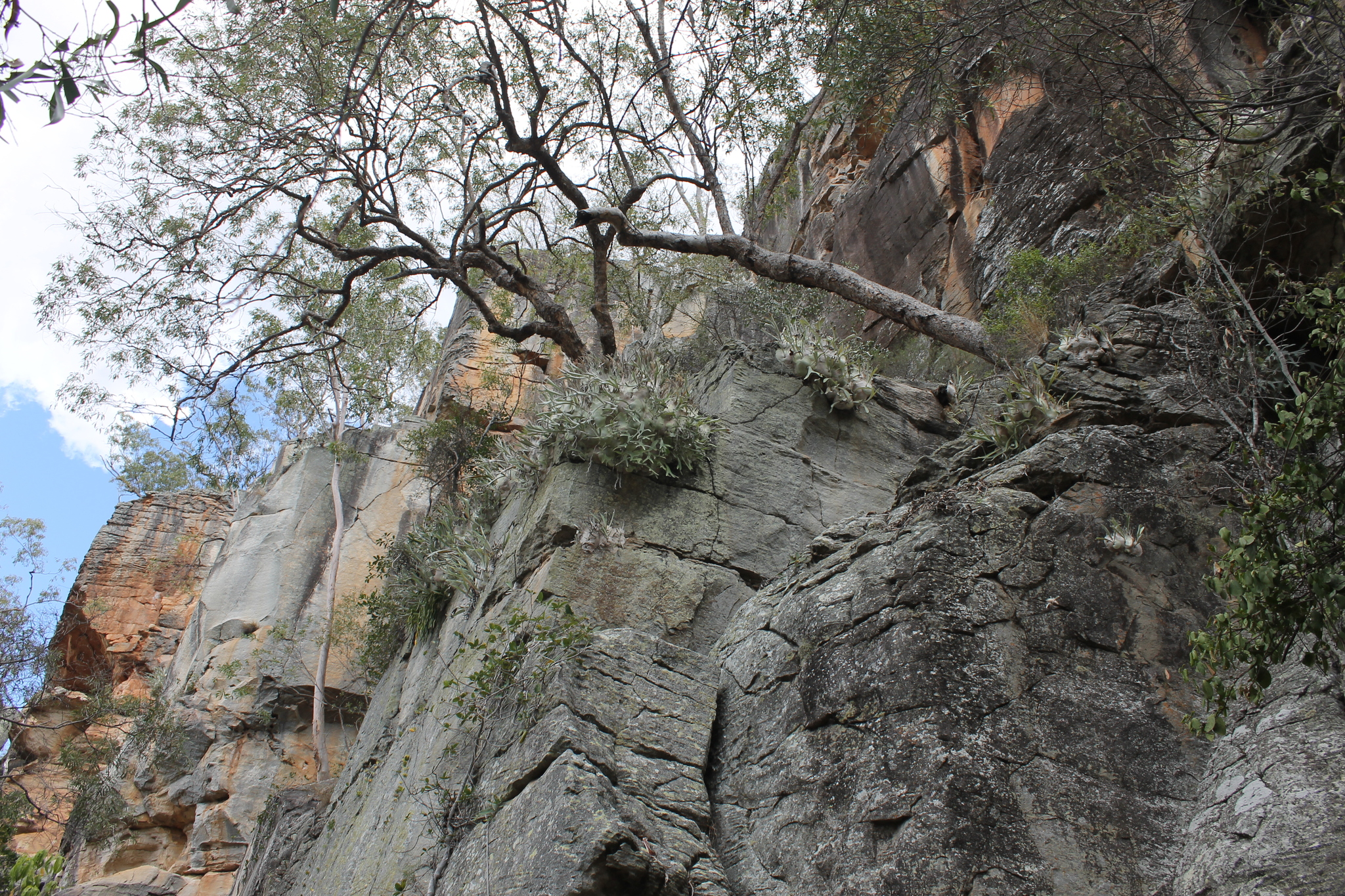
This fern comes from Southeast Asia, Polynesia, and subtropical Australia, where it is found growing on tree trunks and branches rather than in soil. Its epiphytic habit there explains why it is so often mounted rather than potted in cultivation.
Source: Missouri Botanical Garden
Bright Shade and Humidity
Give it partial shade or bright filtered light rather than full sun, and keep it in a warm, humid environment. Water crowns regularly during growth, letting roots dry slightly between waterings, and feed with a balanced liquid fertiliser monthly; in winter water is best given sparingly. The roots should never be allowed to fully dry out, and an occasional dunking of the root ball can help sustain that humidity.
Source: Missouri Botanical Garden
Spores or Plantlets
New plants can be raised by sowing ripe spores or by detaching the plantlets that form at the base. Note that raising this fern from spores at home is not straightforward and asks for patience.
Source: Missouri Botanical Garden
Two Kinds of Frond
The plant produces two distinct types of leaves: small, heart-shaped sterile fronds that clasp the root crown, and larger grey-green fertile fronds that arch outward and can reach up to 90cm. Those fertile fronds are repeatedly forked into strap-shaped segments, covered in a grayish felt, and bear brown spore patches beneath their tips.
Source: RHS
Watch for Scale
Scale insects are the main pest to watch for on this fern. Beyond that it is otherwise largely untroubled by insects or disease.
Source: RHS
Little Pruning Needed
This is a low-maintenance plant that asks for no routine pruning. It is often mounted on a slab of bark or cork board, with peat moss packed around the crown, or grown in a hanging basket using an epiphytic or sphagnum mix, and pot-grown specimens can be watered from below.
Source: Missouri Botanical Garden
Care recipe
The species record — the baseline every cultivar inherits unless it says otherwise.
Care notes are early — not yet verified
- Light
- ai:claude-opus-4-8
- Water
- ai:claude-opus-4-8 (range 7-14d)
- Humidity
- ai:claude-opus-4-8
- Soil
- ai:claude-fable-5
- Care
- ai:claude-fable-5
Bright, indirect
≈ every 14 days
High
15–27 °C
Epiphytic mount or loose bark and sphagnum mix
Division of offsets (pups) from the clump
Dilute feed monthly in the growing season, applied to the fronds
Moderate
Non-flowering fern; reproduces by spores on the fronds
Not yet documented
This is where toxicity lives — every cultivar of this species inherits it and none can override it.
Reference images
Every image credited. Licenses link to their deeds.
PrimarySources: ai:claude-opus-4-8 · ai:claude-opus-4-8 (range 7-14d) · ai:claude-fable-5
Kept true by its growers
Every fact here carries its source. Grow Elkhorn Fern yourself? What you’ve observed — how it drinks, how it holds its color, a name that’s off — and a clear photo of your plant are exactly what keep this page honest. Contributions are reviewed before anything changes.
Sign in to add what you know →