Species · genus Pilea · Urticaceae
Creeping Charlie
Pilea nummulariifolia (Sw.) Wedd.
Cultivars of P. nummulariifolia
The named forms growers keep — each with its own page, each honest about how much we know.
No named cultivars catalogued under P. nummulariifolia yet. When growers document a stable, named form, it earns its own page here.
Guide
The species-level account. Cultivar pages build on this and say where they differ.
A Trailing Pilea
Creeping Charlie, botanically Pilea nummulariifolia, is one of the trailing species within the wider pilea group of foliage houseplants. It belongs to the nettle family, Urticaceae, and is grown for its cascading habit rather than flowers, which are insignificant.
Source: RHS
Bright Spot, Steady Water
Pileas as a group prefer bright but indirect light in a warm room, sitting near a north-, east-, or west-facing window and kept above 10°C, away from draughts. Water once the top few centimetres of compost have started to dry, easing off in winter, and never let the pot sit in standing water. A monthly to bi-monthly balanced liquid feed from April to September supports steady growth, and as a trailing type this one is best given a tall pot, shelf, or hanging planter to let its stems hang, or simply room to spread across a surface.
Source: RHS
Easy From Cuttings
Trailing pileas such as this one are readily propagated by softwood stem-tip cuttings taken in spring and summer, inserted into gritty, free-draining, peat-free compost and kept humid until rooted. Straggly growth can also simply be trimmed back to encourage a bushier trail.
Source: RHS
Deeply Veined Trailers
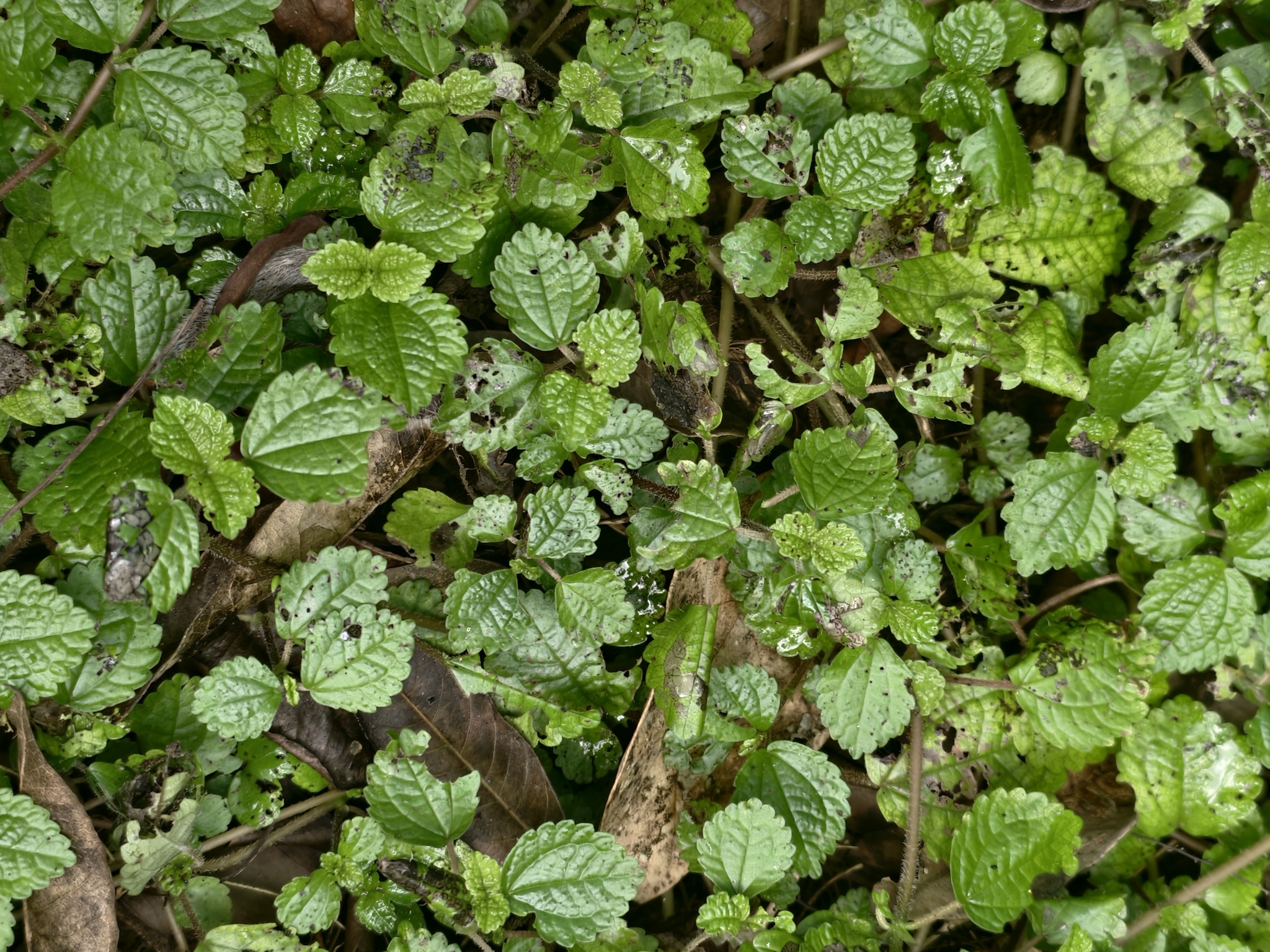
This pilea sends out long, pinky-brown stems clothed in small, rounded, deeply veined green leaves. Like other pileas, its stems are slightly succulent, and the leaves can carry attractive texture or markings even without bold colour.
Source: RHS
Sap-Suckers to Check For
Keep an eye out for sap-sucking insects such as mealybugs, red spider mites, scale insects, and thrips, which are the common pest concerns across the pilea group.
Source: RHS
Watch The Warning Signs
Pileas are generally trouble-free, but a few signs are worth knowing: red-brown flushed leaves usually point to too much direct sun, yellowing between the veins suggests a nutrient deficiency calling for a balanced feed, and curling or puckering leaves signal poor growing conditions from watering or light gone astray. White deposits on leaf undersides are often just harmless mineral marks or guttation from temperature swings, though grey mould can take hold in overly humid settings.
Source: RHS
Safe Around Pets
For households with animals, creeping Charlie is a reassuring choice: it is listed as non-toxic to dogs, cats, and horses.
Source: ASPCA
Care recipe
The species record — the baseline every cultivar inherits unless it says otherwise.
Care notes are early — not yet verified
- Light
- ai:claude-opus-4-8
- Water
- ai:claude-opus-4-8 (range 5-9d)
- Humidity
- ai:claude-opus-4-8
- Soil
- ai:claude-fable-5
- Care
- ai:claude-fable-5
Bright, indirect
≈ every 9 days
High
16–26 °C
Rich, moisture-retentive but well-draining mix
Trailing stem cuttings; roots readily at nodes
Balanced liquid feed monthly while actively growing
Fast
Small inconspicuous flowers; prized as a trailing groundcover
Not yet documented
This is where toxicity lives — every cultivar of this species inherits it and none can override it.
Reference images
Every image credited. Licenses link to their deeds.
Sources: ai:claude-opus-4-8 · ai:claude-opus-4-8 (range 5-9d) · ai:claude-fable-5
Kept true by its growers
Every fact here carries its source. Grow Creeping Charlie yourself? What you’ve observed — how it drinks, how it holds its color, a name that’s off — and a clear photo of your plant are exactly what keep this page honest. Contributions are reviewed before anything changes.
Sign in to add what you know →