Species · genus Pilea · Urticaceae
Aluminium Plant
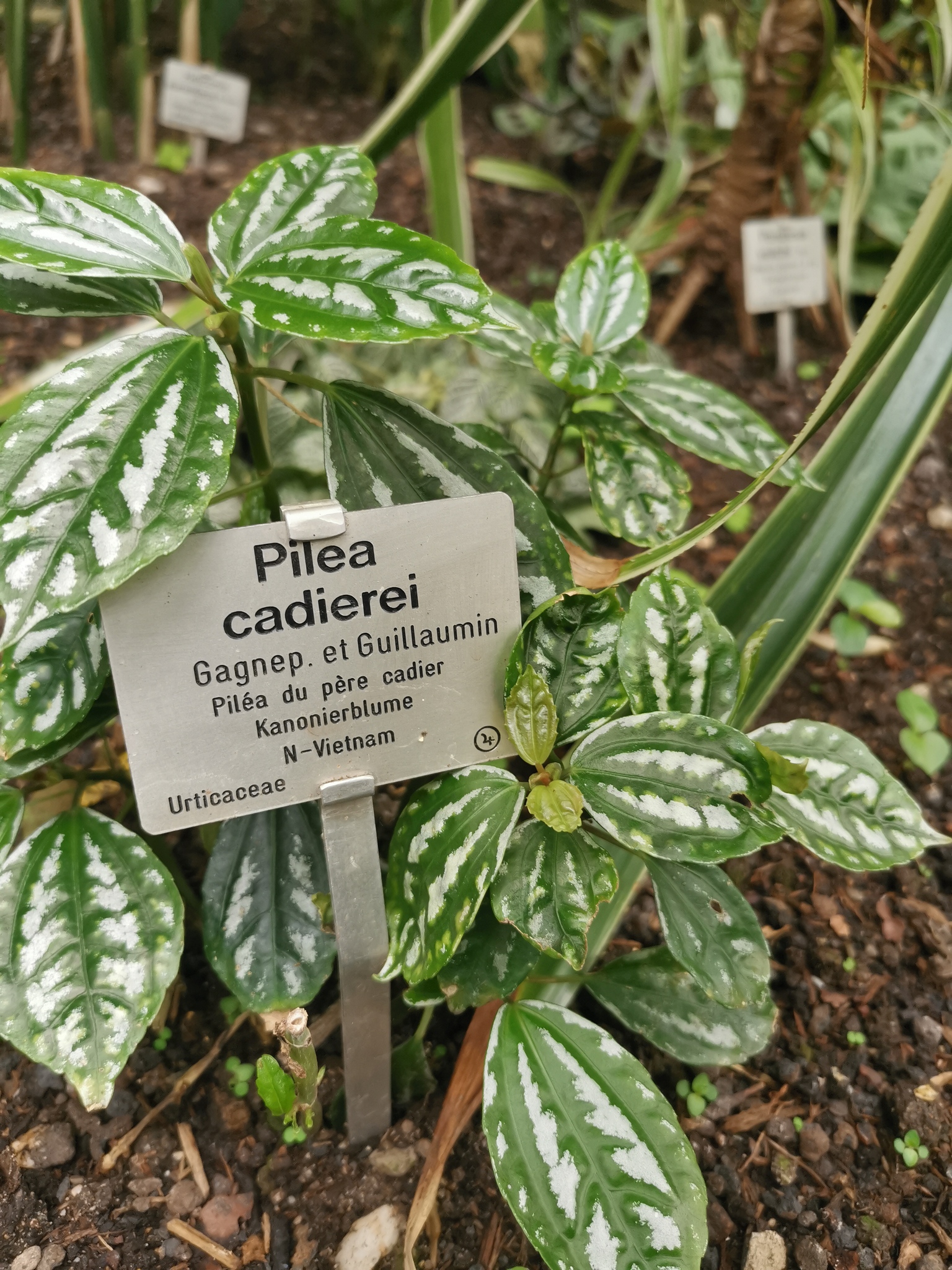
Pilea cadierei Gagnep. & Guillaumin
Also known as: Watermelon Pilea
Cultivars of P. cadierei
The named forms growers keep — each with its own page, each honest about how much we know.
No named cultivars catalogued under P. cadierei yet. When growers document a stable, named form, it earns its own page here.
Guide
The species-level account. Cultivar pages build on this and say where they differ.
A Nettle Relative With Silver Leaves
The aluminum plant, Pilea cadierei, is an evergreen perennial grown almost entirely for its foliage rather than its flowers. It belongs to the nettle family, though it carries none of the sting, and its main appeal is the metallic sheen scattered across each leaf.
Source: Epic Gardening
From Tropical Vietnam and China
This plant is native to the tropical jungles of Vietnam and China, where it grows low to the ground beneath the forest canopy. Its common name, watermelon pilea, comes from the silvery stripe patterns on the leaves, which recall the markings on a watermelon rind, though the plant has no true relation to either aluminum or watermelon.
Source: Epic Gardening
Bright Shade and Steady Moisture
This plant wants bright but indirect light for at least four hours a day; direct sun can scorch the leaves, while too little light causes stretching toward the nearest window. Water when the top quarter inch of soil has dried, keeping the mix evenly moist but never soggy, and taper off watering and feeding as the weather cools. Humidity matters a good deal here, since this is a jungle plant at heart, so a pebble tray, humidifier, or a steamy bathroom window all suit it well, and a loamy, well-draining, organically rich soil rounds out the picture.
Source: Epic Gardening
Rooting From Stem Tips
Stem tip cuttings are the standard and easiest way to propagate this plant. Take cuttings from healthy new growth in spring or summer, strip the lower leaves, and root them in moistened soil under warm conditions with high humidity, covering the cutting to hold moisture in while it establishes.
Source: Epic Gardening
Foliage Splashed With Silver
Each oval leaf is a mid-range green with slightly raised silvery patches that look almost painted on, edged in fine but harmless teeth and tipped with a point. The plant grows in a clumping, bushy habit, typically reaching about 12 inches tall, with dwarf cultivars such as Pilea cadierei minima staying closer to 6 inches. Flowers, when they appear, are pale green and easy to miss, and fruiting is rare.
Source: Epic Gardening
Mealybugs and Spider Mites
Mealybugs show up as small cottony white clusters and, if left alone, can lead to leaf drop; a cotton swab with rubbing alcohol or a neem oil spray helps manage them. Spider mites are harder to spot directly but also cause leaf drop in numbers, and neem oil or an organic pyrethrin spray can knock them back.
Source: Epic Gardening
Reading Light and Water Stress
Most trouble with this plant traces back to light or water. Too much direct sun yellows and droops the leaves, while too little light causes stretchy, unattractive growth reaching for a window. Dry soil brings on wilting, whereas soil that stays soggy invites root rot, so drainage holes and a watch on that top quarter inch of soil matter.
Source: Epic Gardening
Pinching Back and Repotting
Pinch back leggy stems just above a leaf joint to keep the plant bushy, and rotate it periodically so it doesn't lean toward the light. Because plants tend to grow leggy with age, many growers simply replace an older specimen with a fresh rooted cutting after a few years. Repot in spring once roots are tightly packed, moving up to a pot no more than an inch wider and settling the plant at its original depth.
Source: Epic Gardening
Care recipe
The species record — the baseline every cultivar inherits unless it says otherwise.
Care notes are early — not yet verified
- Light
- ai:claude-opus-4-8
- Water
- ai:claude-opus-4-8 (range 5-10d)
- Humidity
- ai:claude-opus-4-8
- Soil
- ai:claude-fable-5
- Care
- ai:claude-fable-5
Bright, indirect
≈ every 10 days
Medium
16–26 °C
Light, well-draining peat-based mix with perlite
Stem tip cuttings rooted in moist mix
Balanced liquid feed monthly in spring and summer
Moderate
Insignificant tiny flowers; grown for its silver-patterned foliage
Non-toxic to cats & dogs
Aluminum/watermelon pilea — ASPCA non-toxic. (Other Pilea, incl. P. peperomioides, are NOT ASPCA-listed — left unknown.) This is where toxicity lives: every cultivar of this species inherits it and none can override it.
Reference images
Every image credited. Licenses link to their deeds.
PrimarySources: ai:claude-opus-4-8 · ai:claude-opus-4-8 (range 5-10d) · ai:claude-fable-5 · ASPCA
Kept true by its growers
Every fact here carries its source. Grow Aluminium Plant yourself? What you’ve observed — how it drinks, how it holds its color, a name that’s off — and a clear photo of your plant are exactly what keep this page honest. Contributions are reviewed before anything changes.
Sign in to add what you know →