Species · genus Phlebodium · Polypodiaceae
Gold-foot Fern
Phlebodium aureum (L.) J.Sm.
Also known as: Golden Polypody · Hare-foot Fern · Rabbit-foot Fern · Blue Star Fern · Cabbage Palm Fern
Cultivars of P. aureum
The named forms growers keep — each with its own page, each honest about how much we know.
No named cultivars catalogued under P. aureum yet. When growers document a stable, named form, it earns its own page here.
Guide
The species-level account. Cultivar pages build on this and say where they differ.
A Blue-Green Creeping Fern
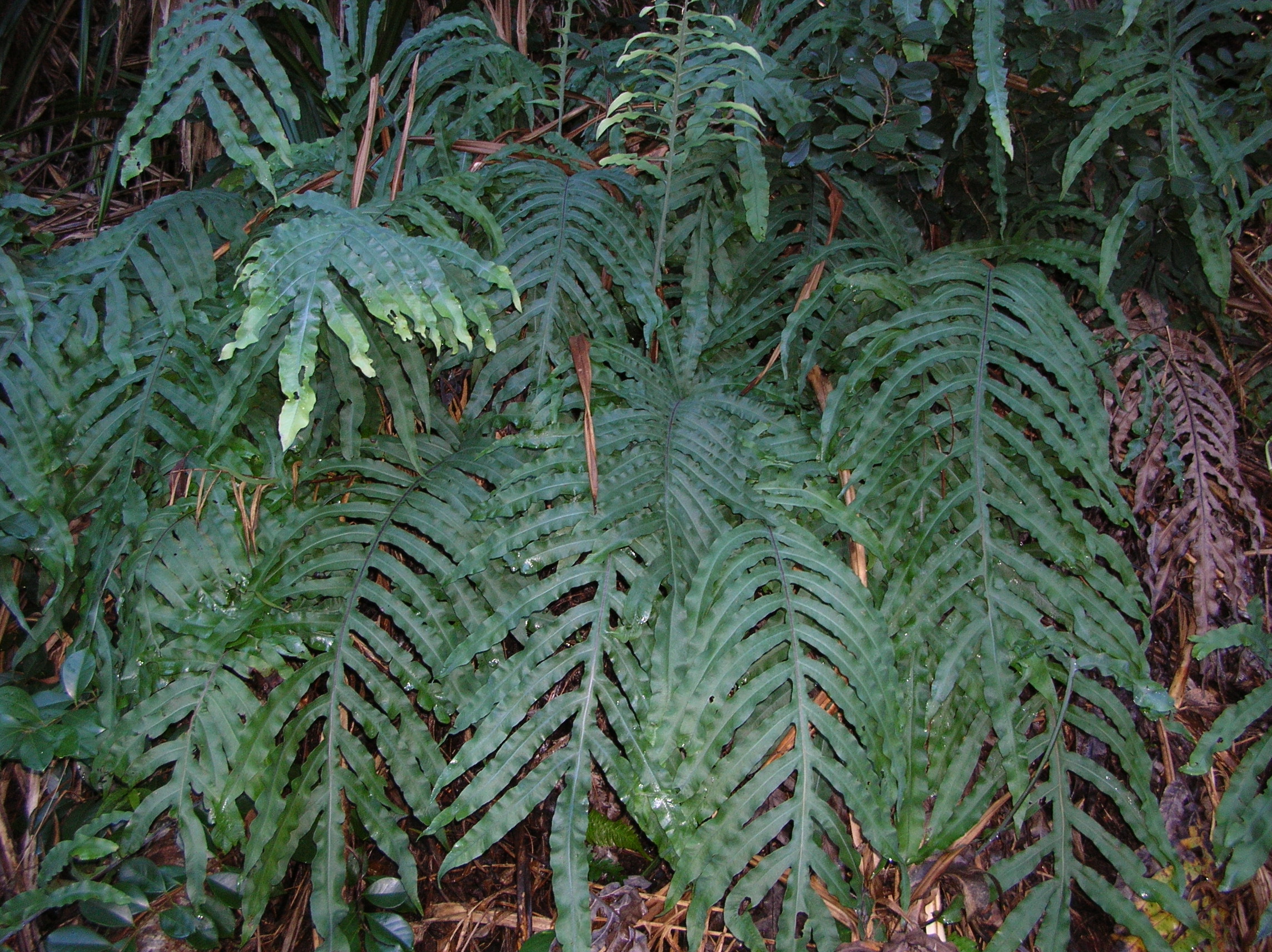
Phlebodium aureum, the golden polypody, is a tender evergreen fern grown as a houseplant for its arching, blue-green fronds. It spreads by creeping, hairy rhizomes rather than forming a single crown, giving it a loose, clump-forming habit.
Source: RHS
A Tropical American Native
This fern's natural range lies in tropical America. In cultivation it has produced several named forms, such as 'Blue Star' and the trade selection Davana, each varying somewhat in frond colour and size.
Source: RHS
Light, Water, and Feed
Grow this fern out of direct sunlight, in partial shade or bright filtered light, and keep it away from cold drafts or direct heat. Water generously once the pot begins to dry, letting water run through the drainage holes, then ease off through winter. During the growing season a regular or monthly balanced liquid feed helps it along, and misting is worthwhile wherever humidity runs low.
Source: RHS
By Spore or Division
Phlebodium aureum can be propagated by dividing the rhizomes, best done in spring, or by sowing spores at a warm 19–24°C once they are ripe.
Source: RHS
Wavy, Lobed Fronds
The fronds are pinnate and lobed, divided into wavy, strap-like segments that can reach up to 40cm long. Colouring ranges through shades of blue-green to yellow-green depending on the selection, and the creeping rhizomes are clothed in scales.
Source: RHS
Watch for Scale
This fern is generally trouble-free, though scale insects may occasionally take hold, so it is worth checking the fronds and rhizomes now and then.
Source: RHS
Minimal Pruning Needed
Little routine maintenance is required beyond removing any dead or damaged fronds as they appear. The plant is generally free of disease as well.
Source: RHS
Care recipe
The species record — the baseline every cultivar inherits unless it says otherwise.
Care notes are early — not yet verified
- Light
- ai:claude-opus-4-8
- Water
- ai:claude-opus-4-8 (range 5-10d)
- Humidity
- ai:claude-opus-4-8
- Soil
- ai:claude-fable-5
- Care
- ai:claude-fable-5
Bright, indirect
≈ every 10 days
High
15–27 °C
Loose, peaty, well-draining mix with added perlite
Division of the creeping rhizome, or spores
Half-strength balanced feed monthly in the growing season
Moderate
Never flowers — a spore-bearing fern
Not yet documented
This is where toxicity lives — every cultivar of this species inherits it and none can override it.
Reference images
Every image credited. Licenses link to their deeds.
Sources: ai:claude-opus-4-8 · ai:claude-opus-4-8 (range 5-10d) · ai:claude-fable-5
Kept true by its growers
Every fact here carries its source. Grow Gold-foot Fern yourself? What you’ve observed — how it drinks, how it holds its color, a name that’s off — and a clear photo of your plant are exactly what keep this page honest. Contributions are reviewed before anything changes.
Sign in to add what you know →