Species · genus Philodendron · Araceae
Ecuador Philodendron
Philodendron verrucosum L.Mathieu ex Schott
Cultivars of P. verrucosum
The named forms growers keep — each with its own page, each honest about how much we know.
No named cultivars catalogued under P. verrucosum yet. When growers document a stable, named form, it earns its own page here.
Guide
The species-level account. Cultivar pages build on this and say where they differ.
An Ecuador Philodendron
Philodendron verrucosum Incensi is an evergreen perennial vine grown for its striking velvet foliage. It belongs to the aroid family Araceae, in a genus of shrubs, trees and climbers known for arum-like flowers held within a spathe.
Source: RHS
Rainforest Climber From Ecuador
In the wild this vine is native to the tropical rainforests of Central America, Ecuador, Colombia and Peru, where it climbs up the trunks of forest trees. Incensi is a named cultivar of the species, registered as 'Ppipve007'.
Source: RHS
Humidity, Light And Feeding
This plant wants bright but diffused light and appreciates higher atmospheric humidity than many of its relatives in the genus. Grow it in an open, ericaceous, well-drained yet moisture-retentive mix, perhaps lava rock or pumice with fine fir bark and leafmould or chopped sphagnum. Let the compost surface dry before watering thoroughly in the growing season, easing off in winter, and feed monthly with a liquid houseplant fertiliser from April to September, stopping over winter.
Source: RHS
Cuttings Do The Work
New plants are raised from stem-tip or leaf bud cuttings.
Source: RHS
Velvet Leaves, Bristled Stems
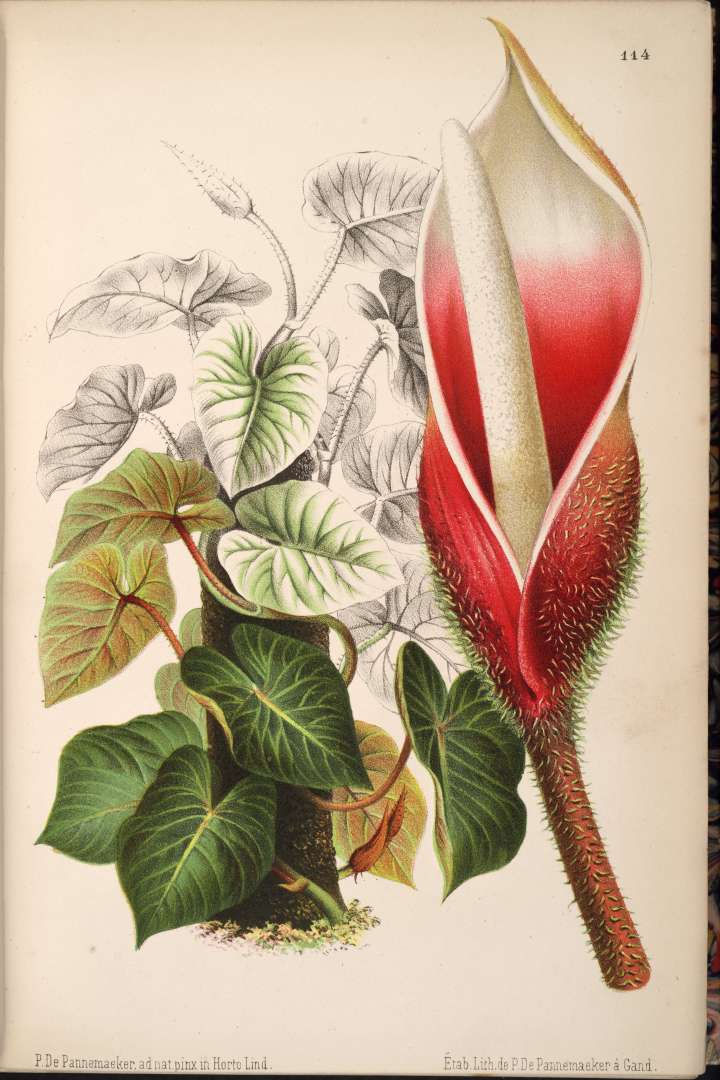
The heart-shaped leaves can grow beyond 30cm across at maturity, with a velvety deep green surface marked by bright green veins and a reddish-green underside. Leaf stalks and stems are reddish-green too, covered in soft, pale, translucent bristles. Given ideal conditions, mature specimens can flower, producing a greenish-white spathe flushed red at the base around a greenish-white spadix.
Source: RHS
Watch For Sap Feeders
Red spider mite, mealybugs and scale insects are the pests most likely to trouble this philodendron.
Source: RHS
Light Pruning, Occasional Repotting
No real pruning is needed beyond trimming stems as required. Repot every two to three years, and generally the plant is disease-free.
Source: RHS
Care recipe
The species record — the baseline every cultivar inherits unless it says otherwise.
Care notes are early — not yet verified
- Light
- ai:claude-opus-4-8
- Water
- ai:claude-opus-4-8 (range 5-10d)
- Humidity
- ai:claude-opus-4-8
- Soil
- ai:claude-fable-5
- Care
- ai:claude-fable-5
Bright, indirect
≈ every 10 days
High
18–27 °C
Moisture-retentive airy mix of sphagnum, bark and perlite
Stem cuttings with a node rooted on a damp pole
Diluted balanced feed monthly in spring and summer
Moderate
Rarely flowers indoors
Toxic to cats & dogs & humans
Araceae contain insoluble calcium oxalate crystals, which irritate the mouth and digestive tract if chewed. This is where toxicity lives: every cultivar of this species inherits it and none can override it.
Reference images
Every image credited. Licenses link to their deeds.
Sources: ai:claude-opus-4-8 · ai:claude-opus-4-8 (range 5-10d) · ai:claude-fable-5 · ai:claude-opus-4-8 (family inference)
Kept true by its growers
Every fact here carries its source. Grow Ecuador Philodendron yourself? What you’ve observed — how it drinks, how it holds its color, a name that’s off — and a clear photo of your plant are exactly what keep this page honest. Contributions are reviewed before anything changes.
Sign in to add what you know →