Species · genus Philodendron · Araceae
Red Bristle Philodendron
Philodendron squamiferum Poepp.
Also known as: Hairy Philodendron
Cultivars of P. squamiferum
The named forms growers keep — each with its own page, each honest about how much we know.
No named cultivars catalogued under P. squamiferum yet. When growers document a stable, named form, it earns its own page here.
Guide
The species-level account. Cultivar pages build on this and say where they differ.
A Bold, Textured Climber
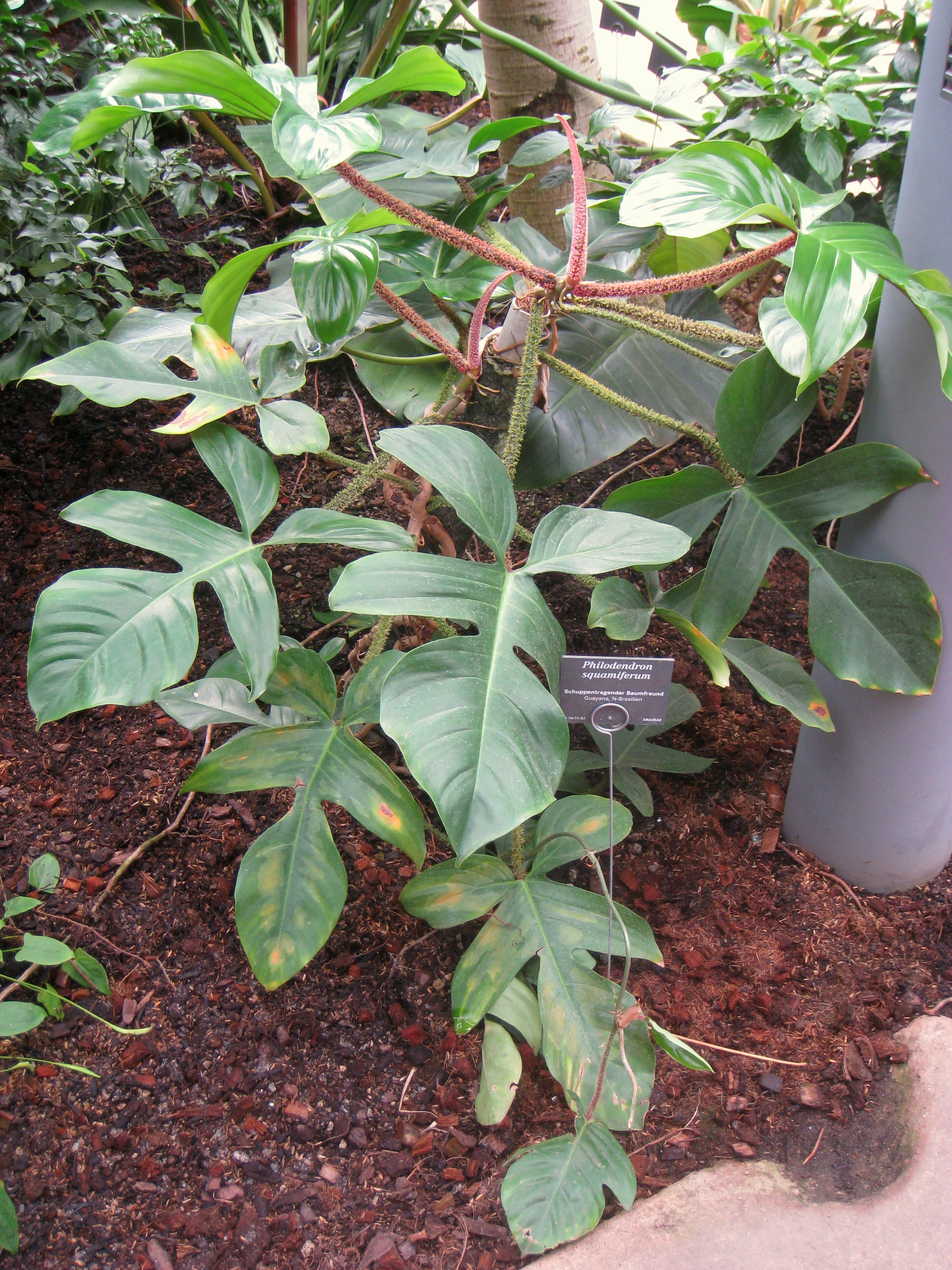
Philodendron squamiferum is a climbing aroid grown for its large, lobed leaves and its distinctively fuzzy leaf stems. It reads as a bold but easy-care houseplant, with mature foliage reminiscent of a Monstera.
Source: Costa Farms
Roots in the Rainforest
This species was first described by Poeppig and Endlicher in 1845, and it belongs to the arum family, Araceae. Its native range lies in the wet tropical lowlands of the Guianas and northern Brazil, where it grows as a climber under the forest canopy.
Source: Kew
Light, Water, and Feeding
Give it bright, indirect light rather than direct sun, ideally within a few feet of an east- or west-facing window, since too much direct light can bleach the leaves. Let the potting mix dry out somewhat between waterings, as overwatering is the greater risk, and expect above-average humidity to keep leaf edges from browning. Feed during the growing months of spring and summer, either with a time-release fertilizer worked into the mix or a water-soluble feed at label rates.
Source: Costa Farms
Stem and Leaf Cuttings
This philodendron is propagated by stem-tip cuttings or leaf bud cuttings.
Source: RHS
Fuzzy Stems, Lobed Leaves
The most memorable trait here is the petiole, the stalk joining leaf to stem, which is covered in coarse hairs that redden as they mature. Leaves are dark green, deeply lobed, and can stretch 18 inches or more on a well-grown plant. Left to climb, it becomes a substantial floor specimen; kept pinched back, it stays compact enough for a desk or tabletop.
Source: Costa Farms
Watch for Scale and Mites
This species may be susceptible to scale insects and glasshouse red spider mite.
Source: RHS
Reading the Leaves
Yellowing and premature drop of the oldest leaves usually points to overwatering. Crispy, brown leaf edges signal air that's too dry, while pale, bleached patches suggest too much direct sun.
Source: Costa Farms
Support, Prune, Repot
Given a totem or trellis, this vining plant needs little pruning beyond removing old leaves as they age. Without support, regularly pinching new growth tips keeps it fuller and more compact. The RHS notes repotting every two to three years, alongside monthly balanced liquid feeding and freer watering during the growing season.
Source: RHS
Care recipe
The species record — the baseline every cultivar inherits unless it says otherwise.
Care notes are early — not yet verified
- Light
- ai:claude-opus-4-8
- Water
- ai:claude-opus-4-8 (range 7-12d)
- Humidity
- ai:claude-opus-4-8
- Soil
- ai:claude-fable-5
- Care
- ai:claude-fable-5
Bright, indirect
≈ every 12 days
High
16–29 °C
Airy aroid mix heavy on bark and perlite
Stem cuttings with a node rooted on a damp pole
Diluted balanced feed monthly during active growth
Moderate
Rarely flowers indoors
Toxic to cats & dogs & humans
Araceae contain insoluble calcium oxalate crystals, which can irritate the mouth and digestive tract if chewed. This is where toxicity lives: every cultivar of this species inherits it and none can override it.
Reference images
Every image credited. Licenses link to their deeds.
PrimarySources: ai:claude-opus-4-8 · ai:claude-opus-4-8 (range 7-12d) · ai:claude-fable-5 · ai:claude-opus-4-8 (family inference)
Kept true by its growers
Every fact here carries its source. Grow Red Bristle Philodendron yourself? What you’ve observed — how it drinks, how it holds its color, a name that’s off — and a clear photo of your plant are exactly what keep this page honest. Contributions are reviewed before anything changes.
Sign in to add what you know →