Species · genus Philodendron · Araceae
Heartleaf Philodendron
Philodendron hederaceum (Jacq.) Schott
Also known as: Heart-leaf Philodendron · Vilevine
Cultivars of P. hederaceum
The named forms growers keep — each with its own page, each honest about how much we know.
No named cultivars catalogued under P. hederaceum yet. When growers document a stable, named form, it earns its own page here.
Guide
The species-level account. Cultivar pages build on this and say where they differ.
A Sweetheart of a Vine
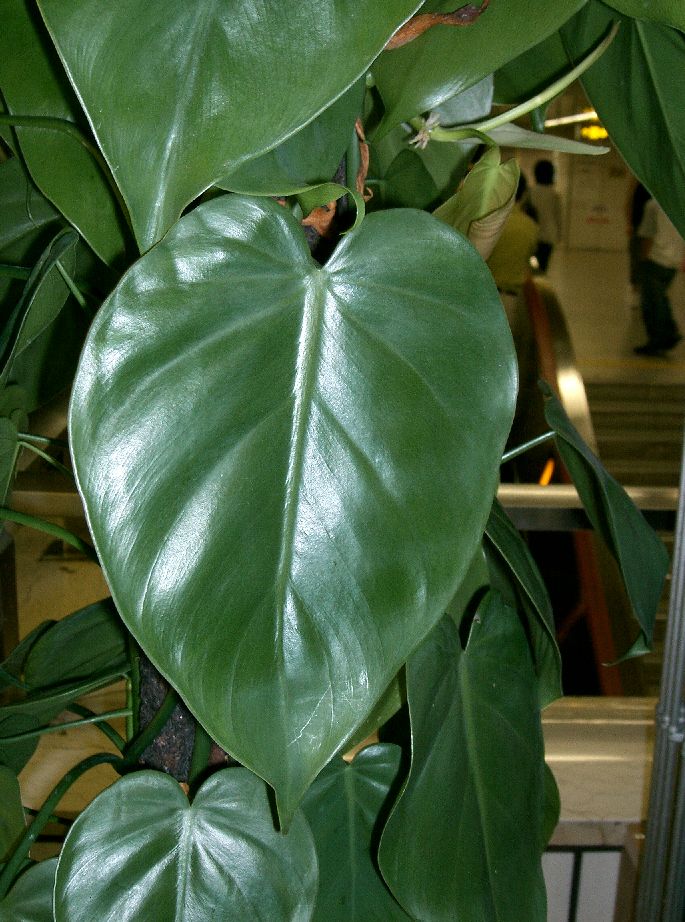
Heartleaf philodendron, Philodendron hederaceum, is one of the most familiar houseplants around, prized for its glossy, heart-shaped leaves and its willingness to grow under almost any roof. It can be trained upright on a support or left to trail from a hanging basket, and either way it asks little of the people who keep it.
Source: Epic Gardening
Out of Central America
This philodendron traces back to the Caribbean and Central America, part of a genus of roughly 489 recognized species. Like its houseplant cousin pothos, its taste for warmth means most of these tropicals only survive our climates indoors.
Source: Epic Gardening
Light, Water, Warmth
Give it bright, indirect light and it will reward you, though it tolerates dimmer corners by stretching its leaves and dulling its color. Keep the soil moist but not soggy in summer, letting the top half inch dry out over winter, and hold temperatures between 65 and 85°F, since anything below 60°F causes damage. A half-strength dose of standard houseplant fertilizer during the growing season is plenty, with feeding paused through fall and winter.
Source: Epic Gardening
Rooting a Cutting
The RHS recommends taking stem cuttings from spring to late summer: snip about 10cm of stem just below a leaf joint, strip the lower leaves, and stand it in a glass of water, where roots appear within a couple of weeks. Once well rooted, pot the cutting into a free-draining mix of two parts orchid compost to one part peat-free ericaceous compost.
Source: RHS
Heart-Shaped and Climbing
The RHS notes that Philodendron hederaceum var. hederaceum is grown as a trailing or climbing plant, its long stems set with heart-shaped leaves, and it suits a high shelf or hanging container where those stems can spill downward. In the wild, philodendrons are often hemi-epiphytic, starting life in soil and climbing trees, or germinating on branches and sending roots down to find the ground.
Source: RHS
Watch for Sap-Suckers
The RHS flags mealybugs, red spider mites, and scale insects as the pests to watch for on philodendrons. Keeping conditions steady is the first line of defense against them settling in.
Source: RHS
Reading the Leaves
According to the RHS, overwatering or compost that drains poorly is the usual root of trouble, leading to root rot, yellowing leaves, and eventually collapse if left unchecked. The fix is straightforward: let the compost surface dry out between waterings and never let the plant sit in standing water.
Source: RHS
Repotting and Pruning
Philodendrons can generally stay in the same pot for a couple of years, with spring the best time to move up, and only into a container a few centimetres larger, since an oversized pot keeps compost wet and invites rot. Climbing types appreciate a moss pole to root into as they grow, and if they outgrow their space, cutting back straggly stems in spring just past a leaf node encourages fuller, fresh new growth.
Source: RHS
Care recipe
The species record — the baseline every cultivar inherits unless it says otherwise.
Care notes are early — not yet verified
- Light
- ai:claude-opus-4-8
- Water
- ai:claude-opus-4-8 (range 7-12d)
- Humidity
- ai:claude-opus-4-8
- Soil
- ai:claude-fable-5
- Care
- ai:claude-fable-5
Bright, indirect
≈ every 12 days
Medium
16–27 °C
Light, well-draining aroid or peat-based mix
Node cuttings in water or sphagnum moss
Balanced liquid feed monthly in the growing season
Fast
Rarely flowers indoors
Toxic to cats & dogs & humans
Araceae contain insoluble calcium oxalate crystals that irritate the mouth and digestive tract if chewed. This is where toxicity lives: every cultivar of this species inherits it and none can override it.
Reference images
Every image credited. Licenses link to their deeds.
PrimarySources: ai:claude-opus-4-8 · ai:claude-opus-4-8 (range 7-12d) · ai:claude-fable-5 · ai:claude-opus-4-8 (family inference)
Kept true by its growers
Every fact here carries its source. Grow Heartleaf Philodendron yourself? What you’ve observed — how it drinks, how it holds its color, a name that’s off — and a clear photo of your plant are exactly what keep this page honest. Contributions are reviewed before anything changes.
Sign in to add what you know →