Species · genus Philodendron · Araceae
Philodendron Gloriosum
Philodendron gloriosum André
Also known as: Velvet Philodendron
Cultivars of P. gloriosum
The named forms growers keep — each with its own page, each honest about how much we know.
No named cultivars catalogued under P. gloriosum yet. When growers document a stable, named form, it earns its own page here.
Guide
The species-level account. Cultivar pages build on this and say where they differ.
A Velvet-Leafed Ground Dweller
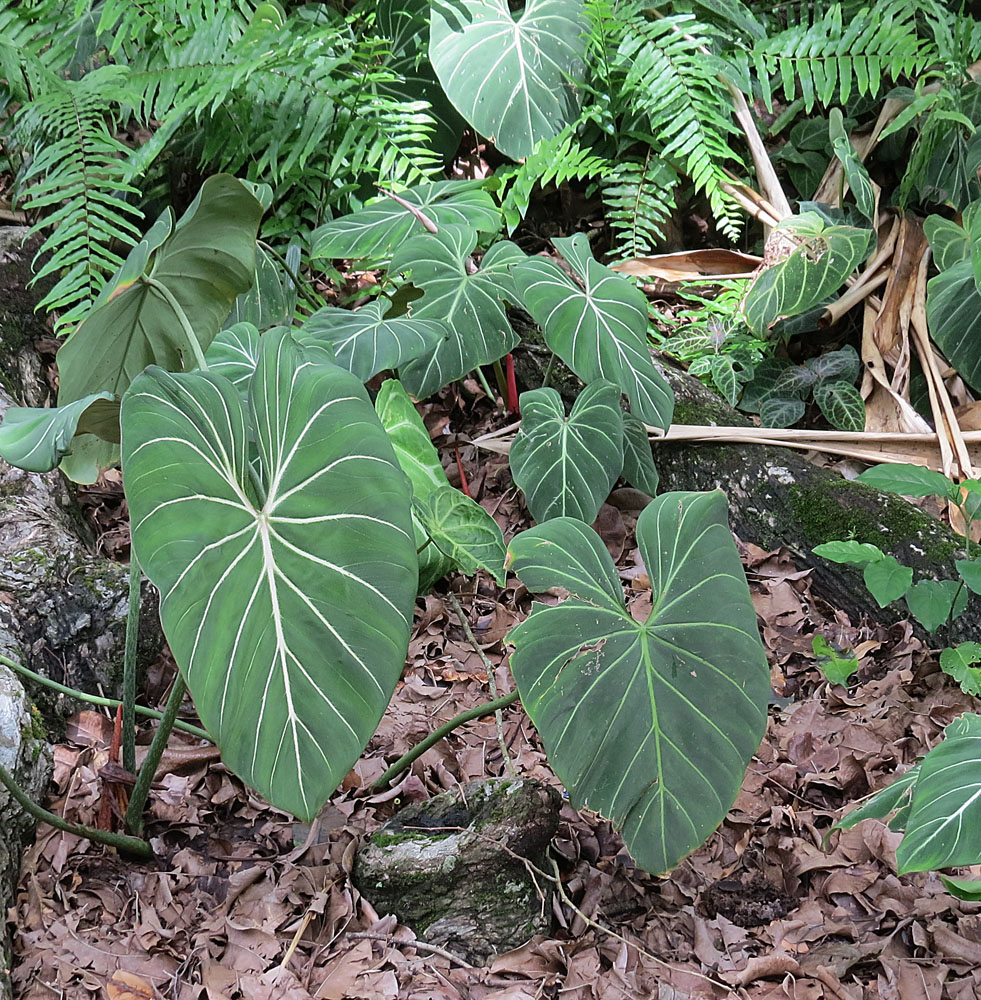
Philodendron gloriosum is a member of the sprawling Araceae family, one of the more than 400 species and cultivars in the Philodendron genus. Unlike its climbing cousins, it stays low, sending large velvety leaves up from a horizontal rhizome rather than scaling a support. Its dark green, heart-shaped foliage laced with pale, silvery veins is what draws collectors to it.
Source: Epic Gardening
A Colombian Discovery
The Philodendron genus dates back to the 1640s, first gathered by botanists Georg Marcgrave and Charles Plumier, though it wasn't recognized as its own genus until 1829. Gloriosum itself was found in 1876 by French botanist Charles Antoine Lemaire, who encountered it growing in Colombia and carried it to Belgium for documentation. It never spread widely beyond a handful of tropical pockets in Central and South America, and it now sits on the IUCN's list of threatened species, known from only about seven wild locations.
Source: Epic Gardening
A Steady, Warm Rhythm
Gloriosum wants bright indirect light, ideally a full day of it near an east-facing window, since its velvety leaves scorch under direct sun. Water only once the top layer of soil has dried and crumbled underfoot, soaking it slowly and deeply while keeping moisture off the leaves. It favors warmth above 65°F, best between 70 and 80°F, alongside humidity in the demanding 60 to 80 percent range, and appreciates a balanced fertilizer during its spring-and-summer growing season.
Source: Epic Gardening
Cuttings From the Rhizome
New plants come from sections of the horizontal rhizome, cut between two leaves while at least two remain on the parent. It helps to let the small rhizome piece callus for a few hours before rooting. Gloriosum cuttings do best rooted in moist sphagnum moss under plastic wrap to hold humidity, kept warm and in indirect light until new shoots appear and it's ready for a pot.
Source: Epic Gardening
Silvery Veins, No Climbing
This philodendron does not climb; it creeps along the ground on a rhizome that grows horizontally, a trait that sets it apart from most of its genus. Its leaves can stretch up to 24 inches, dark olive green with pale creamy, pink, or white veins, sometimes bordered in a touch of purple. Growth is slow, with new leaves occasionally taking a month to unfurl and years passing before the plant reaches its mature size of around three feet. It is often mistaken for the Crystal Anthurium, though gloriosum has fewer, more parallel veins and olive-green leaf undersides rather than coppery ones.
Source: Epic Gardening
Aphids and Mealybugs
The two pests most likely to trouble gloriosum are aphids and mealybugs, both of which settle on the undersides of its large leaves to feed on sap. Left alone, they weaken the plant and can trigger secondary issues, as aphids secrete honeydew that attracts ants. A neem oil solution wiped onto the leaves, or sprayed for larger infestations, generally brings both under control.
Source: Epic Gardening
Reading the Leaves
Yellowing leaves usually point to overwatering or soil that's stayed soggy too long, while browning, curled leaves signal the opposite: a plant going thirsty. Too little light can also yellow the foliage and leave new growth stunted and sparse, whereas too much direct sun brings on brown, crispy patches or dark sunburn spots. Older leaves discoloring and dropping off is simply the plant's natural aging, not cause for concern.
Source: Epic Gardening
Light Touch Upkeep
This is a slow, laid-back plant that asks for little. Occasional pruning just above a node tidies dying leaves and keeps the creeping stems in check, while a monthly wipe with a damp cloth clears dust and helps the leaves photosynthesize. Because the plant grows sluggishly, repotting is rarely needed and is best done in spring or summer, once roots start creeping from the drainage holes.
Source: Epic Gardening
Care recipe
The species record — the baseline every cultivar inherits unless it says otherwise.
Care notes are early — not yet verified
- Light
- ai:claude-opus-4-8
- Water
- ai:claude-opus-4-8 (range 7-12d)
- Humidity
- ai:claude-opus-4-8
- Soil
- ai:claude-fable-5
- Care
- ai:claude-fable-5
Bright, indirect
≈ every 12 days
High
18–29 °C
Loose, breathable aroid mix with bark, perlite and some peat
Rhizome cuttings with an active growth point
Diluted balanced feed monthly during active growth
Slow
Rarely flowers indoors
Toxic to cats & dogs & humans
Araceae contain insoluble calcium oxalate crystals, which irritate the mouth and digestive tract if chewed. This is where toxicity lives: every cultivar of this species inherits it and none can override it.
Reference images
Every image credited. Licenses link to their deeds.
Sources: ai:claude-opus-4-8 · ai:claude-opus-4-8 (range 7-12d) · ai:claude-fable-5 · ai:claude-opus-4-8 (family inference)
Kept true by its growers
Every fact here carries its source. Grow Philodendron Gloriosum yourself? What you’ve observed — how it drinks, how it holds its color, a name that’s off — and a clear photo of your plant are exactly what keep this page honest. Contributions are reviewed before anything changes.
Sign in to add what you know →