Species · genus Philodendron · Araceae
Silver Leaf Philodendron
Philodendron brandtianum K.Krause
Cultivars of P. brandtianum
The named forms growers keep — each with its own page, each honest about how much we know.
No named cultivars catalogued under P. brandtianum yet. When growers document a stable, named form, it earns its own page here.
Guide
The species-level account. Cultivar pages build on this and say where they differ.
The Silver Leaf Philodendron
Philodendron brandtianum is a tropical aroid better known as the Silver Leaf Philodendron, prized for its mottled olive-and-silver foliage. It grows readily as a climber given support, or trails and cascades when left without one, which makes it a flexible presence in a room. Its easy nature has helped it become a popular houseplant in recent years.
Source: Epic Gardening
From South American Canopies
This philodendron hails from the northern reaches of South America, found in Southern Colombia, Northern Brazil, and Bolivia, where it climbs through tropical forest under the tree canopy. The species was named in 1913 by the German botanist Kurt Krause, part of a long lineage of Philodendron discovery that stretches back to seventeenth-century naturalists. The RHS notes it as native to the northern states of South America, growing up trunks and branches in its natural habitat.
Source: Epic Gardening
A Warm, Steady Rhythm
Give this plant bright but diffused or indirect light, since strong direct sun will scorch its sensitive leaves. Keep the compost lightly moist through the growing season from April to September, letting the surface dry before watering thoroughly, and avoid letting it sit in water. Feed monthly with a liquid houseplant fertiliser during that active period, then water more sparingly and stop feeding once growth slows for winter. It generally prefers moist but well-drained, slightly acid to neutral conditions and a sheltered spot out of direct exposure.
Source: RHS
Cuttings or Air-Layering
The simplest route is a stem cutting rooted in water: take a healthy six-inch section in spring or summer, strip the lower leaves, and suspend it in water covered loosely with plastic wrap, changing the water weekly until roots appear in about three weeks. Air-layering is a slower alternative, wrapping damp coconut coir around a vertical cut below a node until roots form over three to four weeks, then potting up the rooted section. The RHS also notes that stem-tip or leaf bud cuttings are a straightforward way to propagate this species.
Source: Epic Gardening
Two Faces, One Plant
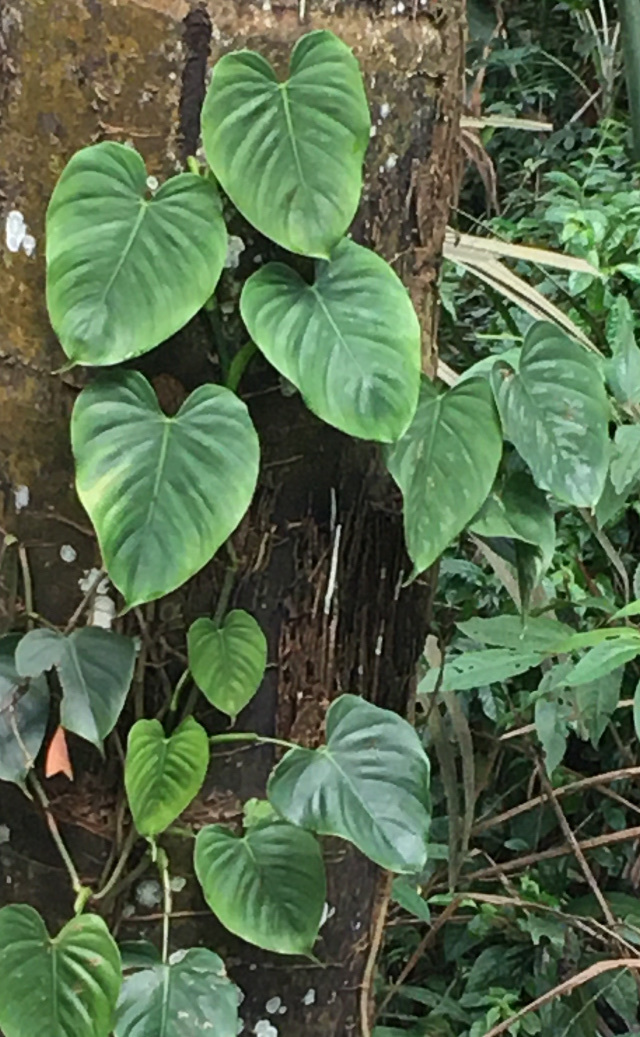
In its youth this philodendron shows heart-shaped leaves heavily marked between the veins with silver, which is the look most houseplant growers know and grow it for. Left to mature and climb high into a tree canopy, however, it eventually produces a quite different adult form: larger, all-green heart-shaped leaves up to 30cm long. Mature plants can also produce greenish-purple spathes, and the species can grow as an epiphyte, hemiepiphyte, or terrestrial plant, with each habit subtly shaping its markings and growth rate.
Source: RHS
Watch for Mites and Mealybugs
The usual troublemakers are spider mites, which spin fine webbing on leaf undersides and feed into leaf cells especially on new growth, and mealybugs, recognizable by their fuzzy white coating as they suck sap and can leave the plant wilted with yellowing leaves. Both can be managed with insecticidal soap or neem oil, with rubbing alcohol useful for spot-treating mealybugs. The RHS also flags scale insects and glasshouse red spider mite as possible visitors, while noting the plant is otherwise generally disease-free.
Source: Epic Gardening
Reading the Leaves
Yellowing leaves most often point to overwatering, poor drainage, or a pot sitting in water, while browning leaves or brown tips suggest underwatering or humidity that has dropped too low. Too much direct sun scorches leaves toward yellow or brown, while too little light also compromises growth and color. Curling, browning leaf edges can signal overfertilizing, and brown, yellow, or black spots point to leaf spot from wet foliage or crowded, poor airflow conditions.
Source: Epic Gardening
Light Pruning, Occasional Repotting
This plant asks little in the way of upkeep: dead or dying leaves and stems can be trimmed away as needed, and an annual tidy keeps it compact, though it's best not to remove too much growth at once. Repotting every two to three years refreshes the soil and nutrients, and is worth doing sooner if roots emerge from the drainage holes or growth stalls. As a climber, training it up a moss pole rather than a plain trellis gives the roots something porous to grip and mimics its natural habit.
Source: Epic Gardening
Care recipe
The species record — the baseline every cultivar inherits unless it says otherwise.
Care notes are early — not yet verified
- Light
- ai:claude-opus-4-8
- Water
- ai:claude-opus-4-8 (range 7-12d)
- Humidity
- ai:claude-opus-4-8
- Soil
- ai:claude-fable-5
- Care
- ai:claude-fable-5
Bright, indirect
≈ every 12 days
Medium
18–29 °C
Light, airy aroid mix rich in bark and perlite
Stem cuttings with a node rooted in water or sphagnum
Diluted balanced feed monthly during active growth
Moderate
Rarely flowers indoors
Toxic to cats & dogs & humans
Araceae contain insoluble calcium oxalate crystals, which irritate mouth and digestive tract if chewed. This is where toxicity lives: every cultivar of this species inherits it and none can override it.
Reference images
Every image credited. Licenses link to their deeds.
PrimarySources: ai:claude-opus-4-8 · ai:claude-opus-4-8 (range 7-12d) · ai:claude-fable-5 · ai:claude-opus-4-8 (family inference)
Kept true by its growers
Every fact here carries its source. Grow Silver Leaf Philodendron yourself? What you’ve observed — how it drinks, how it holds its color, a name that’s off — and a clear photo of your plant are exactly what keep this page honest. Contributions are reviewed before anything changes.
Sign in to add what you know →