Species · genus Philodendron · Araceae
Tree Philodendron
Philodendron bipinnatifidum Schott ex Kunth, 1841
Also known as: Split-leaf Philodendron · Lacy Tree Philodendron · Selloum · Philodendron Selloum · Horsehead Philodendron · Hope Philodendron
Cultivars of P. bipinnatifidum
The named forms growers keep — each with its own page, each honest about how much we know.
No named cultivars catalogued under P. bipinnatifidum yet. When growers document a stable, named form, it earns its own page here.
Guide
The species-level account. Cultivar pages build on this and say where they differ.
A Big, Bold Aroid
The split leaf philodendron is a large, tropical evergreen shrub often confused with the monster, but it is a distinct plant in its own right. It is prized as a houseplant for its dramatic, deeply lobed foliage and its willingness to adapt to indoor life, though it can also be grown outdoors in warm climates.
Source: Epic Gardening
A Tangle of Names
This plant traces back to the tropical rainforests of South America, especially Brazil, Argentina, Paraguay, and Bolivia, with a range that reaches north into Central America. Its naming history is a bit of a muddle: Schott first split it into two species in the 19th century, later research folded them back into one, and a 2018 reclassification briefly moved it into its own genus, Thaumatophyllum, before the name reverted to Philodendron bipinnatifidum in 2024. Whatever the tag on the pot says, nurseries will know the plant by any of its aliases.
Source: Epic Gardening
Bright Light, Even Moisture
Indoors this plant wants bright indirect light and tolerates some gentle morning sun, though greenhouse-raised plants need to be acclimated slowly before any direct exposure. Water when the top inch or two of soil has dried, adjusting for pot size, and keep the plant in a well-draining, nutrient-rich mix. It favors warm rooms between 65 and 80°F and humidity in the 60 to 70 percent range, with growth slowing below 60°F and tip browning setting in if humidity drops under 40 percent; regular feeding usually is not needed given how often the plant is repotted.
Source: Epic Gardening
Three Paths to New Plants
Stem cuttings are the easiest route for younger plants, since their stems are still green and flexible enough to root, while older plants with woody stems generally respond better to air layering. Division works only on mature, multi-stemmed plants and is the fastest way to get an already-rooted specimen, but it does mean disturbing and repotting the parent. Whichever method is used, rooting takes several weeks and goes best in warmth, humidity, and bright indirect light, ideally begun in spring when the plant is actively growing.
Source: Epic Gardening
Slits, Not Holes
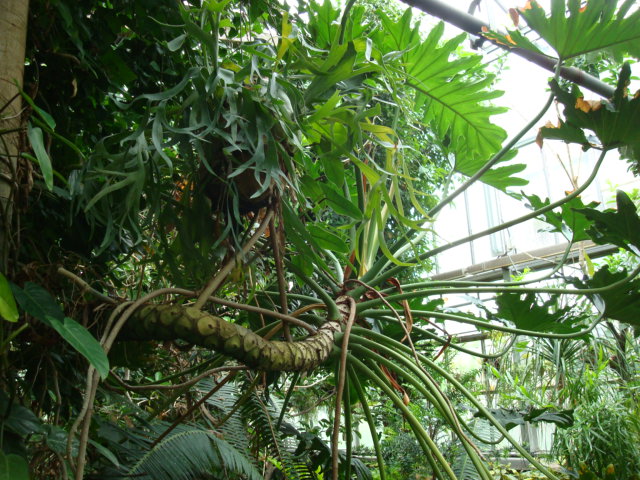
The deep green, triangular leaves develop side slits as the plant matures, giving them their ruffled, split look, and they can reach over three feet long given the right conditions. A thick central stem holds the foliage upright without help, which is the clearest way to tell this plant apart from a monstera: the split leaf philodendron has slits along the leaf edges but no true fenestrations, or holes, within the leaf itself. Indoors it is usually capped by pot size and ceiling height at around six feet, well short of the ten-plus feet it can reach outdoors.
Source: Epic Gardening
Watch for Common Insects
This philodendron can attract scale insects and glasshouse red spider mite, and Epic Gardening's sources add mealybugs to that watch list. The plant is otherwise generally disease-free, so most trouble tends to come from these few insect pests rather than pathogens.
Source: RHS
Reading the Leaves
Yellowing leaves most often point to overwatering and the root rot that follows, with mushy stems near the soil line as a further warning sign; trimming affected roots and repotting into fresh, well-draining soil is the usual fix. Underwatering shows up as wilting and brown tips, while brown patches elsewhere on the leaf can mean sun damage from harsh direct light. Very low light causes permanent, irreversible stretching toward the light source, and leaves that all lean one way call for a weekly quarter-turn of the pot to keep growth balanced.
Source: Epic Gardening
Light Upkeep, Regular Repotting
This is a low-maintenance plant that mainly needs its large leaves wiped free of dust every couple of months to keep photosynthesis and transpiration running smoothly, along with the occasional pruning of dying or damaged leaves cut just above a node. Smaller plants are best repotted yearly as they outgrow their containers, while larger, established plants can go one to two years between repottings, with the soil itself refreshed every three to four years once the plant has reached its ceiling. The RHS notes it falls into pruning group eleven, best tackled in spring, and that under glass it wants moderate watering and a monthly balanced liquid feed during active growth, tapering off at other times.
Source: RHS
Care recipe
The species record — the baseline every cultivar inherits unless it says otherwise.
Care notes are early — not yet verified
- Light
- ai:claude-opus-4-8
- Water
- ai:claude-opus-4-8 (range 7-14d)
- Humidity
- ai:claude-opus-4-8
- Soil
- ai:claude-fable-5
- Care
- ai:claude-fable-5
Bright, indirect
≈ every 14 days
Medium
15–29 °C
Chunky, well-draining aroid mix with bark and perlite
Stem cuttings or offsets rooted in moist mix
Balanced liquid feed monthly in spring and summer
Fast
Rarely flowers indoors
Toxic to cats & dogs & humans
Araceae contain insoluble calcium oxalate crystals that irritate mouth, throat, and digestive tract. This is where toxicity lives: every cultivar of this species inherits it and none can override it.
Reference images
Every image credited. Licenses link to their deeds.
PrimarySources: ai:claude-opus-4-8 · ai:claude-opus-4-8 (range 7-14d) · ai:claude-fable-5 · ai:claude-opus-4-8 (family inference)
Kept true by its growers
Every fact here carries its source. Grow Tree Philodendron yourself? What you’ve observed — how it drinks, how it holds its color, a name that’s off — and a clear photo of your plant are exactly what keep this page honest. Contributions are reviewed before anything changes.
Sign in to add what you know →