Species · genus Philodendron
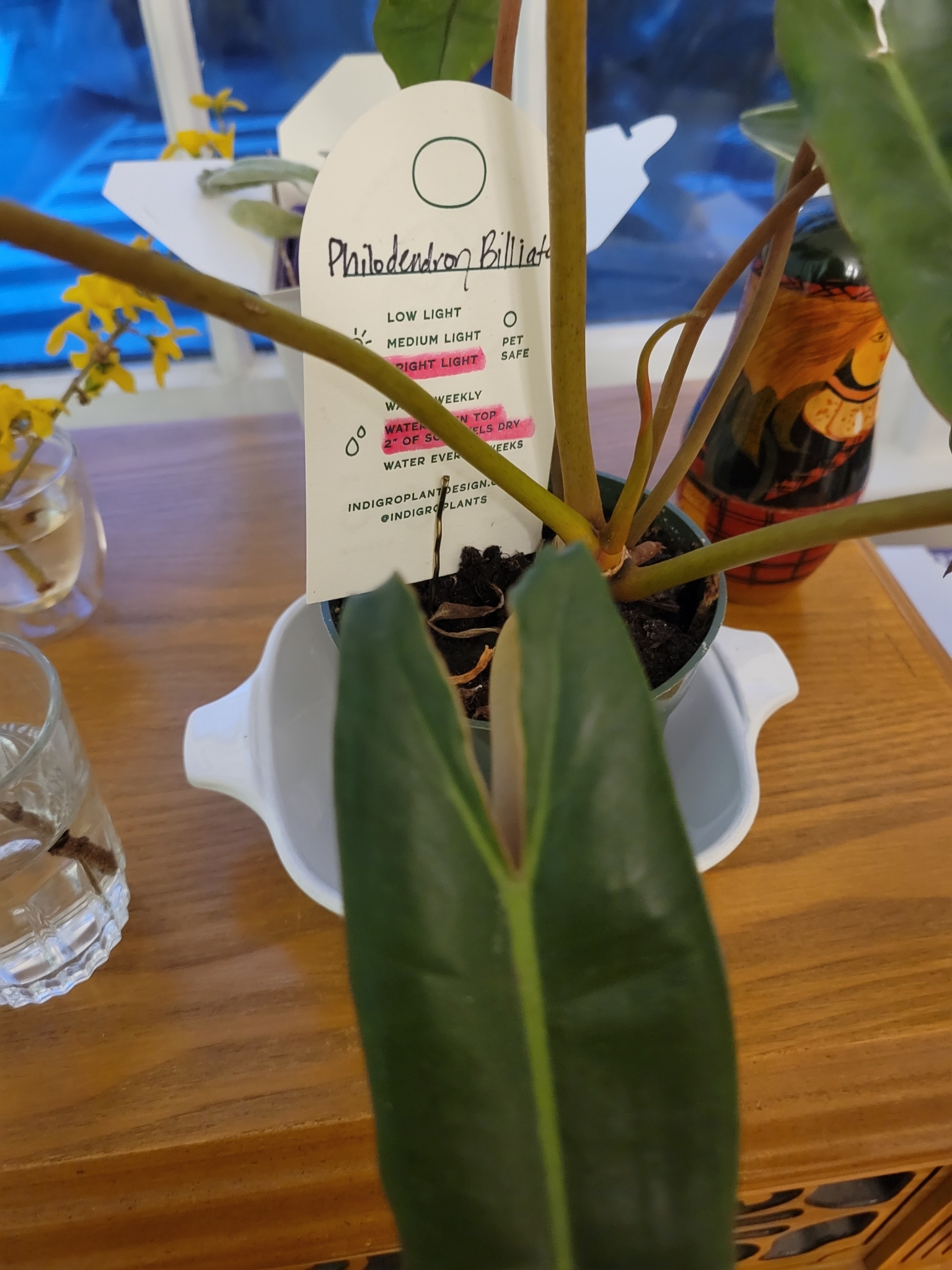
Philodendron billietiae
Philodendron billietiae Croat
Cultivars of P. billietiae
The named forms growers keep — each with its own page, each honest about how much we know.
No named cultivars catalogued under P. billietiae yet. When growers document a stable, named form, it earns its own page here.
Guide
The species-level account. Cultivar pages build on this and say where they differ.
A Climbing Amazonian Aroid
Philodendron billietiae is a climbing evergreen aroid grown for its long, spear-shaped leaves and bright orange-yellow stalks. It is a relatively undemanding houseplant once its basic climbing and moisture needs are met.
Source: RHS
Native to Northern South America
This species comes from the wet tropical forests of the Guianas and northern Brazil, in Pará, where it grows as a climber through the canopy. It was first described by Croat and published in 1995.
Source: Kew
Bright Shade, Even Moisture
Grow this philodendron in an open, well-drained yet moisture-retentive mix, such as one built from lava rock or pumice, fine fir bark, and leafmould or chopped sphagnum, set in bright but diffused light. Let the surface dry slightly before watering thoroughly in the growing season, water less in winter as growth slows, and feed monthly with a liquid houseplant fertiliser from April to September, stopping over winter.
Source: RHS
Stem and Leaf Cuttings
New plants are raised from stem-tip cuttings or leaf bud cuttings.
Source: RHS
Long Leaves, Orange Stalks
Mature plants produce leathery, glossy, dark green leaves with wavy, ridged edges that can reach up to 90 centimetres long, each hanging vertically from a distinctive orange-yellow leaf stalk. Given the right conditions, mature specimens may occasionally flower, showing an orange-green spathe wrapped around a cream spadix.
Source: RHS
Watch for Scale and Mites
Keep an eye out for scale insects, glasshouse red spider mite, and mealybugs, which are the pests most likely to trouble this plant. It is otherwise generally free of disease.
Source: RHS
Repot Every Few Years
This philodendron needs no routine pruning. Repot roughly every two to three years to refresh the growing medium and give the roots room.
Source: RHS
Care recipe
The species record — the baseline every cultivar inherits unless it says otherwise.
Care notes are early — not yet verified
- Light
- admin:reviewed
- Water
- admin:reviewed
- Humidity
- ai:claude-sonnet-5
- Soil
- ai:claude-fable-5
- Care
- ai:claude-fable-5
Bright, indirect
≈ every 7 days
High
18–29 °C
Chunky, well-draining aroid mix of bark, perlite and coir
Stem cuttings with a node rooted in water or moist mix
Balanced liquid feed monthly in the growing season
Moderate
Rarely flowers indoors; grown for elongated arrow-shaped leaves
Not yet documented
This is where toxicity lives — every cultivar of this species inherits it and none can override it.
Reference images
Every image credited. Licenses link to their deeds.
PrimarySources: admin:reviewed · ai:claude-sonnet-5 · ai:claude-fable-5
Kept true by its growers
Every fact here carries its source. Grow Philodendron billietiae yourself? What you’ve observed — how it drinks, how it holds its color, a name that’s off — and a clear photo of your plant are exactly what keep this page honest. Contributions are reviewed before anything changes.
Sign in to add what you know →