Species · genus Peperomia · Piperaceae
Peperomia urvilleana
Peperomia urvilleana A.Rich.
Cultivars of P. urvilleana
The named forms growers keep — each with its own page, each honest about how much we know.
No named cultivars catalogued under P. urvilleana yet. When growers document a stable, named form, it earns its own page here.
Guide
The species-level account. Cultivar pages build on this and say where they differ.
A Pacific Peperomia
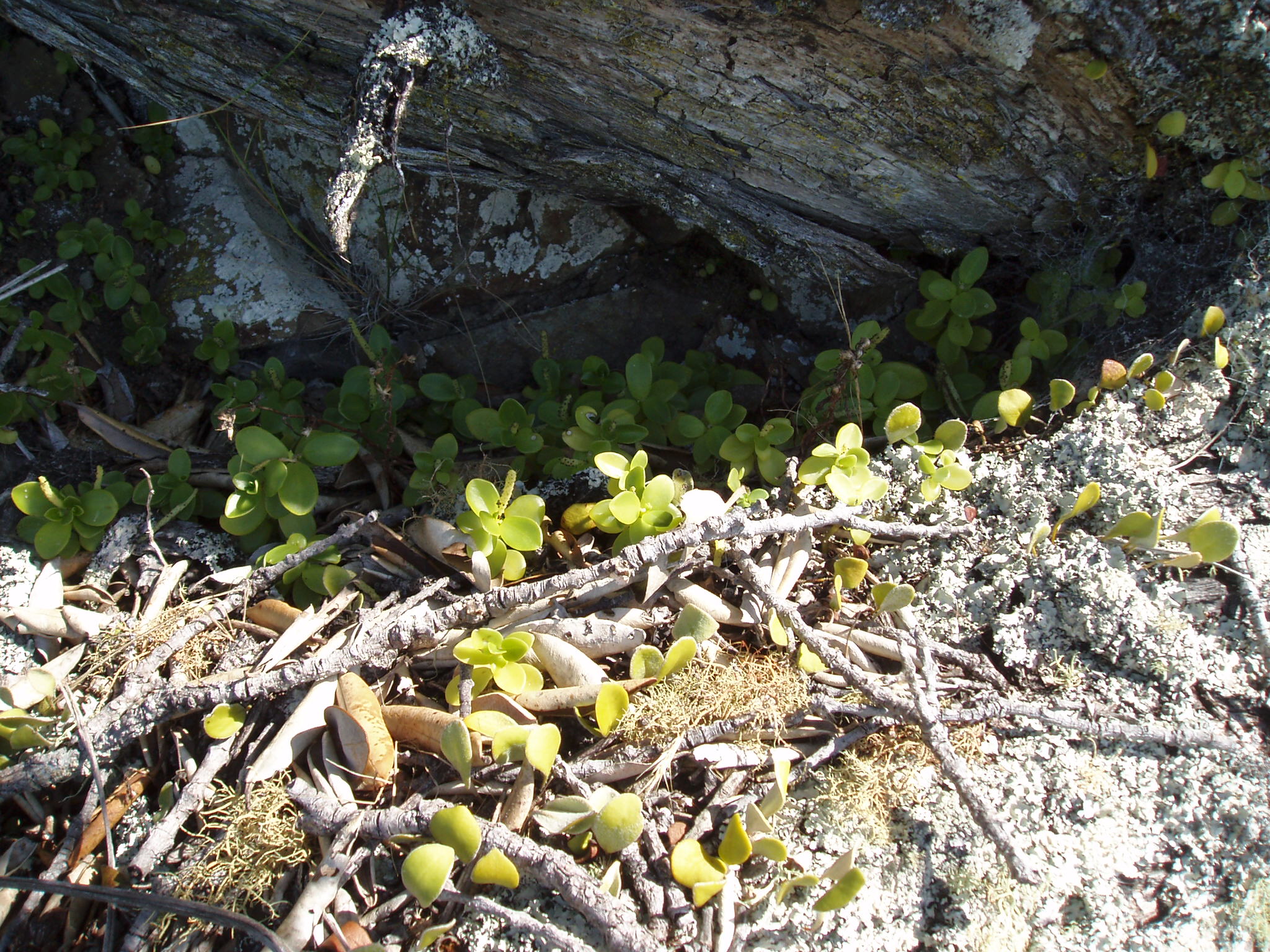
Peperomia urvilleana is an accepted species within the pepper family, Piperaceae. It grows as a subshrub or epiphyte, one of the many peperomias that make compact, foliage-forward houseplants.
Source: Kew
Native to the Southwest Pacific
This plant's native range stretches from the Solomon Islands to New Zealand and across the southwest Pacific, taking in Fiji, New Caledonia, Vanuatu, Samoa, Norfolk Island, and the Kermadec Islands. It was first published by Dumont d'Urville in 1832, and it grows primarily within the wet tropical biome, fitting its habit as either a subshrub or an epiphyte.
Source: Kew
An Easy, Forgiving Rhythm
Peperomias as a group ask for bright, indirect light, though they will tolerate lower light with less vigorous, less interesting foliage. Water once the top few centimetres of compost dry out, keep temperatures between about 18 and 30°C, and offer humid air if you can, though these plants adapt to an ordinary home. Feeding is optional rather than essential, since growth is naturally slow, and any houseplant fertiliser used per its label is enough for those who want a bit more speed.
Source: RHS
Compact and Varied
Peperomias tend to stay small, usually under 30cm, with habits that can be upright, horizontal, or trailing. Their foliage varies widely in colour, shape, and texture, from succulent and glossy to ridged or striped, and flower spikes are slender and typically cream or green.
Source: RHS
Watch Light and Water
Overwatering is the main hazard, since persistently damp conditions make peperomias prone to root rot. Deep shade brings on weak, spindly growth, direct summer sun can scorch the leaves, and a spot too near a radiator will dehydrate the plant. Keep it above 10°C and away from cold draughts as well.
Source: RHS
Little Pruning Needed
Because peperomias grow slowly, pruning is rarely a concern with this group.
Source: Costa Farms
Care recipe
The species record — the baseline every cultivar inherits unless it says otherwise.
Care notes are early — not yet verified
- Light
- ai:claude-opus-4-8
- Water
- ai:claude-opus-4-8 (range 7-12d)
- Humidity
- ai:claude-opus-4-8
- Soil
- ai:claude-fable-5
- Care
- ai:claude-fable-5
Bright, indirect
≈ every 12 days
Medium
16–26 °C
Free-draining peat-based mix with perlite
Leaf or stem cuttings in moist mix
Dilute balanced feed monthly in spring and summer
Moderate
Narrow greenish flower spikes; grown for compact fleshy foliage
Non-toxic to cats & dogs
Peperomia (Piperaceae) — ASPCA lists multiple Peperomia non-toxic (e.g. watermelon peperomia, P. argyreia); genus-wide safe. This is where toxicity lives: every cultivar of this species inherits it and none can override it.
Reference images
Every image credited. Licenses link to their deeds.
PrimarySources: ai:claude-opus-4-8 · ai:claude-opus-4-8 (range 7-12d) · ai:claude-fable-5 · ASPCA
Kept true by its growers
Every fact here carries its source. Grow Peperomia urvilleana yourself? What you’ve observed — how it drinks, how it holds its color, a name that’s off — and a clear photo of your plant are exactly what keep this page honest. Contributions are reviewed before anything changes.
Sign in to add what you know →