Species · genus Peperomia · Piperaceae
Vinagre
Peperomia serpens (Sw.) G.Don
Cultivars of P. serpens
The named forms growers keep — each with its own page, each honest about how much we know.
No named cultivars catalogued under P. serpens yet. When growers document a stable, named form, it earns its own page here.
Guide
The species-level account. Cultivar pages build on this and say where they differ.
A Small, Easy Genus
Peperomia is a large genus of small, easy-going houseplants that has stayed popular for years without much fuss. Most types stay compact, so a windowsill or a shelf is room enough, though some varieties carry variegated foliage bold enough to be a display on their own.
Source: Costa Farms
Tropical Roots, Many Forms
Peperomias come from tropical and subtropical regions, mostly Central and South America, with a scattering of species from Africa as well. The genus is enormous, over a thousand species strong, and new ones keep turning up, which explains why the group includes vines, shrubs, and everything in between. Depending on the species, a peperomia may grow as an epiphyte on other plants, a lithophyte wedged into rock crevices, a xerophyte suited to dry ground, or a geophyte spreading through soil.
Source: Epic Gardening
The Basic Rhythm
Give a peperomia a medium to bright spot; it will tolerate low light, but the foliage loses some of its interest and vigor there. Let the soil dry to the touch between waterings, since many varieties store water in their fleshy stems and leaves and can shrug off a missed week. Feeding is optional rather than necessary, and any standard indoor-plant fertilizer used per label directions is enough for those who want a bit more growth.
Source: Costa Farms
Leaf and Stem Cuttings
Peperomia is propagated from stem or leaf cuttings. For a leaf cutting, sever the leaf where it joins the stem, dip it in rooting powder, pot it, and enclose it in plastic to hold humidity until new growth signals success. Stem cuttings are simpler still: cut just below a node, submerge one or two nodes in water, and roots typically form within two to six weeks before the cutting is moved to soil.
Source: Epic Gardening
Heart-Shaped, Vein-Marked Leaves
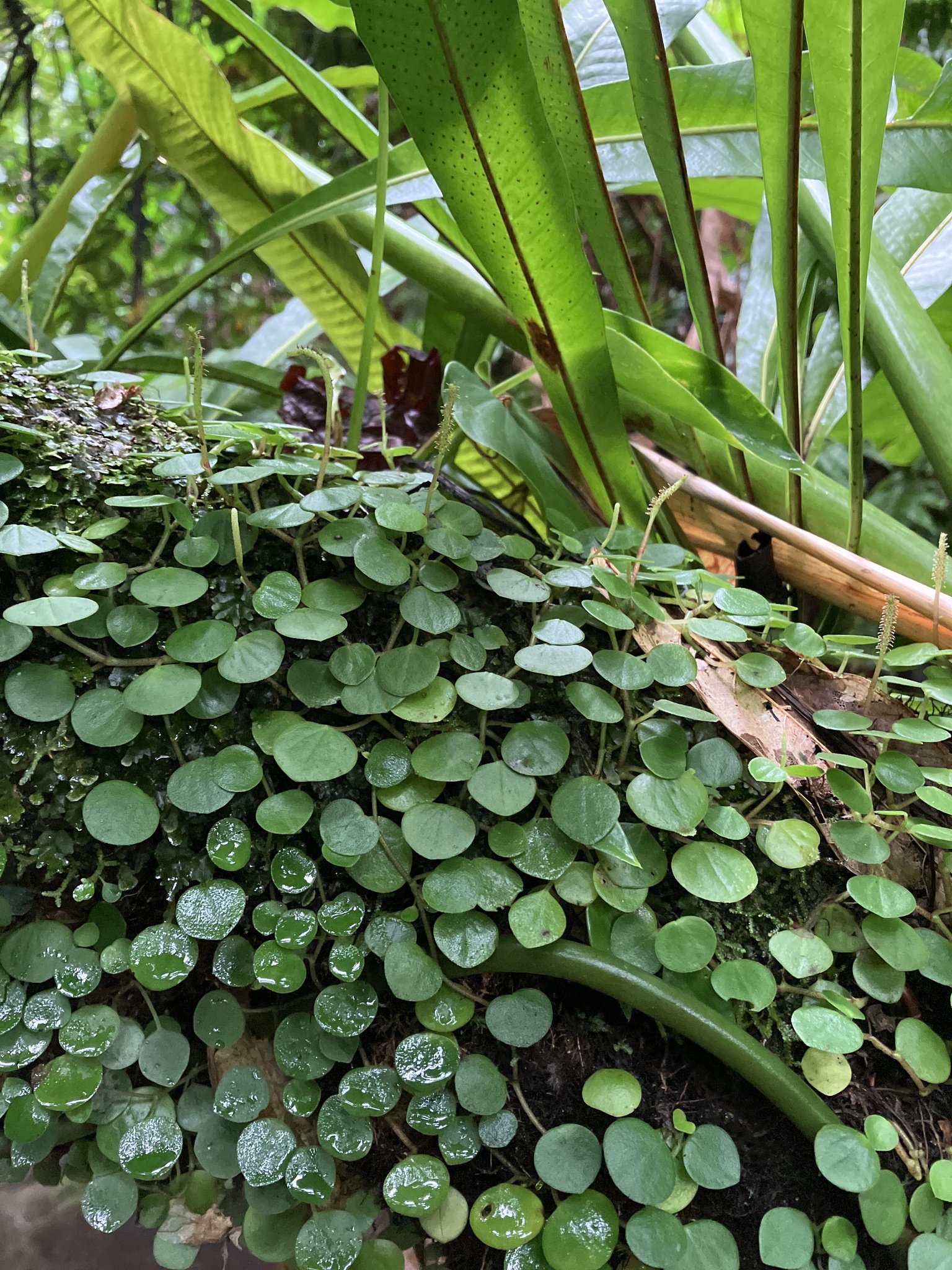
Peperomia serpens carries small, heart-shaped leaves marked with prominent veins on a trailing stem. That cascading habit makes it well suited to hanging baskets, and its scale also earns it a place in terrariums.
Source: Costa Farms
Watch for Sap-Suckers
Fungus gnats and spider mites are the most common visitors, and both tend to build up when conditions run dry, so keeping humidity steady helps keep them off. Whiteflies show up occasionally indoors, usually in greenhouse settings, feeding on sap and leaving yellowed leaves behind. Mealybugs, scale, and thrips appear more often outdoors, and any of these sap-feeders can be managed with a light application of insecticidal soap or neem oil.
Source: Epic Gardening
Reading the Leaves
Wilting and leaf drop despite steady watering often points to soil that has become too dense over time, in which case a repot into fresh mix restores vigor. Pale, yellowing leaves signal chlorosis, usually a shortage of nitrogen or potassium, and an early feeding correction can bring the plant back. Underwatering shows up as curling, browning leaves, while overwatering or letting the plant sit wet turns the small leaves of some species mushy and brown.
Source: Epic Gardening
Light Pruning, Occasional Repot
Peperomias grow slowly, so pruning is rarely a chore; a bit of cosmetic trimming to remove dead or damaged stems is usually all that's needed. Costa Farms notes you don't need to worry about pruning them for growth control, since their pace keeps them tidy on its own.
Source: Costa Farms
Care recipe
The species record — the baseline every cultivar inherits unless it says otherwise.
Care notes are early — not yet verified
- Light
- ai:claude-opus-4-8
- Water
- ai:claude-opus-4-8 (range 7-12d)
- Humidity
- ai:claude-opus-4-8
- Soil
- ai:claude-fable-5
- Care
- ai:claude-fable-5
Bright, indirect
≈ every 12 days
High
16–26 °C
Light, airy peat-based mix with perlite
Stem cuttings rooted in moist mix or water
Weak balanced feed every 4–6 weeks in growing season
Moderate
Slender green spikes; trailing/climbing habit suits hanging pots
Non-toxic to cats & dogs
Peperomia (Piperaceae) — ASPCA lists multiple Peperomia non-toxic (e.g. watermelon peperomia, P. argyreia); genus-wide safe. This is where toxicity lives: every cultivar of this species inherits it and none can override it.
Reference images
Every image credited. Licenses link to their deeds.
PrimarySources: ai:claude-opus-4-8 · ai:claude-opus-4-8 (range 7-12d) · ai:claude-fable-5 · ASPCA
Kept true by its growers
Every fact here carries its source. Grow Vinagre yourself? What you’ve observed — how it drinks, how it holds its color, a name that’s off — and a clear photo of your plant are exactly what keep this page honest. Contributions are reviewed before anything changes.
Sign in to add what you know →