Species · genus Peperomia · Piperaceae
Yerba Linda
Peperomia rotundifolia (L.) Kunth
Cultivars of P. rotundifolia
The named forms growers keep — each with its own page, each honest about how much we know.
No named cultivars catalogued under P. rotundifolia yet. When growers document a stable, named form, it earns its own page here.
Guide
The species-level account. Cultivar pages build on this and say where they differ.
A tiny jade trailer
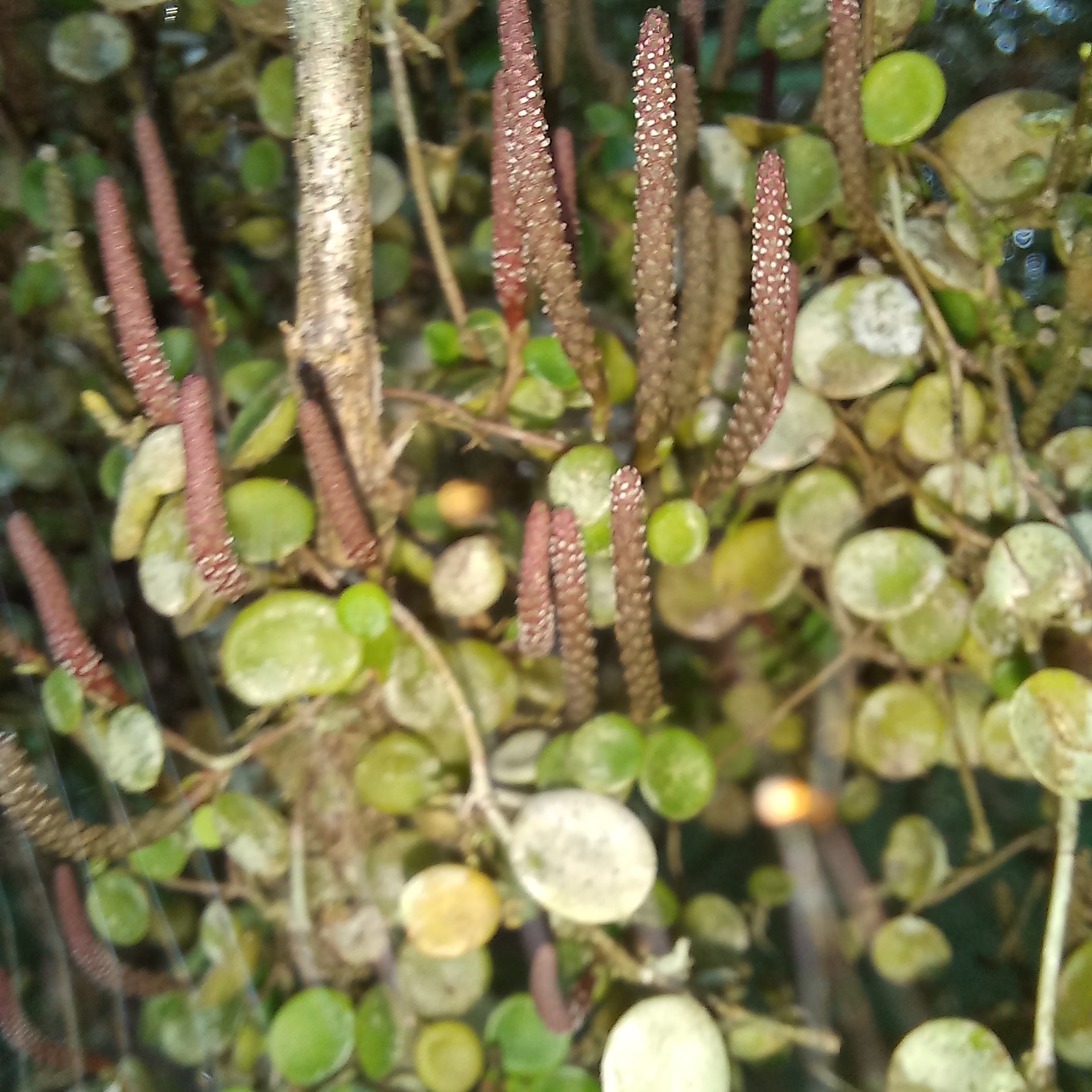
Peperomia rotundifolia, sometimes called jade necklace, is a creeping, semi-succulent perennial that rarely rises above a few centimetres tall. Its slender, fleshy stems carry small rounded leaves and, through much of the year, short spikes of modest yellowish flowers. It is grown as a houseplant, valued more for its neat trailing habit than for any showy bloom.
Source: RHS
Bright, moderate, unfussy
Grow it in houseplant compost in bright but indirect light while it is actively growing, giving it fuller light once winter arrives. Water moderately through summer and sparingly in winter, ideally with tepid, soft water, and feed monthly with a balanced liquid fertiliser from spring to summer. Like other peperomias, it does best in a warm room and appreciates humid air, though it tolerates the ordinary conditions of a home reasonably well.
Source: RHS
Cuttings or seed
This peperomia can be raised from seed sown at 19–24°C as soon as it is ripe, or increased more simply by taking stem cuttings in summer.
Source: RHS
Small rounded leaves
The plant's defining trait is its scale: leaves reach only about a centimetre across, rounded and bright green, set along thin succulent stems often covered in fine hairs. It forms a tufted, mat-forming habit, spreading low rather than climbing upward, with a maximum spread measured in tens of centimetres rather than height.
Source: RHS
Largely trouble-free
This species is generally free of both pests and disease, one of the easier peperomias in that respect. Where problems do arise across the genus, sap-sucking insects such as mealybugs are the usual early sign to watch for.
Source: RHS
Watch the watering
The main risk with peperomias is overwatering: roots left too wet are prone to rot, which shows up as yellowing, dropping leaves and can eventually collapse the whole plant. Tap water fluoride can also brown leaf tips, so rainwater or filtered water is preferable.
Source: RHS
Little intervention needed
No pruning is required for this compact grower. As with peperomias generally, repotting can wait until roots fill the pot, since most are slow growing and settle happily in the same container for a couple of years.
Source: RHS
Care recipe
The species record — the baseline every cultivar inherits unless it says otherwise.
Care notes are early — not yet verified
- Light
- ai:claude-opus-4-8
- Water
- ai:claude-opus-4-8 (range 7-12d)
- Humidity
- ai:claude-opus-4-8
- Soil
- ai:claude-fable-5
- Care
- ai:claude-fable-5
Bright, indirect
≈ every 12 days
Medium
16–26 °C
Free-draining mix with perlite; shallow pot
Stem cuttings or strands rooted in moist mix
Light balanced feed every 4–6 weeks in growing season
Moderate
Inconspicuous spikes; trailing round-leaved creeper
Non-toxic to cats & dogs
Peperomia (Piperaceae) — ASPCA lists multiple Peperomia non-toxic (e.g. watermelon peperomia, P. argyreia); genus-wide safe. This is where toxicity lives: every cultivar of this species inherits it and none can override it.
Reference images
Every image credited. Licenses link to their deeds.
Sources: ai:claude-opus-4-8 · ai:claude-opus-4-8 (range 7-12d) · ai:claude-fable-5 · ASPCA
Kept true by its growers
Every fact here carries its source. Grow Yerba Linda yourself? What you’ve observed — how it drinks, how it holds its color, a name that’s off — and a clear photo of your plant are exactly what keep this page honest. Contributions are reviewed before anything changes.
Sign in to add what you know →