Species · genus Peperomia · Piperaceae
Man To Man
Peperomia pellucida (L.) Kunth
Also known as: Pepper Elder · Icing Grass · Water Grass · Clearweed · Shining Bush Plant
Cultivars of P. pellucida
The named forms growers keep — each with its own page, each honest about how much we know.
No named cultivars catalogued under P. pellucida yet. When growers document a stable, named form, it earns its own page here.
Guide
The species-level account. Cultivar pages build on this and say where they differ.
A Widespread Little Piperaceae
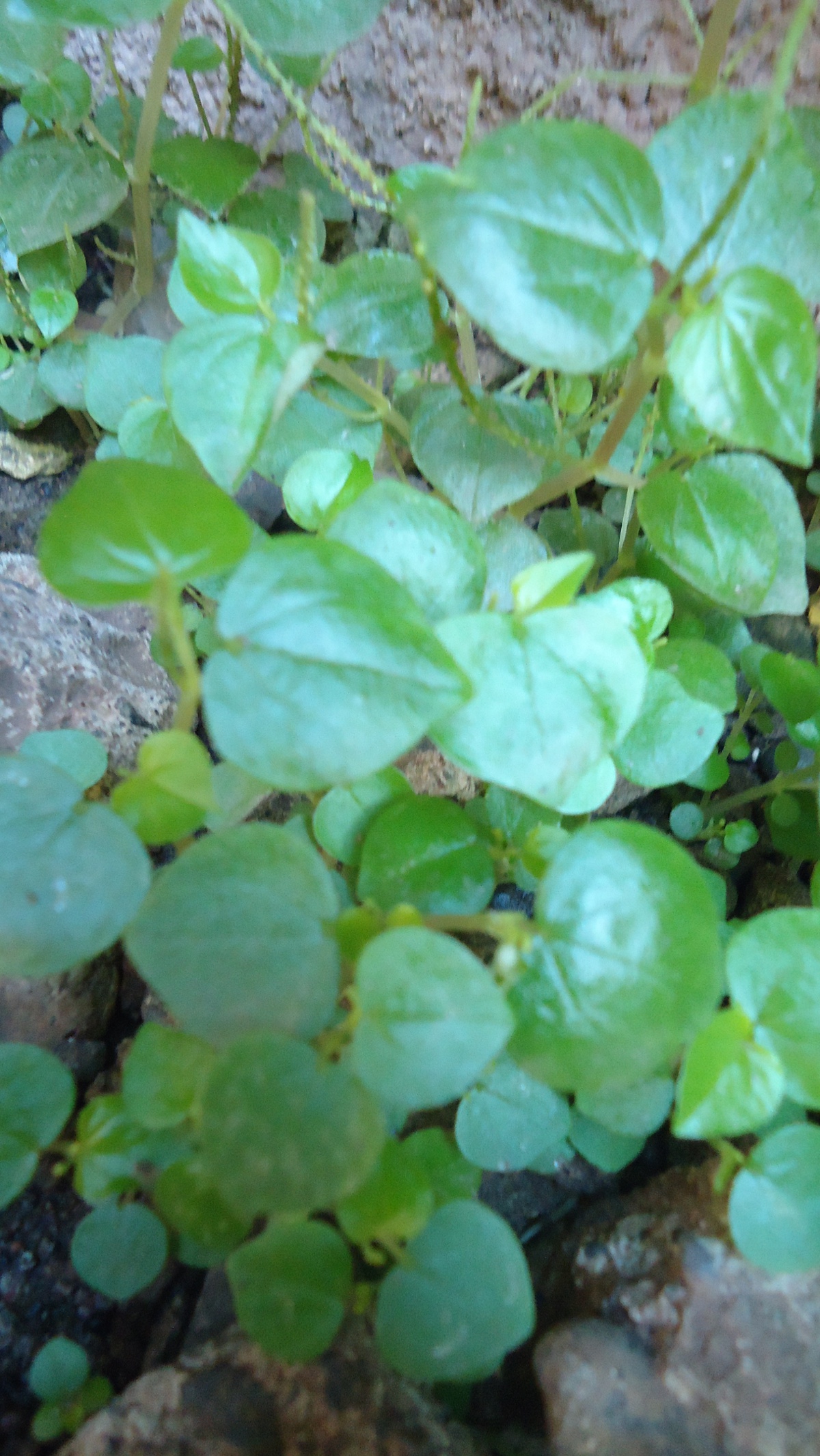
Peperomia pellucida is a small annual member of the pepper family, Piperaceae, grown more for curiosity and use than for ornament. It carries simple, somewhat succulent leaves and tiny greenish-white flowers arranged in slender spikes, traits typical of the wider Peperomia genus.
Source: RHS
Pantropical Wanderer
This species is native to tropical and subtropical America, tropical Africa, and Madagascar, and it has since been introduced well beyond that range, turning up from India and China to Hawaii and Australia. It grows as an annual or lithophyte, favouring the wet tropical biome. People have long put it to use as a medicine, a food, and for various social and environmental purposes.
Source: Kew
Leaves, Habit, and Kin
As a Peperomia, it is evergreen where conditions allow and carries simple, often succulent leaves, with very small greenish-white flowers held in slender spikes or panicles. Within the species, botanists recognise two accepted varieties, including the widespread variety pellucida itself, which shares the same tropical wet-biome habit and lithophyte tendency.
Source: Kew
Care recipe
The species record — the baseline every cultivar inherits unless it says otherwise.
Care notes are early — not yet verified
- Light
- ai:claude-opus-4-8
- Water
- ai:claude-opus-4-8 (range 4-8d)
- Humidity
- ai:claude-opus-4-8
- Soil
- ai:claude-fable-5
- Care
- ai:claude-fable-5
Bright, indirect
≈ every 8 days
High
18–28 °C
Moist, loose organic mix that drains freely
Self-seeds readily; also stem cuttings in moist mix
Light feed occasionally; often thrives with minimal feeding
Fast
Frequent tiny greenish flower spikes; short-lived annual herb
Non-toxic to cats & dogs
Peperomia (Piperaceae) — ASPCA lists multiple Peperomia non-toxic (e.g. watermelon peperomia, P. argyreia); genus-wide safe. This is where toxicity lives: every cultivar of this species inherits it and none can override it.
Reference images
Every image credited. Licenses link to their deeds.
PrimarySources: ai:claude-opus-4-8 · ai:claude-opus-4-8 (range 4-8d) · ai:claude-fable-5 · ASPCA
Kept true by its growers
Every fact here carries its source. Grow Man To Man yourself? What you’ve observed — how it drinks, how it holds its color, a name that’s off — and a clear photo of your plant are exactly what keep this page honest. Contributions are reviewed before anything changes.
Sign in to add what you know →