Species · genus Peperomia · Piperaceae
Watermelon Pepper
Peperomia argyreia (Miq.) É.Morren
Also known as: Watermelon-begonia
Cultivars of P. argyreia
The named forms growers keep — each with its own page, each honest about how much we know.
No named cultivars catalogued under P. argyreia yet. When growers document a stable, named form, it earns its own page here.
Guide
The species-level account. Cultivar pages build on this and say where they differ.
A Small Silver-Striped Peperomia
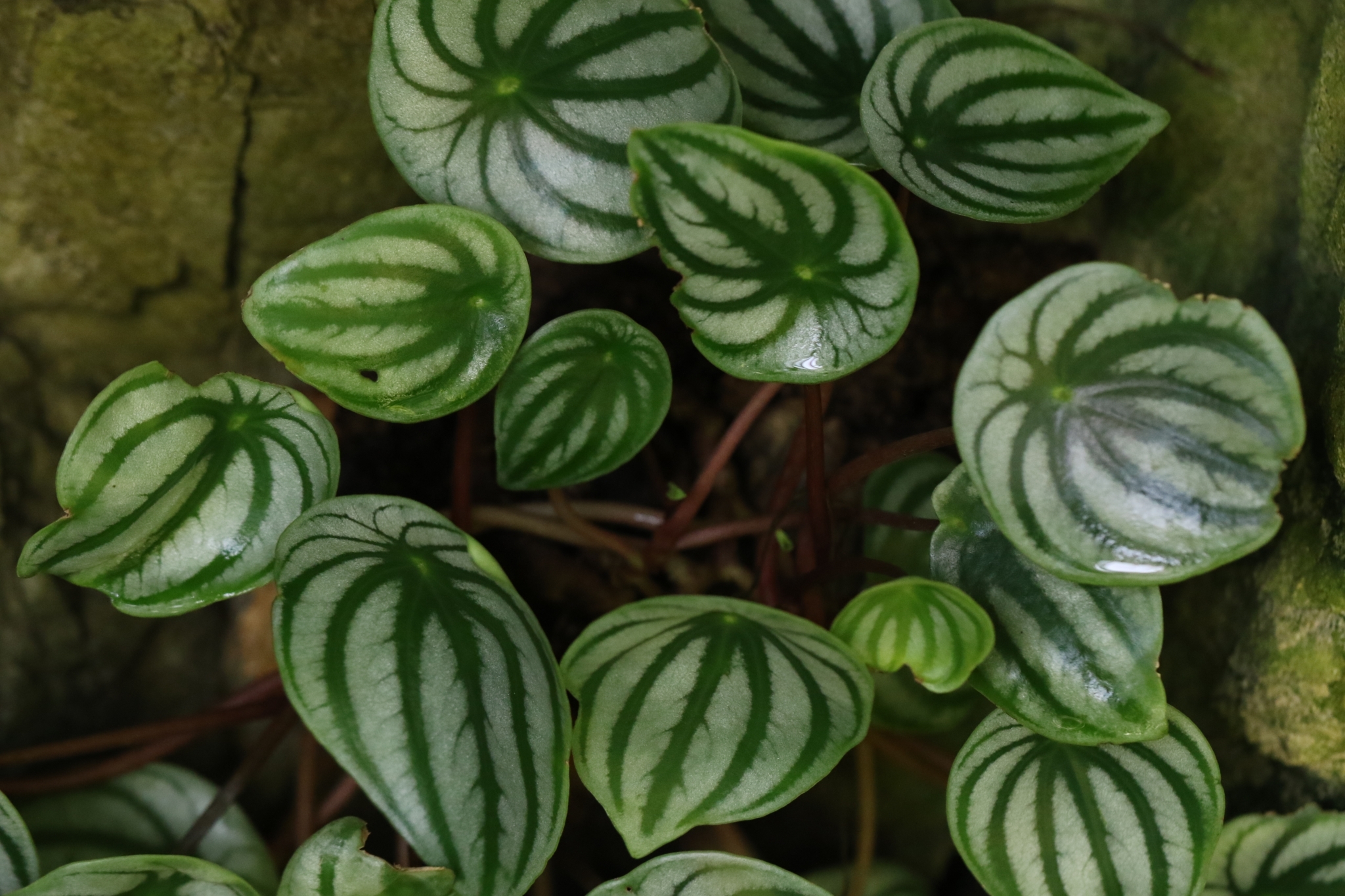
Watermelon peperomia is a compact houseplant grown for its tear-drop leaves, marked with silvery bands between the veins over deep green. It stays small, generally under a foot tall, making it a natural fit for desks, shelves, and terrariums rather than floor space.
Source: Costa Farms
Brazilian Forest Roots
This peperomia traces back to Brazil, part of a genus that largely hails from humid tropical forests. In the wild it would have grown low to the ground or up on tree branches as an epiphyte, conditions that shaped its fleshy, moisture-storing leaves.
Source: RHS
Light, Water, and Feeding
Give this peperomia medium to bright, indirect light; it can manage without direct sun and even grows well under artificial light, though hot afternoon sun through glass risks scorching it. Water only once the top half of the mix has dried, since the thick leaves store some moisture and the roots dislike staying wet. Average home humidity is generally enough, though dry air can brown the leaf edges, and feeding with a houseplant fertilizer through spring and summer supports steady growth.
Source: Costa Farms
Cuttings, Leaves, or Offsets
Watermelon peperomia can be raised from seed, from softwood, leaf, or leaf-bud cuttings, or simply by removing offsets from the base of the plant.
Source: RHS
Watermelon-Patterned Foliage
The plant earns its name from ovate, striped leaves that echo watermelon rind, held up on notably red stalks. It grows as a bushy little perennial, rarely reaching more than about twenty centimeters tall, with tiny greenish flowers on slender spikes that are more curiosity than ornament.
Source: RHS
Watch for Mealybugs
Peperomias as a group tend to stay fairly healthy, but sap-sucking mealybugs are worth watching for, as they can weaken a plant over time.
Source: RHS
Overwatering Is the Main Risk
The biggest threat to peperomias is wet roots: too much water or a pot left standing in a saucer can lead to rot, showing up as yellowing, dropping leaves, and eventually collapse. Tap water fluoride can also brown the leaf tips, so rainwater or filtered water is preferable when possible.
Source: RHS
Light Pruning, Occasional Repotting
This peperomia asks for little upkeep beyond snipping away old or faded leaves as they appear. Most peperomias are slow enough growers to stay in the same pot for two or three years, needing repotting only once roots crowd the container, ideally in spring.
Source: Costa Farms
Care recipe
The species record — the baseline every cultivar inherits unless it says otherwise.
Care notes are early — not yet verified
- Light
- ai:claude-opus-4-8
- Water
- ai:claude-opus-4-8 (range 7-14d)
- Humidity
- ai:claude-opus-4-8
- Soil
- ai:claude-fable-5
- Care
- ai:claude-fable-5
Bright, indirect
≈ every 14 days
Medium
16–26 °C
Light, airy peat-based mix with perlite
Leaf cuttings with petiole in moist mix
Weak balanced feed every 4–6 weeks in growing season
Slow
Slender greenish spikes; prized for watermelon-patterned leaves
Non-toxic to cats & dogs
Peperomia (Piperaceae) — ASPCA lists multiple Peperomia non-toxic (e.g. watermelon peperomia, P. argyreia); genus-wide safe. This is where toxicity lives: every cultivar of this species inherits it and none can override it.
Reference images
Every image credited. Licenses link to their deeds.
PrimarySources: ai:claude-opus-4-8 · ai:claude-opus-4-8 (range 7-14d) · ai:claude-fable-5 · ASPCA
Kept true by its growers
Every fact here carries its source. Grow Watermelon Pepper yourself? What you’ve observed — how it drinks, how it holds its color, a name that’s off — and a clear photo of your plant are exactly what keep this page honest. Contributions are reviewed before anything changes.
Sign in to add what you know →