Species · genus Parodia · Cactaceae
Balloon Cactus
Parodia magnifica (F.Ritter) F.H.Brandt
Cultivars of P. magnifica
The named forms growers keep — each with its own page, each honest about how much we know.
No named cultivars catalogued under P. magnifica yet. When growers document a stable, named form, it earns its own page here.
Guide
The species-level account. Cultivar pages build on this and say where they differ.
A globe of gold spines
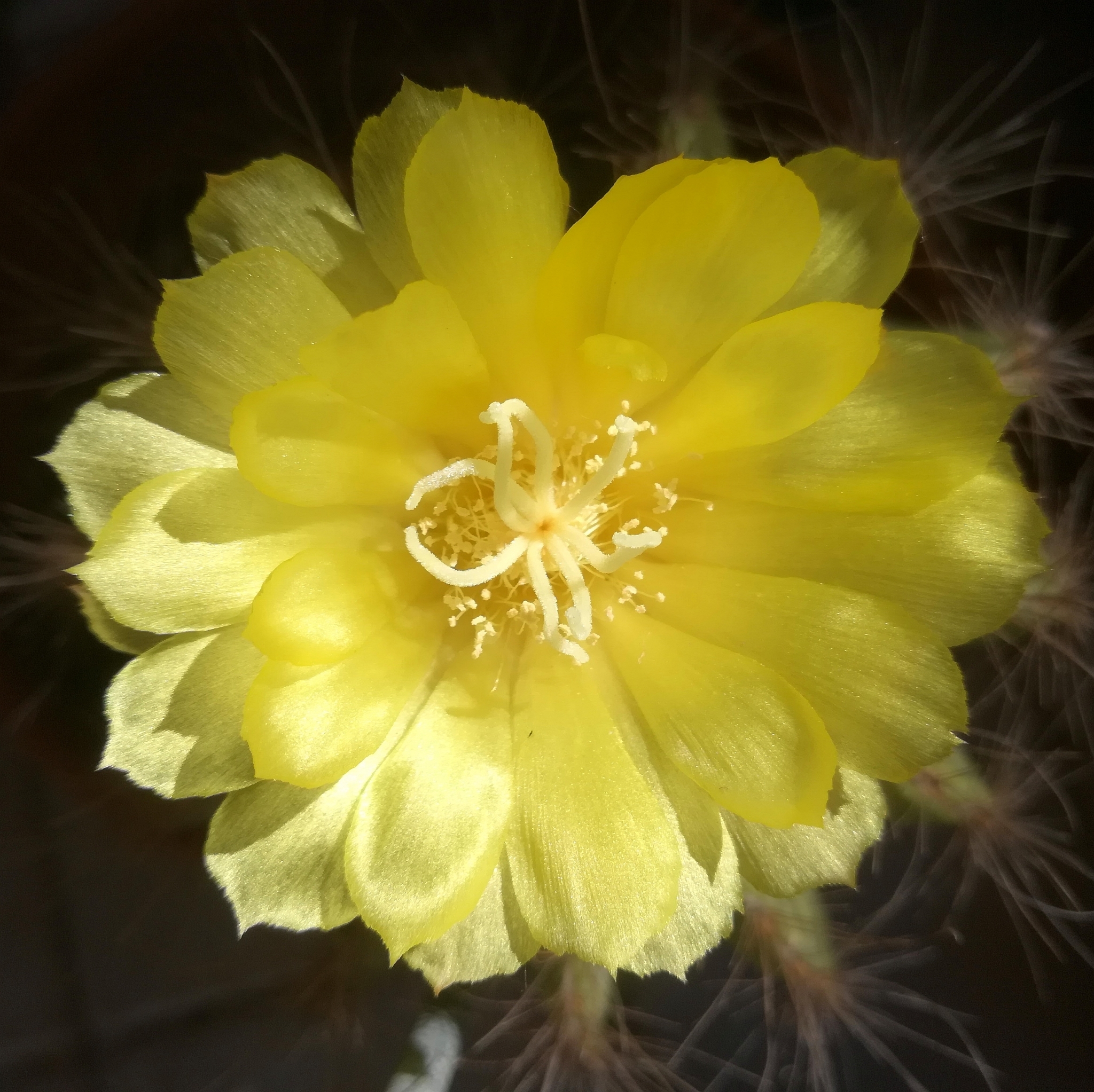
Parodia magnifica, also known by its older name Notocactus magnificus, is a cactus grown for its neat globose to cylindrical stem and its bright sulphur-yellow summer flowers. It carries the common name magnificent ball cactus, and the RHS has judged it worthy of its Award of Garden Merit.
Source: RHS
A native of southern Brazil
This species comes from Rio Grande do Sul in southern Brazil, where it grows as a succulent subshrub in subtropical conditions. It has passed through a few names in cactus circles, having been classified at various points as Eriocactus magnificus and Notocactus magnificus before settling as Parodia magnifica.
Source: Kew
Sun, restraint, and patience
Grow this cactus under glass in standard cactus compost, in full or bright filtered light, with well-drained chalk, loam, or sand and a south- or west-facing spot in a sheltered position suits it. Water moderately from mid-spring to late summer and feed with a low-nitrogen liquid fertiliser every 6 to 8 weeks, then keep the compost barely moist for the rest of the year. It is only tolerant of cool conditions down to around 1 to 5 degrees C, so it cannot be left to face frost, and it takes some 5 to 10 years to reach maturity.
Source: RHS
Raised from seed
Propagation is by seed, sown in spring or summer at a temperature of 19-24°C.
Source: RHS
Ribbed globe, funnel flowers
The stem is usually solitary, ranging from globose to cylindrical and reaching up to about 15cm tall, set with bristly yellow spines along its ribs. In summer it produces funnel-shaped, sulphur-yellow flowers up to 5cm across near the crown, and its evergreen habit is described as bushy.
Source: RHS
Mealybugs and flowering-time aphids
Mealybugs are the main pest to watch for, and aphids can also appear while the plant is in flower. Otherwise it is described as relatively resistant to disease.
Source: RHS
No pruning needed
This cactus asks for no pruning at all. It suits life as a patio or container plant kept under glass.
Source: RHS
Care recipe
The species record — the baseline every cultivar inherits unless it says otherwise.
Care notes are early — not yet verified
- Light
- ai:claude-opus-4-8
- Water
- ai:claude-opus-4-8 (range 14-28d)
- Humidity
- ai:claude-opus-4-8
- Soil
- ai:claude-fable-5
- Care
- ai:claude-fable-5
Direct sun
≈ every 28 days
Low — average room
10–30 °C
Gritty, fast-draining cactus mix
Offsets or seed
Dilute low-nitrogen cactus feed monthly in the growing season
Slow
Yellow blooms in summer on mature plants
Not yet documented
This is where toxicity lives — every cultivar of this species inherits it and none can override it.
Reference images
Every image credited. Licenses link to their deeds.
Sources: ai:claude-opus-4-8 · ai:claude-opus-4-8 (range 14-28d) · ai:claude-fable-5
Kept true by its growers
Every fact here carries its source. Grow Balloon Cactus yourself? What you’ve observed — how it drinks, how it holds its color, a name that’s off — and a clear photo of your plant are exactly what keep this page honest. Contributions are reviewed before anything changes.
Sign in to add what you know →