Species · genus Pandanus · Pandanaceae
Common Screwpine
Pandanus utilis Bory
Also known as: Screw Palm
Cultivars of P. utilis
The named forms growers keep — each with its own page, each honest about how much we know.
No named cultivars catalogued under P. utilis yet. When growers document a stable, named form, it earns its own page here.
Guide
The species-level account. Cultivar pages build on this and say where they differ.
A spiralling screw pine
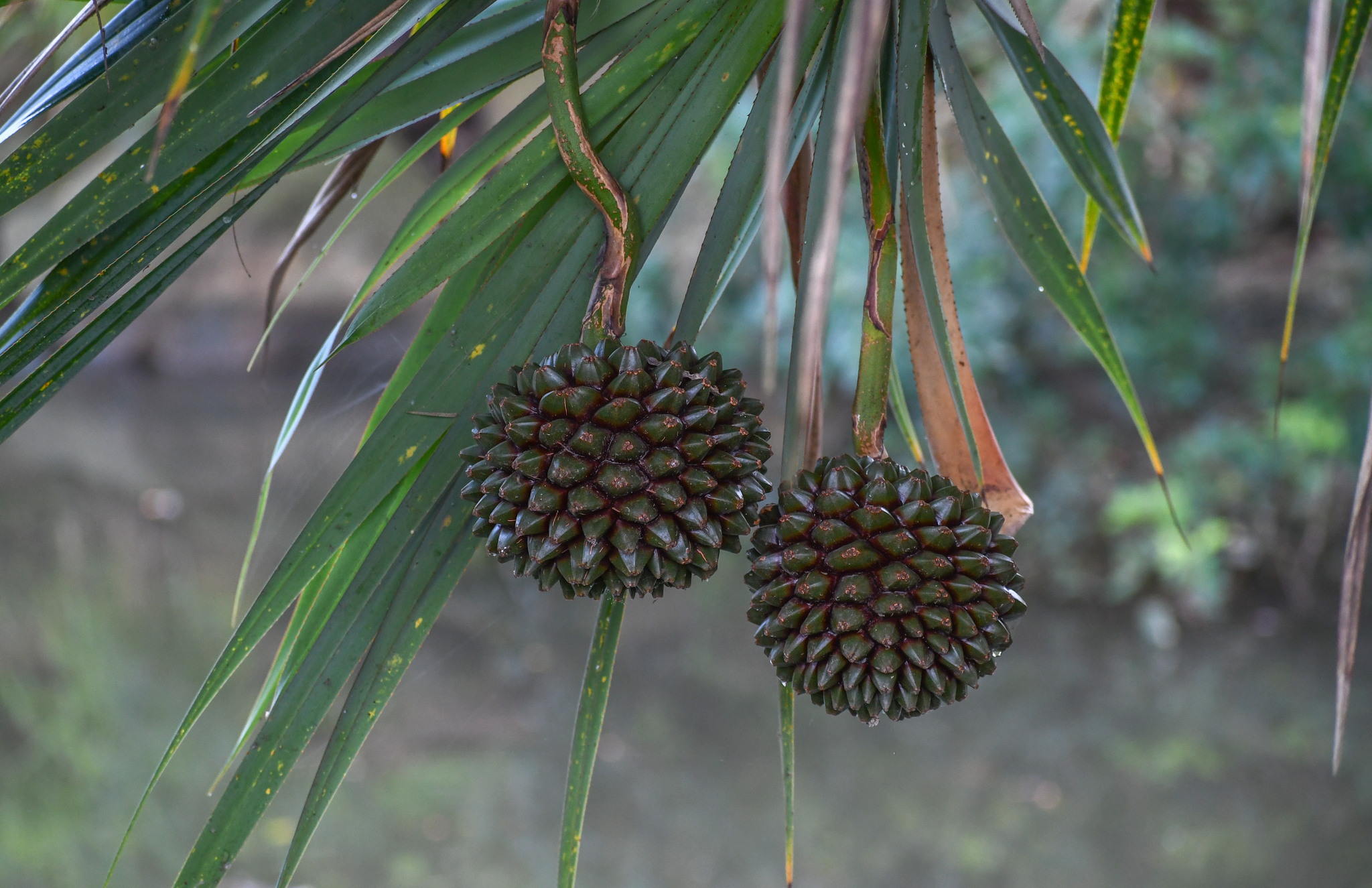
Pandanus utilis, known as the useful screw pine, is a tender evergreen tree that grows palm-like to around 6 metres, with stiff, sword-shaped leaves edged in red spines. Its foliage spirals in rosettes at the branch tips, giving the plant its common name.
Source: RHS
Roots in the Mascarenes
This species was first described by Bory in 1804 and its native range lies in the Mascarene Islands, specifically Mauritius, Rodrigues and Réunion. It has since been introduced well beyond that range, to places including Bermuda, Cuba, Jamaica, the Seychelles and several other island groups. It belongs to the family Pandanaceae and grows primarily in wet tropical conditions.
Source: Kew
Light, water, feeding rhythm
Under glass this plant wants full light and a peat-free, loam-based potting compost with good drainage. Through the growing season, water it moderately and give a balanced liquid feed once a month, cutting back to sparing watering over winter. It suits a sheltered spot with full sun and tolerates acid, alkaline or neutral soil so long as it stays well-drained.
Source: RHS
From seed or offsets
Propagate by sowing seed that has been pre-soaked, using it as soon as it is ripe or in spring. Alternatively, remove suckers or offsets from the plant in spring.
Source: RHS
Spined, spiralling foliage
The genus Pandanus is marked by evergreen shrubs and trees bearing terminal rosettes of spiralled, linear, spine-edged leaves. Male and female flowers appear on separate plants, males in branched spikes and females in cone-like heads. In this species the habit is a spreading, branched tree with glossy, sword-shaped leaves armed with stiff red marginal spines.
Source: RHS
Scale and spider mite
This screw pine may be troubled by scale insects or by glasshouse red spider mite. Otherwise it is generally free of disease.
Source: RHS
Light pruning, slow growth
This is a slow grower, taking somewhere between 10 and 20 years to reach its mature size of 4 to 8 metres tall and 2.5 to 4 metres across. Pruning falls into the light pruning group for trees and shrubs.
Source: RHS
Care recipe
The species record — the baseline every cultivar inherits unless it says otherwise.
Care notes are early — not yet verified
- Light
- ai:claude-opus-4-8
- Water
- ai:claude-opus-4-8 (range 7-14d)
- Humidity
- ai:claude-opus-4-8
- Soil
- ai:claude-fable-5
- Care
- ai:claude-fable-5
Bright, indirect
≈ every 14 days
Medium
18–30 °C
Sandy, free-draining mix
Offsets or suckers
Balanced liquid feed monthly in spring and summer
Moderate
Does not flower indoors
Not yet documented
This is where toxicity lives — every cultivar of this species inherits it and none can override it.
Reference images
Every image credited. Licenses link to their deeds.
PrimarySources: ai:claude-opus-4-8 · ai:claude-opus-4-8 (range 7-14d) · ai:claude-fable-5
Kept true by its growers
Every fact here carries its source. Grow Common Screwpine yourself? What you’ve observed — how it drinks, how it holds its color, a name that’s off — and a clear photo of your plant are exactly what keep this page honest. Contributions are reviewed before anything changes.
Sign in to add what you know →