Species · genus Pandanus · Pandanaceae
Screw Pine
Pandanus tectorius Parkinson ex Du Roi
Also known as: Tahitian Screwpine · Beach Pandanus · Hala · Thatch Screwpine · Pandanus Palm · Textile Screwpine
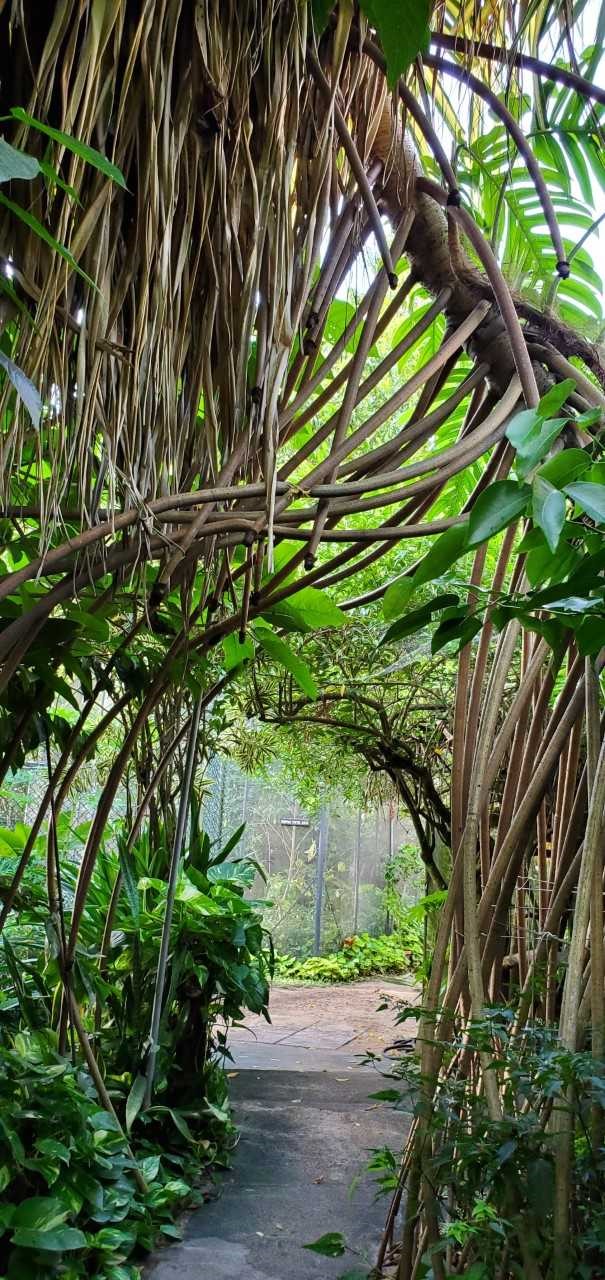
Cultivars of P. tectorius
The named forms growers keep — each with its own page, each honest about how much we know.
No named cultivars catalogued under P. tectorius yet. When growers document a stable, named form, it earns its own page here.
Guide
The species-level account. Cultivar pages build on this and say where they differ.
Veitch Screw Pine
Pandanus tectorius 'Veitchii', also known as Veitch screw pine or striped screw pine, is an evergreen tree grown for its bold rosettes of arching, spine-edged leaves. Under glass it rarely flowers or fruits, so its appeal rests almost entirely on foliage form.
Source: RHS
Light, Water, Feed
Give it full sun, ideally a west- or south-facing spot with some shelter, and grow it in a peat-free, loam-based compost that stays moist but well-drained. It appreciates moderate to high humidity, and from spring to summer wants moderate watering along with a balanced feed roughly every four weeks. As autumn arrives, ease off on both feeding and watering, keeping it only sparingly watered through winter.
Source: RHS
Seed Or Suckers
Propagate from seed sown in containers at around 18C as soon as it is ripe, after first soaking the seed for 24 hours. Alternatively, suckers can be removed in spring and potted up on their own.
Source: RHS
Spiralled, Striped Leaves
This is a short-stemmed tree that can reach 5m or more, topped with terminal rosettes of long, linear leaves edged with spines. Each leaf can grow to 90cm and carries a creamy-white margin, giving the plant its striped common name. The genus as a whole is known for these spiralled, spine-edged leaf arrangements, and for bearing male and female flowers on separate plants.
Source: RHS
Scale And Red Spider Mite
Under glass this plant can be susceptible to scale insects and glasshouse red spider mite. Otherwise it is generally free of disease.
Source: RHS
Minimal Pruning Needed
Grown under glass, this screw pine generally needs no pruning. It is well suited to being grown as a patio or container plant, and reaches maturity slowly, over roughly 10 to 20 years.
Source: RHS
Care recipe
The species record — the baseline every cultivar inherits unless it says otherwise.
Care notes are early — not yet verified
- Light
- ai:claude-opus-4-8
- Water
- ai:claude-opus-4-8 (range 7-14d)
- Humidity
- ai:claude-opus-4-8
- Soil
- ai:claude-fable-5
- Care
- ai:claude-fable-5
Bright, indirect
≈ every 14 days
Medium
18–32 °C
Sandy, salt-tolerant free-draining mix
Suckers or seed
Light balanced feed monthly while actively growing
Moderate
Rarely flowers indoors
Not yet documented
This is where toxicity lives — every cultivar of this species inherits it and none can override it.
Reference images
Every image credited. Licenses link to their deeds.
PrimarySources: ai:claude-opus-4-8 · ai:claude-opus-4-8 (range 7-14d) · ai:claude-fable-5
Kept true by its growers
Every fact here carries its source. Grow Screw Pine yourself? What you’ve observed — how it drinks, how it holds its color, a name that’s off — and a clear photo of your plant are exactly what keep this page honest. Contributions are reviewed before anything changes.
Sign in to add what you know →