Species · genus Pandanus · Pandanaceae
Fragrant Pandan
Pandanus amaryllifolius Roxb. ex Lindl.
Also known as: Pandanus
Cultivars of P. amaryllifolius
The named forms growers keep — each with its own page, each honest about how much we know.
No named cultivars catalogued under P. amaryllifolius yet. When growers document a stable, named form, it earns its own page here.
Guide
The species-level account. Cultivar pages build on this and say where they differ.
The Fragrant Pandan
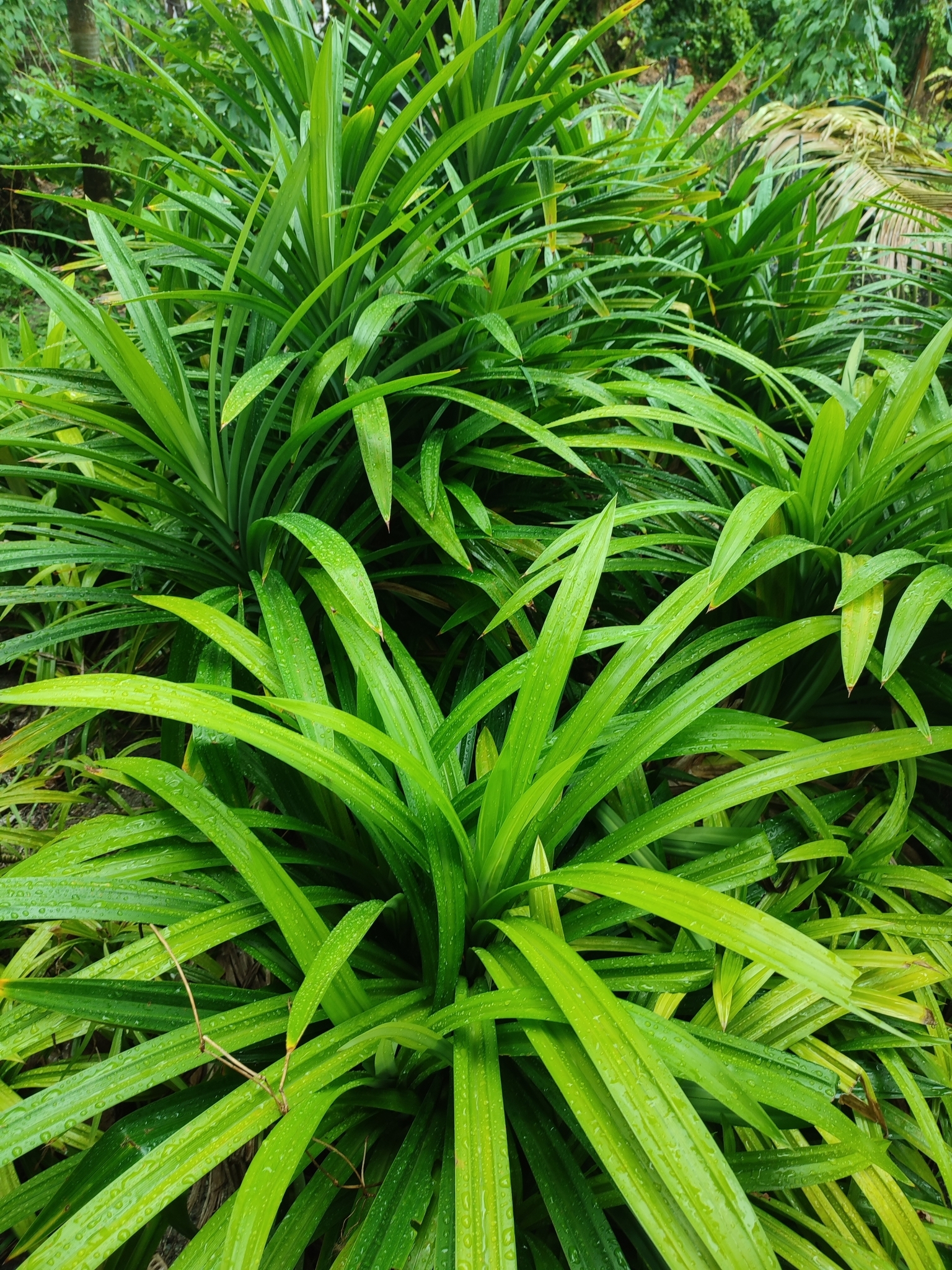
Pandanus amaryllifolius, known as pandan wangi, is an evergreen shrub prized for its scented leaves rather than any flower. It belongs to the screw-pine family, a group more often grown for structure and utility than for beauty.
Source: RHS
Roots in Maluku
This plant's native range traces to Maluku, in what is now Indonesia, and it has since been carried and grown well beyond that home ground. It has been introduced across a wide swathe of tropical and subtropical Asia, from Bangladesh and India through to southern China, Vietnam, the Philippines, and New Guinea. That spread speaks to centuries of cultivation and exchange rather than a single wild frontier.
Source: Kew
A Palm-Like Habit
Pandan wangi has a palm-like look, with the genus as a whole marked by evergreen shrubs and trees bearing terminal rosettes of spiralled, linear, spine-edged leaves. It is the leaves themselves that mark this species out, carrying a scent often likened to vanilla when used in cooking.
Source: RHS
Care recipe
The species record — the baseline every cultivar inherits unless it says otherwise.
Care notes are early — not yet verified
- Light
- ai:claude-opus-4-8
- Water
- ai:claude-opus-4-8 (range 5-10d)
- Humidity
- ai:claude-opus-4-8
- Soil
- ai:claude-fable-5
- Care
- ai:claude-fable-5
Bright, indirect
≈ every 10 days
High
18–30 °C
Loose, well-draining loamy mix that stays lightly moist
Offsets or basal suckers
Balanced liquid feed monthly in spring and summer
Moderate
Does not flower indoors
Not yet documented
This is where toxicity lives — every cultivar of this species inherits it and none can override it.
Reference images
Every image credited. Licenses link to their deeds.
PrimarySources: ai:claude-opus-4-8 · ai:claude-opus-4-8 (range 5-10d) · ai:claude-fable-5
Kept true by its growers
Every fact here carries its source. Grow Fragrant Pandan yourself? What you’ve observed — how it drinks, how it holds its color, a name that’s off — and a clear photo of your plant are exactly what keep this page honest. Contributions are reviewed before anything changes.
Sign in to add what you know →