Species · genus Pachystachys · Acanthaceae
Lollipop Plant
Pachystachys lutea (Ruiz & Pav. ex Schult.) Nees
Also known as: Golden Shrimp Plant · Golden-candle · Yellow Shrimp-plant · Yellow-candles
Cultivars of P. lutea
The named forms growers keep — each with its own page, each honest about how much we know.
No named cultivars catalogued under P. lutea yet. When growers document a stable, named form, it earns its own page here.
Guide
The species-level account. Cultivar pages build on this and say where they differ.
The Lollipop Plant
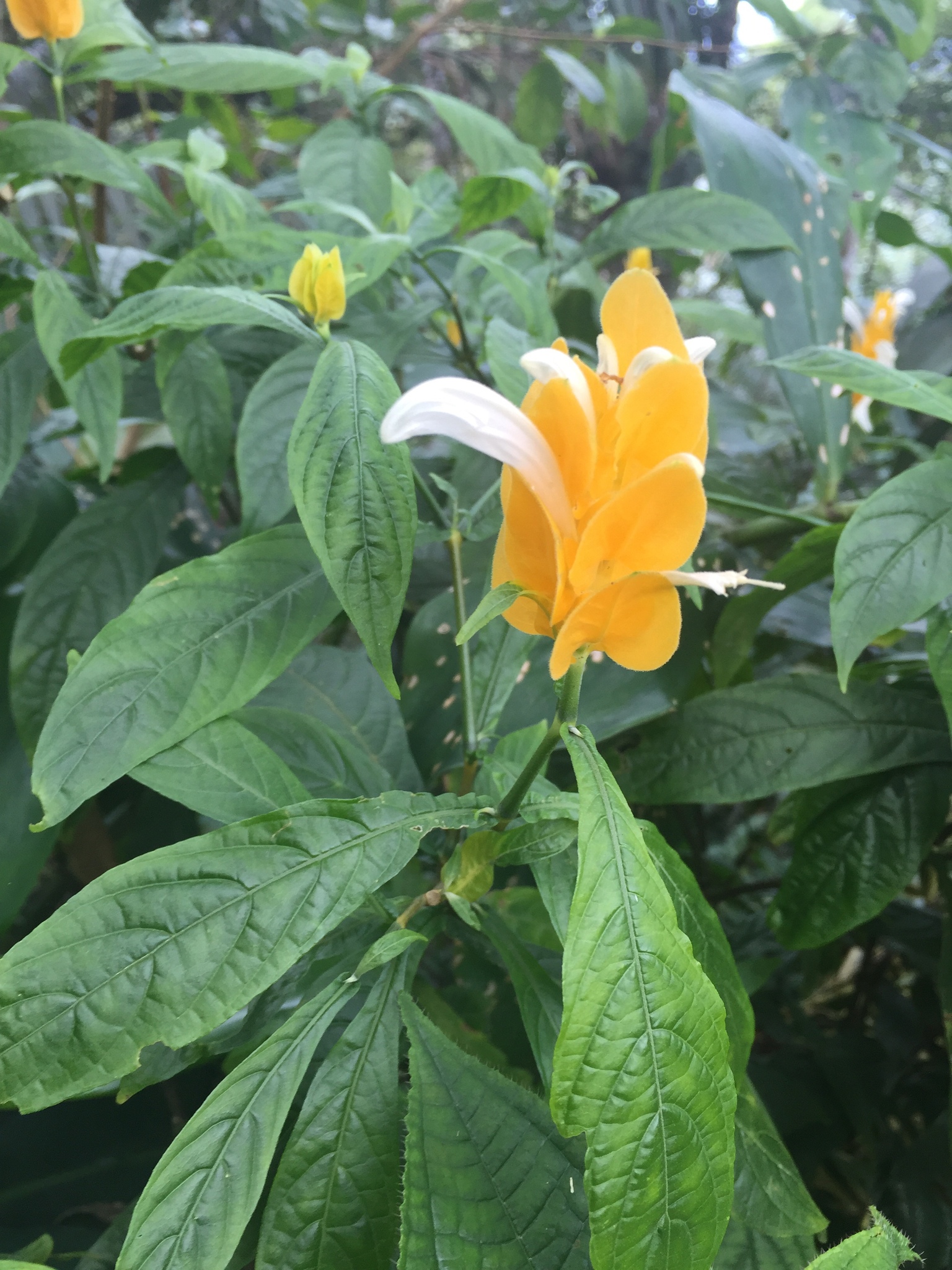
Pachystachys lutea, commonly called the lollipop plant, is an evergreen shrub grown for its dense spikes of showy yellow bracts, from which small white two-lipped flowers emerge. It stays fairly compact, reaching around 0.5 to 1 metre in height with a modest spread.
Source: RHS
Native to Peru and Brazil
This species belongs to the Acanthaceae family and comes originally from Peru and northern Brazil, where it grows in wet tropical conditions. It has since been introduced well beyond its native range, turning up in places as varied as Bangladesh, Myanmar, and several Caribbean and Central American countries.
Source: Kew
Warmth, Light, and Moisture
Outdoors this plant wants a sheltered, frost-free spot in full sun with moist but well-drained soil, tolerant of chalk, clay, loam or sand and of acid, alkaline or neutral pH. Grown under glass, it does best in peat-free, loam-based compost with full light and high humidity around it.
Source: RHS
Softwood Cuttings
New plants are raised from softwood cuttings, a straightforward and commonly used method for this shrub.
Source: RHS
Bracts, Not Petals
The visual draw here is not the flower itself but the bright yellow bracts that hold it, arranged in dense, upright terminal spikes. Against these emerge white, two-lipped tubular flowers, while the foliage is dark green, lance-shaped, and kept year-round on a bushy, evergreen habit.
Source: RHS
Whitefly and Red Spider Mite
Under glass, keep an eye out for glasshouse whitefly and glasshouse red spider mite, the two pests most likely to trouble this plant. Otherwise it is generally free of disease.
Source: RHS
Little Pruning Needed
This is a low-maintenance shrub in that respect: no routine pruning is required. Its hardiness rating places it firmly as a plant for growing outside only in summer, or under glass the rest of the year.
Source: RHS
Care recipe
The species record — the baseline every cultivar inherits unless it says otherwise.
Care notes are early — not yet verified
- Light
- ai:claude-opus-4-8
- Water
- ai:claude-opus-4-8 (range 4-9d)
- Humidity
- ai:claude-opus-4-8
- Soil
- ai:claude-fable-5
- Care
- ai:claude-fable-5
Bright, indirect
≈ every 9 days
Medium
16–27 °C
Fertile, well-draining loamy mix
Softwood stem cuttings
Balanced liquid feed every two weeks while in growth
Fast
Golden bracts through the warm months in bright light
Not yet documented
This is where toxicity lives — every cultivar of this species inherits it and none can override it.
Reference images
Every image credited. Licenses link to their deeds.
PrimarySources: ai:claude-opus-4-8 · ai:claude-opus-4-8 (range 4-9d) · ai:claude-fable-5
Kept true by its growers
Every fact here carries its source. Grow Lollipop Plant yourself? What you’ve observed — how it drinks, how it holds its color, a name that’s off — and a clear photo of your plant are exactly what keep this page honest. Contributions are reviewed before anything changes.
Sign in to add what you know →