Species · genus Pachira · Malvaceae
French-peanut
Pachira glabra Pasq.
Also known as: Luckytree · Moneytree · Saba Nut Tree
Cultivars of P. glabra
The named forms growers keep — each with its own page, each honest about how much we know.
No named cultivars catalogued under P. glabra yet. When growers document a stable, named form, it earns its own page here.
Guide
The species-level account. Cultivar pages build on this and say where they differ.
A braided houseplant favorite
The money tree, Pachira aquatica, is a tropical foliage plant best known indoors for its braided trunk and hand-shaped leaves. It carries genuine cultural weight beyond decoration, tied to good luck and Feng Shui practice, which sets it apart from most houseplants sold mainly on looks alone.
Source: Costa Farms
A swamp tree from the Americas
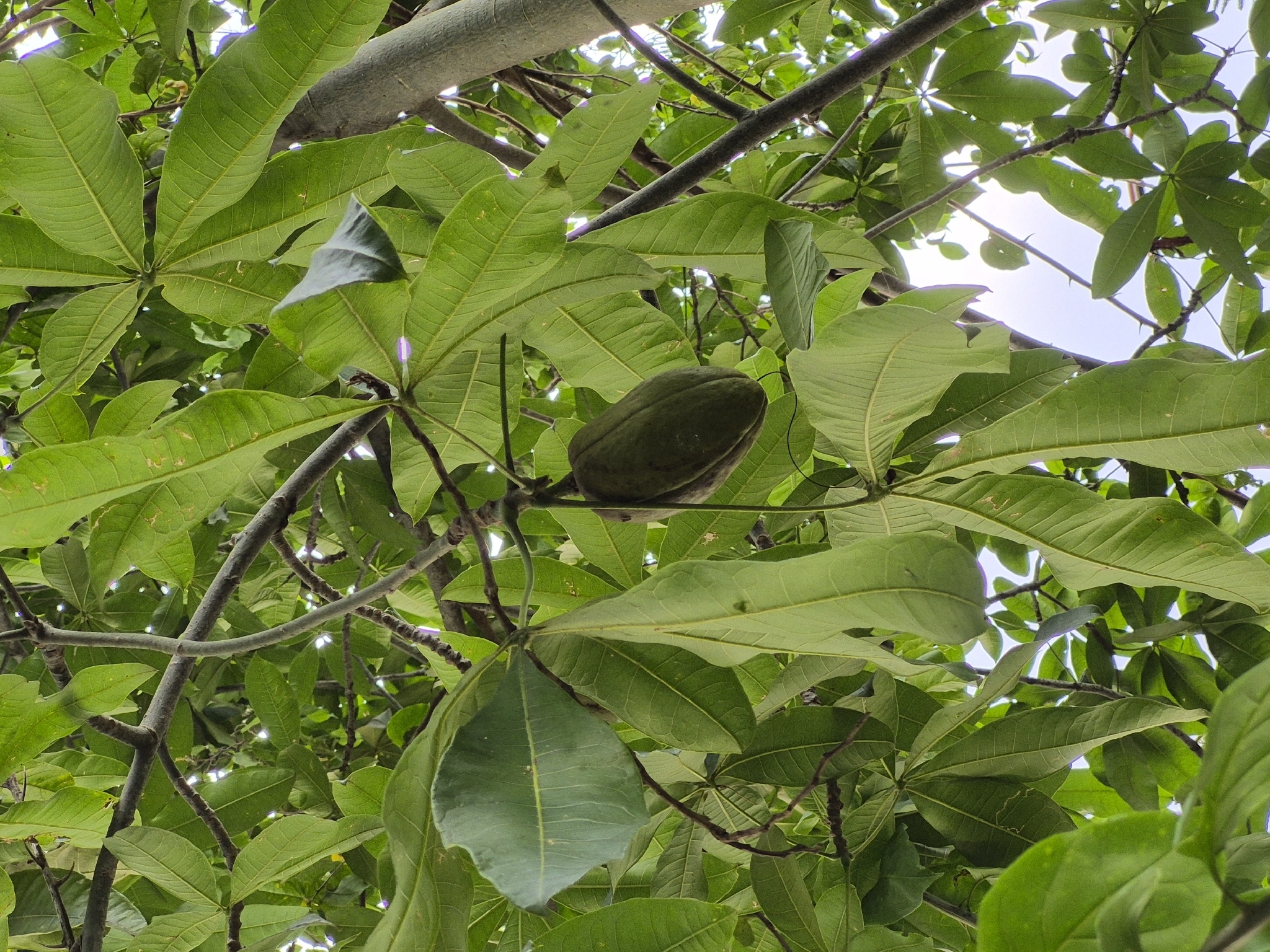
In the wild this is an estuarine tree of freshwater swamps, riverbanks, and tropical rainforest edges, ranging from Mexico down into northern South America, and it is also cultivated in places like Hawaii and southern California. Left to grow outdoors it can reach 60 feet in its native habitat, though it stays smaller, generally to 30 feet, in cultivated landscapes. The common name traces to an old tale of a poor man who found wealth by discovering the tree and selling its seeds, a story that fed directly into its later adoption in Feng Shui.
Source: Missouri Botanical Garden
Bright light, even moisture
Money tree does best in bright, indirect light near a south- or east-facing window, tolerating medium light at the cost of slower growth, while extended direct sun can scorch unacclimated foliage. Water thoroughly once the top inch or two of mix begins to dry, then let it drain fully, since standing water and soggy soil are the most common route to root rot. It also appreciates humidity above what most homes offer naturally, around 50 to 60 percent, which can be supplied with grouping, a pebble tray, or a humidifier, and it should be kept clear of heating and cooling vents and drafts below 50°F.
Source: Costa Farms
Hand-shaped leaves, braided base
Each leaf is palmately compound, typically made of five to nine glossy, elliptic to lance-shaped leaflets that fan out like an open hand, giving the plant its tropical, architectural look. Most retail specimens have several young trunks braided together as they grow, a purely cosmetic technique that fuses over time and does no harm to the plant. As money trees age, the base can thicken into a dense, fat trunk that lends older specimens a bonsai-like presence, and unbraided single-trunk forms are available too, developing a more conventionally tree-like shape.
Source: Costa Farms
Watering drives most issues
Yellowing leaves on money tree are almost always a watering problem, most often overwatering or poor drainage that leaves roots sitting wet, though low light or long-neglected feeding can occasionally be a factor. Leaf drop tends to follow stress such as overwatering, a sudden change in location, cold drafts, or low humidity, and some drop is normal after a move or repotting as the plant adjusts. In outdoor or garden settings the plant has no serious insect or disease problems, but it will drop leaves if the soil is allowed to dry out.
Source: Missouri Botanical Garden
Spring pruning keeps it full
Money tree tolerates pruning well and can be shaped to control size or encourage bushiness. Spring is the time to cut, trimming just above a leaf node so the plant branches from that point and grows back more compact, while also removing any yellowing, damaged, or crowded growth at the base. Use clean, sharp tools and avoid taking off more than a third of the plant at once.
Source: Costa Farms
Care recipe
The species record — the baseline every cultivar inherits unless it says otherwise.
Care notes are early — not yet verified
- Light
- ai:claude-opus-4-8
- Water
- ai:claude-opus-4-8 (range 7-14d)
- Humidity
- ai:claude-opus-4-8
- Soil
- ai:claude-fable-5
- Care
- ai:claude-fable-5
Bright, indirect
≈ every 14 days
Medium
16–27 °C
Rich, well-draining potting mix with sand or perlite
Stem cuttings or seed
Balanced liquid feed monthly in the growing season
Moderate
Rarely flowers indoors
Not yet documented
This is where toxicity lives — every cultivar of this species inherits it and none can override it.
Reference images
Every image credited. Licenses link to their deeds.
PrimarySources: ai:claude-opus-4-8 · ai:claude-opus-4-8 (range 7-14d) · ai:claude-fable-5
Kept true by its growers
Every fact here carries its source. Grow French-peanut yourself? What you’ve observed — how it drinks, how it holds its color, a name that’s off — and a clear photo of your plant are exactly what keep this page honest. Contributions are reviewed before anything changes.
Sign in to add what you know →