Species · genus Pachira · Malvaceae
Guiana Chestnut
Pachira aquatica Aubl.
Also known as: Malabar Chestnut · French Peanut · Money Tree · Provision Tree · Saba Nut
Cultivars of P. aquatica
The named forms growers keep — each with its own page, each honest about how much we know.
No named cultivars catalogued under P. aquatica yet. When growers document a stable, named form, it earns its own page here.
Guide
The species-level account. Cultivar pages build on this and say where they differ.
A Braided Icon
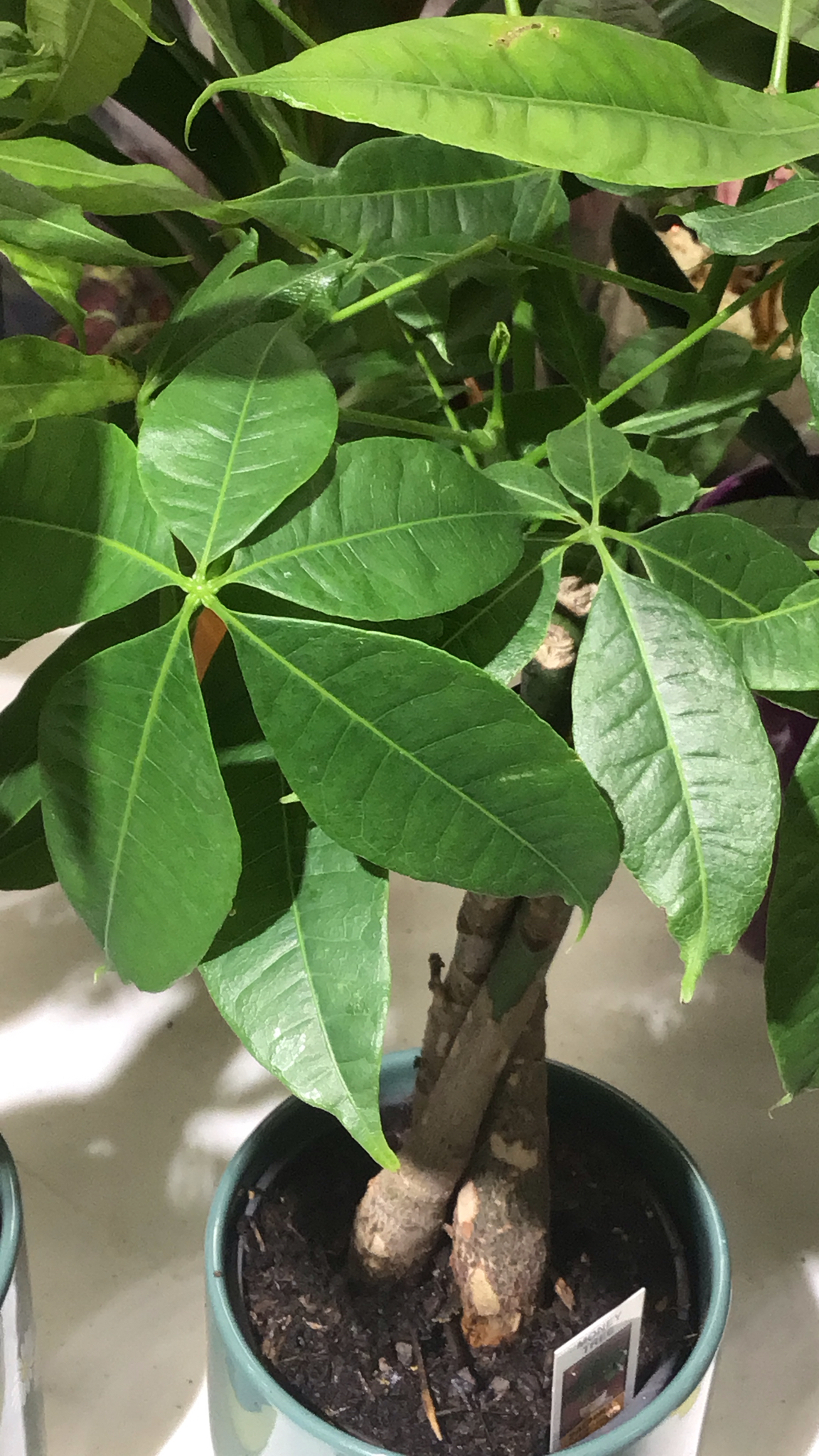
The money tree, Pachira aquatica, is a tropical houseplant known for its glossy, hand-shaped leaves and, in most retail specimens, a trunk of several young stems braided together as they grew. It carries genuine cultural weight beyond its looks, valued in feng shui practice as a bringer of good luck.
Source: Costa Farms
From Wetlands to Feng Shui
Pachira aquatica hails from the wetlands of Central and South America, where it grows beside streams and rivers. Its rise as a houseplant traces to the 1980s, when a truck driver in Taiwan began braiding young trunks together, a practice said to lock in good fortune. By 2005 money tree had added some seven million dollars to Taiwan's agricultural export economy, and older braided specimens can become genuinely valuable.
Source: Epic Gardening
Bright Light, Even Moisture
Money tree wants bright, indirect light near a south or east window, tolerating medium light with slower growth but scorching if left in direct sun too long. Water thoroughly once the top inch or two of mix begins to dry, letting it drain fully and never sit in standing water, since that is the most common route to root rot. It prefers humidity above what most homes offer naturally, ideally 50 to 60 percent, so grouping plants, a pebble tray, or a small humidifier helps, and feeding follows the seasons: a time-release houseplant fertilizer in spring and summer, none in fall and winter.
Source: Costa Farms
Cuttings or Seed
Money tree can be propagated from stem cuttings or from seed, though cuttings do best rooted in a well-draining medium such as sand or a peat-perlite mix rather than in water. A six-inch cutting with a couple of leaf nodes, dipped in rooting hormone and kept humid under a plastic cover, typically roots in four to six weeks. Seed propagation uses the same shallow planting depth, about a quarter inch with the pale eye turned sideways, and benefits from warm soil around 80°F and bright indirect light while it establishes.
Source: Epic Gardening
Hand-Shaped Leaves, Braided Trunks
The foliage draws the eye first: large, glossy leaves divided into five to seven leaflets that spread like an open hand, giving the plant a tropical, architectural presence. The braided trunk seen on most nursery plants isn't a natural habit but a grower's technique, several young stems plaited together so they fuse as they mature, purely decorative and harmless to the plant. Over years, the base can thicken into a dense, bonsai-like trunk, and unbraided single-trunk forms are also grown, developing a more conventional tree shape.
Source: Costa Farms
Sap Suckers and Gnats
Aphids, mealybugs, and other soft scale insects are the main sap-sucking troubles, often first noticed as limp or dropping leaves or small clusters on stems and leaf undersides. Fungus gnats can also move in, their larvae chewing at roots while adults flit about the room; keeping soil on the drier side between waterings discourages them. Regular neem oil applications help against aphids, scale, and mealybugs, and a cotton swab dipped in rubbing alcohol can loosen scale by hand.
Source: Epic Gardening
Reading the Leaves
Yellowing leaves usually point to a watering problem, most often overwatering or poor drainage that leaves roots sitting wet, though low light or long-neglected feeding can occasionally be the cause. Brown, crisp leaf edges typically signal low humidity or under-watering, while drooping leaves suggest too much water rather than too little. Leaf drop often follows stress such as a sudden move, a temperature drop, or cold drafts below 50°F, and some dropping after relocation or repotting is simply the plant acclimating.
Source: Costa Farms
Pruning and Repotting
Money tree tolerates pruning well and can be shaped in spring by cutting just above a leaf node, which encourages branching and keeps the plant from growing leggy; removing more than a third at once is best avoided. Repotting calls for a pot only one to two inches larger than the current one, with the root mass kept intact and the plant set about an inch below the rim. Some leaf drop after repotting is normal as the plant settles into its new container.
Source: Epic Gardening
Care recipe
The species record — the baseline every cultivar inherits unless it says otherwise.
Care notes are early — not yet verified
- Light
- ai:claude-opus-4-8
- Water
- ai:claude-opus-4-8 (range 7-14d)
- Humidity
- ai:claude-opus-4-8
- Soil
- ai:claude-fable-5
- Care
- ai:claude-fable-5
Bright, indirect
≈ every 14 days
Medium
16–27 °C
Rich, well-draining potting mix with sand or perlite
Stem cuttings or seed
Balanced liquid feed monthly in spring and summer
Moderate
Rarely flowers indoors
Not yet documented
This is where toxicity lives — every cultivar of this species inherits it and none can override it.
Reference images
Every image credited. Licenses link to their deeds.
PrimarySources: ai:claude-opus-4-8 · ai:claude-opus-4-8 (range 7-14d) · ai:claude-fable-5
Kept true by its growers
Every fact here carries its source. Grow Guiana Chestnut yourself? What you’ve observed — how it drinks, how it holds its color, a name that’s off — and a clear photo of your plant are exactly what keep this page honest. Contributions are reviewed before anything changes.
Sign in to add what you know →