Species · genus Oxalis · Oxalidaceae
Wood Sorrel
Oxalis triangularis A.St.-Hil.
Also known as: False Shamrock · Purple Shamrock
Cultivars of O. triangularis
The named forms growers keep — each with its own page, each honest about how much we know.
No named cultivars catalogued under O. triangularis yet. When growers document a stable, named form, it earns its own page here.
Guide
The species-level account. Cultivar pages build on this and say where they differ.
The False Shamrock
Oxalis triangularis is a foliage perennial known as the false shamrock, prized for its purple, near-black, reddish, or green leaves formed of three triangular leaflets. It is not a true shamrock at all, since shamrocks belong to the clover family, but the resemblance gave it the common name. It suits life as a houseplant just as readily as it does a spot in the outdoor garden.
Source: Epic Gardening
South American Roots
This plant is native to Argentina, Bolivia, Brazil, Paraguay, and Peru, and the RHS lists its range as stretching from Peru to Brazil and northern Argentina. It has earned the Royal Horticultural Society's Award of Garden Merit, a recognition it holds deservedly.
Source: Epic Gardening
A Steady Rhythm
Give this plant a bright spot with sun or partial shade, keeping in mind that hotter climates call for afternoon shade while cooler ones support full sun for the best color. Keep the soil evenly moist while the plant is young, easing off once it has rooted deeply, and always favor well-draining, humus-rich soil over anything that stays soggy. Temperatures between 60 and 80°F suit it best, since frost and extremes beyond that range will weaken or stall it, and feeding needs are modest, with compost worked into the soil usually enough. The RHS recommends a sheltered position with south, east, or west aspect and well-drained sandy or humus-rich soil.
Source: Epic Gardening
Division of Rhizomes
Division is the most dependable way to propagate false shamrock. Loosen the soil around the plant, lift it, and look for the larger tubers with rhizomes extending from them, then gently separate the clumps so each piece carries a corm and plenty of rhizome. Replant divisions at their original depth in compost-rich soil, and expect some temporary drooping while new roots settle in. Seed is also an option, sown in spring once soil reaches 60°F, kept consistently moist through the first season. The RHS likewise notes that this plant can be propagated by seed or division.
Source: Epic Gardening
Leaves That Move
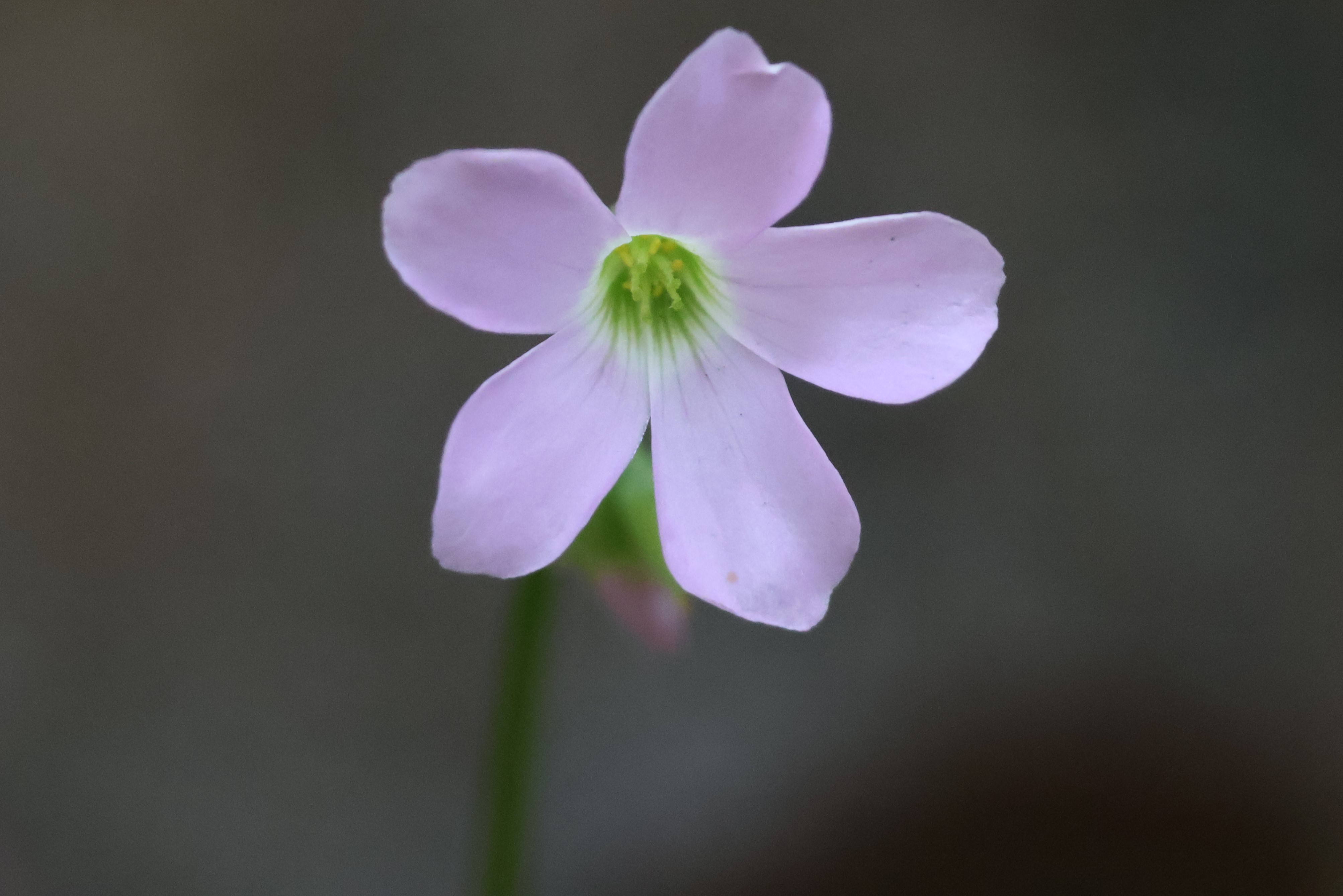
Each triangular leaflet sits on a slender petiole rising from an underground rhizome, and the whole leaf responds to light, folding down like a closed umbrella at night and reopening at sunrise. The foliage will also fold if bumped or windblown, a small act of self-protection. Flower stalks rise separately from the same rhizome, carrying five-petaled blooms in white, pale pink, or pale lavender. The RHS describes the plant as clump-forming and bulbous, reaching 15 to 30 centimeters tall in flower, with funnel-shaped white or pale pink blooms held in umbels above the foliage in summer.
Source: Epic Gardening
Sap Suckers to Watch
The oxalic acid in this plant's tissue makes it a poor food source for most pests, so trouble usually spreads over from other infested plants nearby. Aphids, whiteflies, and spider mites are the main culprits, all sucking sap and all treatable with a strong water spray followed by neem oil or insecticidal soap. Outdoors, the RHS notes it may also draw the attention of slugs and snails.
Source: Epic Gardening
Dormancy and Disease
Temperature swings are the trickiest part of keeping this plant content, and it may go dormant up to twice a year, browning its leaves and appearing dead as it conserves energy; watering should be cut back until new growth shows. Root rot can set in from overly moist, warm conditions, showing as yellowing foliage or wilting near the base. Rust causes yellowing leaves that develop rusty spore patches, especially heading into dormancy, while powdery mildew and botrytis are treatable fungal nuisances, and the RHS flags rust diseases as a particular susceptibility. Chlorotic ringspot is more serious, appearing as yellow rings or streaks with no cure, and infected plants are best removed and destroyed since aphids are thought to spread it.
Source: Epic Gardening
Pruning and Repotting
Maintenance is light: snip spent flower stalks at the base with clean shears once blooms fade, and trim back any browning, dormant foliage to about an inch from the base. When repotting, ease the plant free, brush away old soil, check the roots for rot, and either return it to fresh compost-rich mix or divide overcrowded clumps rather than sizing up the pot. Established plants also do well slightly rootbound, and repotting is a natural moment to divide and refresh the soil, which encourages new root growth.
Source: Epic Gardening
Care recipe
The species record — the baseline every cultivar inherits unless it says otherwise.
Care notes are early — not yet verified
- Light
- ai:claude-opus-4-8
- Water
- ai:claude-opus-4-8 (range 7-14d)
- Humidity
- ai:claude-opus-4-8
- Soil
- ai:claude-fable-5
- Care
- ai:claude-fable-5
Bright, indirect
≈ every 14 days
Medium
10–25 °C
Loose, well-draining potting mix with some grit
Divide the small bulbs after a dormancy rest
Balanced liquid feed monthly during active growth
Moderate
Small pale-pink flowers above deep-purple triangular leaves
Toxic to cats & dogs & humans
Oxalidaceae accumulate soluble oxalates, which can be harmful if ingested in quantity. This is where toxicity lives: every cultivar of this species inherits it and none can override it.
Reference images
Every image credited. Licenses link to their deeds.
PrimarySources: ai:claude-opus-4-8 · ai:claude-opus-4-8 (range 7-14d) · ai:claude-fable-5 · ai:claude-opus-4-8 (family inference)
Kept true by its growers
Every fact here carries its source. Grow Wood Sorrel yourself? What you’ve observed — how it drinks, how it holds its color, a name that’s off — and a clear photo of your plant are exactly what keep this page honest. Contributions are reviewed before anything changes.
Sign in to add what you know →