Species · genus Oxalis · Oxalidaceae
Four-Leaved Pink Sorrel
Oxalis tetraphylla Cav.
Also known as: Lucky Clover · Four-leaf Pink-sorrel · Good-luck-leaf · Fleshy Yellow-sorrel · Four-leaved Sorrel
Cultivars of O. tetraphylla
The named forms growers keep — each with its own page, each honest about how much we know.
No named cultivars catalogued under O. tetraphylla yet. When growers document a stable, named form, it earns its own page here.
Guide
The species-level account. Cultivar pages build on this and say where they differ.
Lucky Clover, Explained
Oxalis tetraphylla, commonly called lucky clover or the good luck plant, is a clump-forming bulbous perennial grown for its clover-like leaves and bright pink flowers. It stays modest in stature, reaching only about 10cm in height when in bloom, and is equally at home in a pot, a hanging basket, or tucked into a rock garden.
Source: RHS
A Mexican Native
This species originates from Mexico, and is also known under the older synonym Oxalis deppei. The selection 'Iron Cross' takes its name from the dark patches at the base of each leaflet, which together form a distinct cross shape on the foliage.
Source: RHS
Sun, Grit, Patience
Give this plant full sun and a sheltered spot, in well-drained soil that is on the poor side rather than rich. It manages well in sand or loam, tolerates acid, alkaline, or neutral pH, and copes with either well-drained or moist-but-well-drained conditions. Grown under glass, an alpine house mix of equal parts loam, leaf mould, and grit suits it well, and it takes two to five years to reach its mature size of 10-50cm.
Source: RHS
By Seed or Division
Lucky clover is propagated either from seed or by division of the clump.
Source: RHS
Clover Leaves, Cross Marks
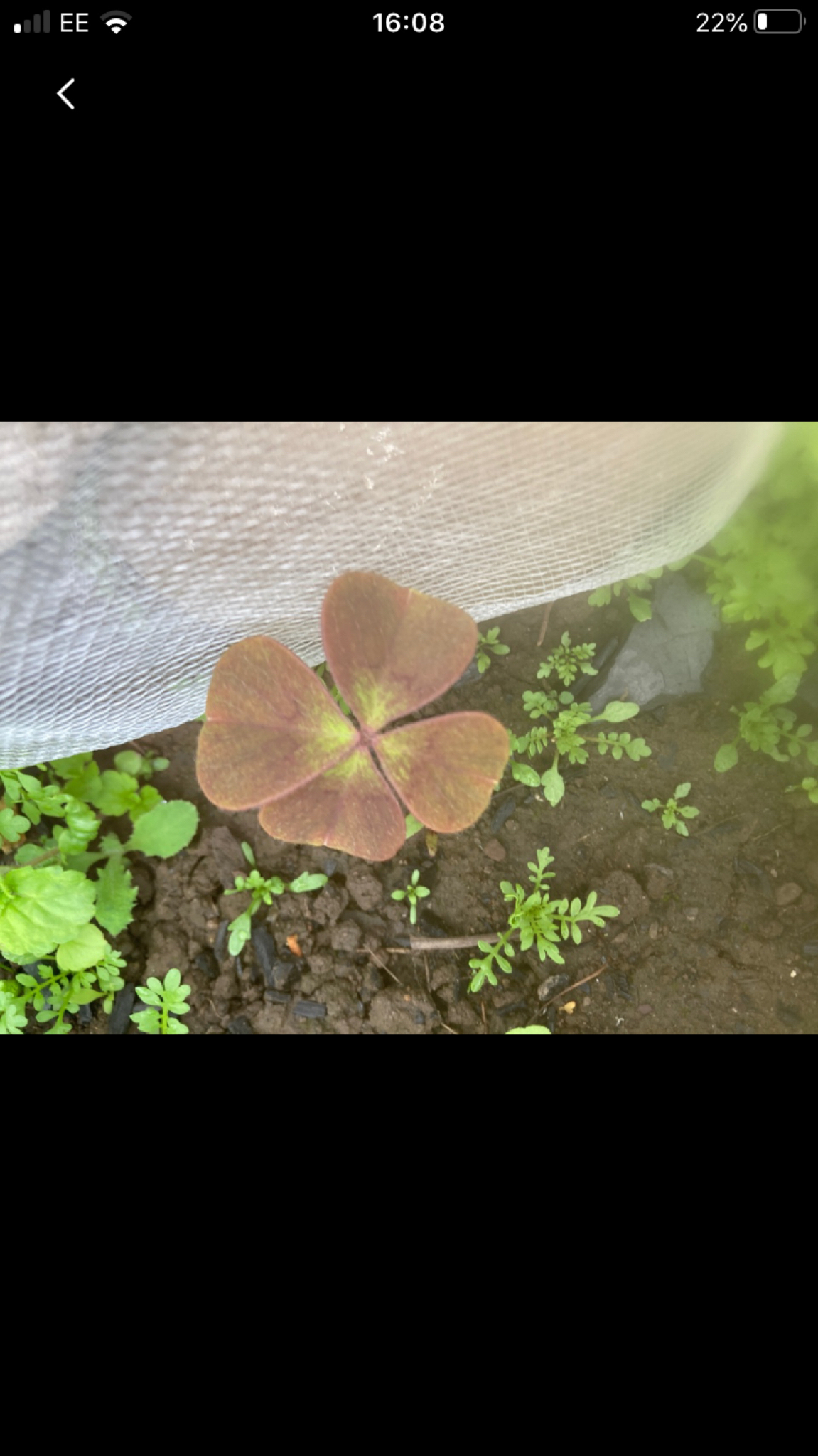
The heart-shaped leaflets carry a dark brown band near the base, and in the cultivar 'Iron Cross' these markings meet to form a cross pattern across the clump. From spring to early autumn it sends up bright, funnel-shaped pink flowers above the foliage, with the deciduous leaves dying back in their season.
Source: RHS
Slugs and Rust to Watch
Outdoors, slugs and snails are the main pests to watch for on this plant, while rust diseases are the notable disease risk. Indoors and in sheltered spots these pressures ease considerably, but it is worth checking foliage if the plant spends time outside.
Source: RHS
A Spreader by Nature
Like other Oxalis species, this one can multiply readily once established, and some gardeners consider certain relatives in the genus weedy because of how persistently they spread and self-propagate. If lucky clover establishes more vigorously than wanted, non-chemical methods such as careful digging out of bulbs and bulbils are the recommended approach, since common weedkillers are not particularly effective against this genus.
Source: RHS
No Pruning Needed
There is no pruning required for this plant, which keeps its maintenance fairly light beyond routine care.
Source: RHS
Care recipe
The species record — the baseline every cultivar inherits unless it says otherwise.
Care notes are early — not yet verified
- Light
- ai:claude-opus-4-8
- Water
- ai:claude-opus-4-8 (range 7-14d)
- Humidity
- ai:claude-opus-4-8
- Soil
- ai:claude-fable-5
- Care
- ai:claude-fable-5
Bright, indirect
≈ every 14 days
Medium
10–27 °C
Well-draining potting mix with a little grit
Separate and pot the small bulbs
Balanced liquid feed monthly in the growing season
Moderate
Reddish-pink flowers above the four-lobed 'lucky' leaves
Toxic to cats & dogs & humans
Oxalidaceae are known for soluble oxalates (oxalic acid), which can be harmful if ingested in quantity. This is where toxicity lives: every cultivar of this species inherits it and none can override it.
Reference images
Every image credited. Licenses link to their deeds.
PrimarySources: ai:claude-opus-4-8 · ai:claude-opus-4-8 (range 7-14d) · ai:claude-fable-5 · ai:claude-opus-4-8 (family inference)
Kept true by its growers
Every fact here carries its source. Grow Four-Leaved Pink Sorrel yourself? What you’ve observed — how it drinks, how it holds its color, a name that’s off — and a clear photo of your plant are exactly what keep this page honest. Contributions are reviewed before anything changes.
Sign in to add what you know →