Species · genus Oxalis · Oxalidaceae
Spiral Sorrel
Oxalis spiralis G.Don
Also known as: Spiral Woodsorrel
Cultivars of O. spiralis
The named forms growers keep — each with its own page, each honest about how much we know.
No named cultivars catalogued under O. spiralis yet. When growers document a stable, named form, it earns its own page here.
Guide
The species-level account. Cultivar pages build on this and say where they differ.
Volcanic sorrel, briefly
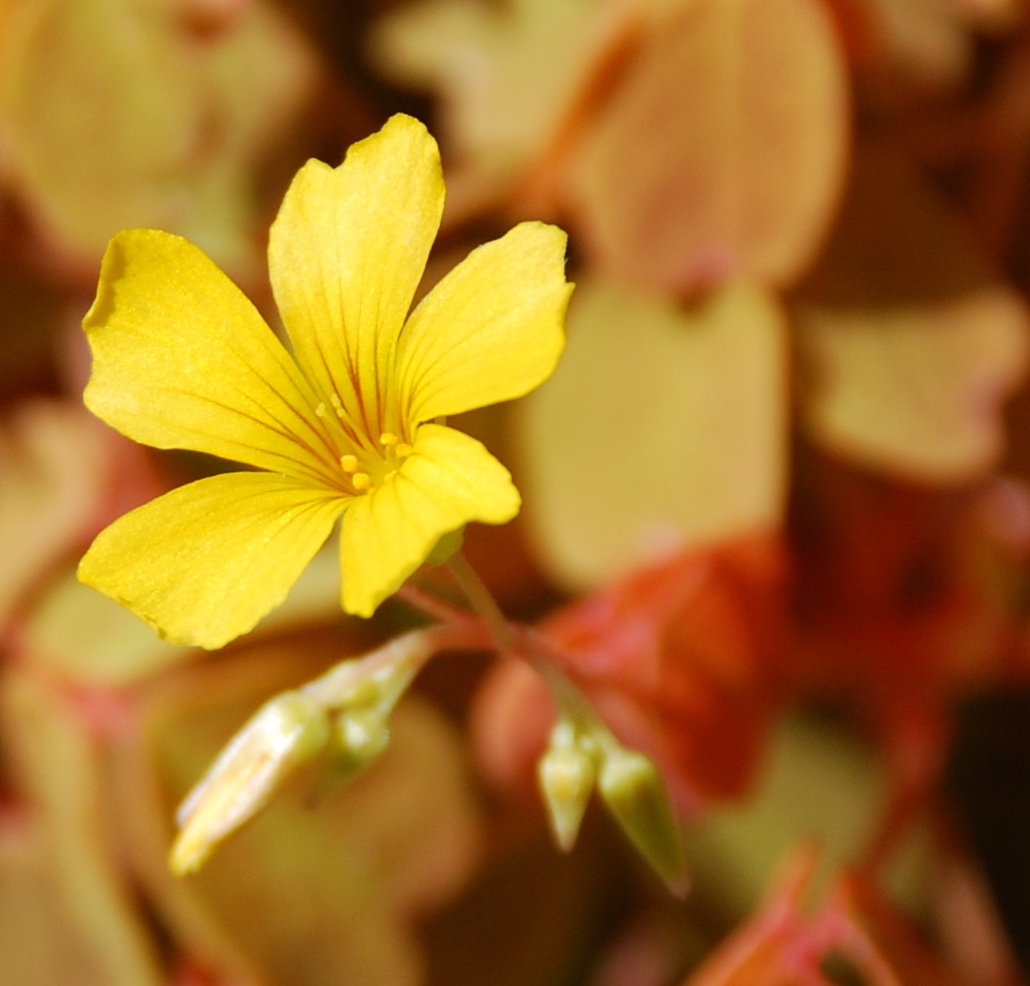
Oxalis spiralis subsp. vulcanicola, known as volcanic sorrel, is a spreading, bulbous perennial grown for its fleshy stems and trilobe foliage. It carries small, star-shaped yellow flowers on wiry purple stems through summer into autumn.
Source: RHS
Native range
This subspecies is found from Mexico down to Panama, and it is not native to Britain or Ireland. It belongs to the wider Oxalis genus, which spans annuals and perennials with fibrous, bulbous or rhizomatous roots.
Source: RHS
Light, soil, and position
Grow it in well-drained, humus-rich soil, ideally in full sun though it tolerates partial shade, and give it a sheltered spot. Indoors, an equal mix of loam, leaf mould and grit suits it well, whether on a windowsill, in a conservatory or an alpine house. It is only rated to H2, so it will not take being frozen and needs protection from cold.
Source: RHS
By seed or division
Propagation is straightforward: sow seed, or divide established clumps, following the usual approach used for dividing perennials.
Source: RHS
Colour-shifting, sun-tracking leaves
The green foliage turns purple-pink where sunlight falls on it, a shift tied directly to light exposure. The plant also rotates its leaves to track the sun through the day, and they visibly quiver as they fold shut in the evening. The related cultivar 'Sunset Velvet' shows its own seasonal colour turn, with pinkish-orange leaflets in spring, greener tones by summer, and deep magenta by autumn.
Source: RHS
Slugs, snails, vine weevil
Slugs, snails and vine weevil larvae are the pests most likely to trouble it. Rust disease is also worth watching for.
Source: RHS
Minimal pruning needed
No pruning is required for this plant, so maintenance stays light. Time to maturity runs roughly two to five years for the species itself.
Source: RHS
Care recipe
The species record — the baseline every cultivar inherits unless it says otherwise.
Care notes are early — not yet verified
- Light
- ai:claude-opus-4-8
- Water
- ai:claude-opus-4-8 (range 5-10d)
- Humidity
- ai:claude-opus-4-8
- Soil
- ai:claude-fable-5
- Care
- ai:claude-fable-5
Bright, indirect
≈ every 10 days
Medium
10–27 °C
Light, well-draining potting mix with added grit
Divide the small tubers or rhizomes
Dilute balanced feed monthly during growth
Moderate
Cheerful yellow flowers under bright, indirect light
Toxic to cats & dogs & humans
Oxalidaceae accumulate soluble oxalates (oxalic acid salts), which can irritate and cause harm if ingested in quantity. This is where toxicity lives: every cultivar of this species inherits it and none can override it.
Reference images
Every image credited. Licenses link to their deeds.
PrimarySources: ai:claude-opus-4-8 · ai:claude-opus-4-8 (range 5-10d) · ai:claude-fable-5 · ai:claude-opus-4-8 (family inference)
Kept true by its growers
Every fact here carries its source. Grow Spiral Sorrel yourself? What you’ve observed — how it drinks, how it holds its color, a name that’s off — and a clear photo of your plant are exactly what keep this page honest. Contributions are reviewed before anything changes.
Sign in to add what you know →