Species · genus Oxalis · Oxalidaceae
Oregon Wood Sorrel
Oxalis oregana Nutt. ex Torr. & A.Gray
Also known as: Oregon Oxalis · Redwood Sorrel · Redwood Woodsorrel
Cultivars of O. oregana
The named forms growers keep — each with its own page, each honest about how much we know.
No named cultivars catalogued under O. oregana yet. When growers document a stable, named form, it earns its own page here.
Guide
The species-level account. Cultivar pages build on this and say where they differ.
A woodland sorrel
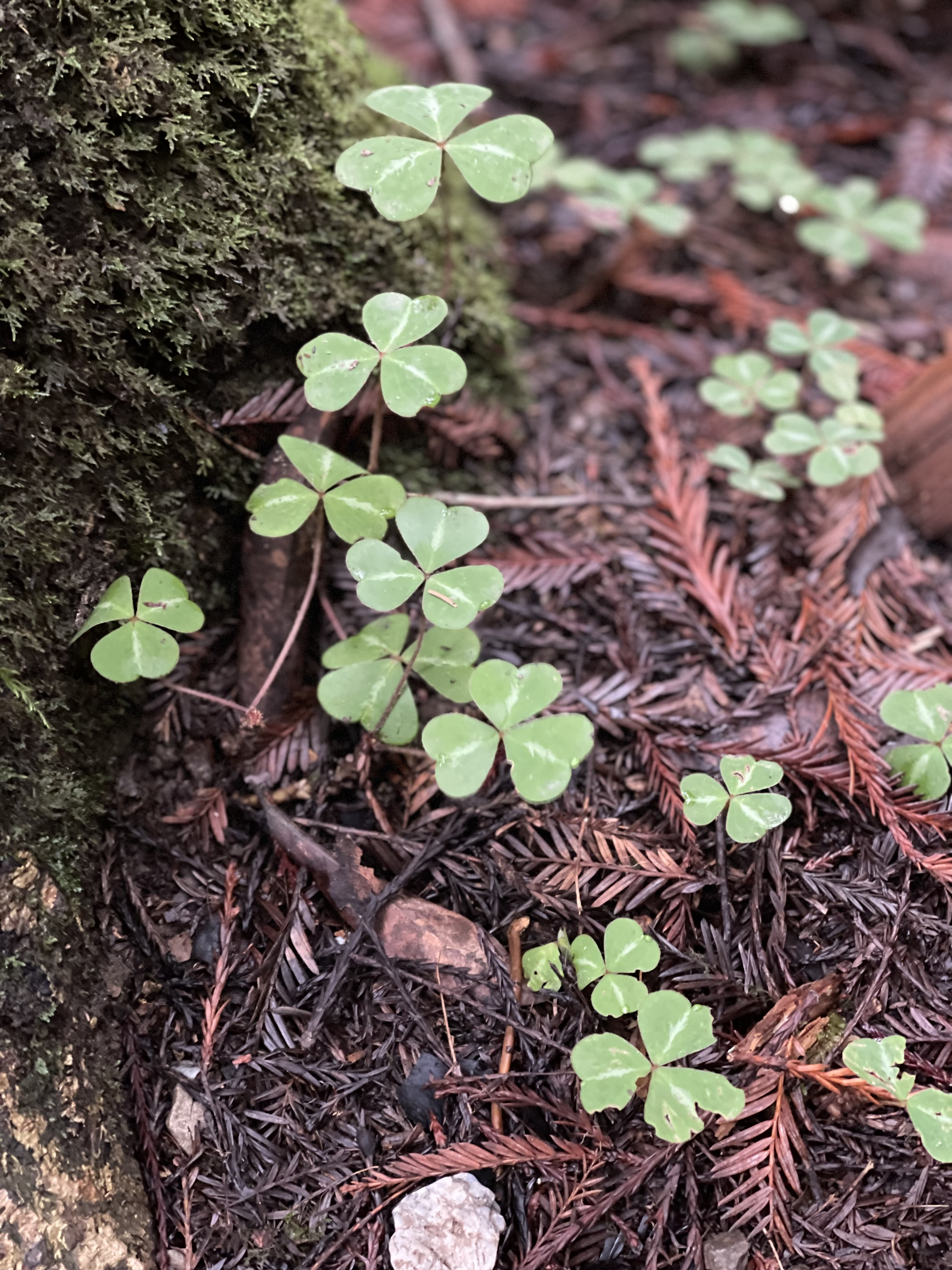
Redwood sorrel, Oxalis oregana, is a low creeping perennial grown for the way it carpets shady ground rather than for any single showy feature. It carries hairy, trifoliate leaves and small solitary flowers that appear over a long stretch from spring into autumn.
Source: RHS
From western North America
This species comes from western North America, and its common name nods to the redwood forests it is associated with in the wild. In cultivation it is classed as a herbaceous perennial and is not native to Britain or Ireland.
Source: RHS
Shade and steady moisture
Give it full or partial shade and a soil that stays moist but drains, whether that is chalk, clay, loam or sand, with an acid to alkaline pH all tolerated. It is content in sheltered, north, east or west facing spots and rated hardy down to H5, so in most UK gardens it needs no winter protection. No feeding or particular humidity regime is called for beyond keeping that humus rich ground reliably damp.
Source: RHS
Divide the rhizomes
Propagation is by division in spring, and small sections of the rhizome will root readily if given bottom heat. The related form, smalliana, can also be raised from seed as well as by dividing its rhizomes.
Source: RHS
Creeping, mat-forming habit
The plant spreads by rhizome into an indefinitely widening mat, staying low at around 20cm tall while covering ground without limit, which suits it to naturalising in woodland conditions. Its solitary flowers, in rose-pink, lilac or white and about 2.5cm across, sit on slender stems above the trifoliate foliage.
Source: RHS
Mostly left alone
The species itself is generally free of pest trouble. Its form smalliana is the exception, noted as potentially susceptible to slugs and snails when grown outdoors.
Source: RHS
Watch for rust
The main disease concern noted for this plant is a susceptibility to rust, so foliage showing rust-like spotting is the main thing to keep an eye on.
Source: RHS
No pruning needed
Redwood sorrel asks for no pruning at all, making it a low-fuss choice once it is settled into its shaded spot.
Source: RHS
Care recipe
The species record — the baseline every cultivar inherits unless it says otherwise.
Care notes are early — not yet verified
- Light
- ai:claude-opus-4-8
- Water
- ai:claude-opus-4-8 (range 5-10d)
- Humidity
- ai:claude-opus-4-8
- Soil
- ai:claude-fable-5
- Care
- ai:claude-fable-5
Low light
≈ every 10 days
High
4–24 °C
Humus-rich, moisture-retentive mix that still drains
Divide the creeping rhizomes in spring
Gentle balanced feed monthly in spring and summer
Moderate
Delicate white to pale-pink flowers; enjoys cool shade
Toxic to cats & dogs & humans
Oxalidaceae are rich in soluble oxalates (oxalic acid salts), which can irritate and, in quantity, cause systemic harm. This is where toxicity lives: every cultivar of this species inherits it and none can override it.
Reference images
Every image credited. Licenses link to their deeds.
PrimarySources: ai:claude-opus-4-8 · ai:claude-opus-4-8 (range 5-10d) · ai:claude-fable-5 · ai:claude-opus-4-8 (family inference)
Kept true by its growers
Every fact here carries its source. Grow Oregon Wood Sorrel yourself? What you’ve observed — how it drinks, how it holds its color, a name that’s off — and a clear photo of your plant are exactly what keep this page honest. Contributions are reviewed before anything changes.
Sign in to add what you know →