Species · genus Oxalis · Oxalidaceae
Garden Pink-Sorrel
Oxalis latifolia Kunth
Also known as: Broadleaf Wood-sorrel · Fishtail Oxalis · Large-leaf Wood-sorrel · Pink Shamrock · Purple-flower Oxalis
Cultivars of O. latifolia
The named forms growers keep — each with its own page, each honest about how much we know.
No named cultivars catalogued under O. latifolia yet. When growers document a stable, named form, it earns its own page here.
Guide
The species-level account. Cultivar pages build on this and say where they differ.
A Sour-Leaved Wanderer
Oxalis is the sorrel family, a wide genus taken in by gardeners for their clover-like leaves and cheerful flowers, though several species are known just as readily as persistent weeds. Three in particular, O. corniculata, O. debilis and O. latifolia, are the ones UK gardeners most often meet uninvited, while others such as O. triangularis are grown deliberately as houseplants.
Source: RHS
Not From Here
The three troublesome species, O. corniculata, O. debilis and O. latifolia, are all perennial but none are native to the UK. Their long history as medicinal and food plants seems to have helped carry them well beyond their original ranges.
Source: RHS
Where It Settles In
Oxalis latifolia is content in full sun or partial shade, in chalk, loam or sandy soil that is moist but well-drained, and tolerates acid, alkaline or neutral conditions. It is hardy through most of the UK even in severe winters, and grown as a houseplant it needs no pruning at all.
Source: RHS
Bulbils Do The Work
Oxalis latifolia is propagated by separating its bulbils, or by seed. In the ground it spreads readily this way, since disturbing the soil easily knocks bulbils loose to start new plants elsewhere, which is why it is often better confined to a container.
Source: RHS
Three Faces, One Genus
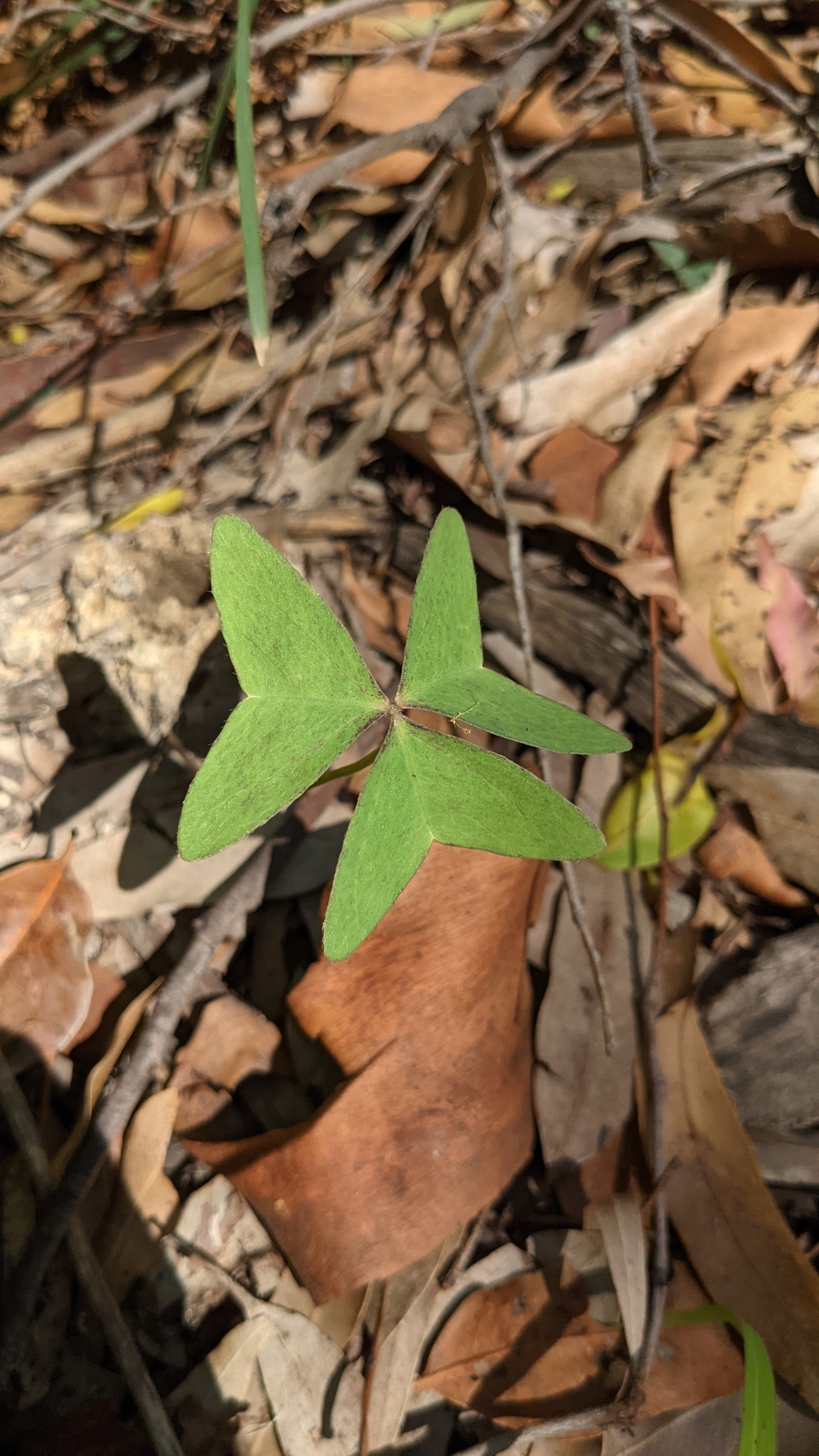
All share trifoliate leaves and summer flowers, but their forms differ. O. corniculata is low and creeping, its clover-like leaves ranging from mid-green to dark purple, with yellow flowers followed by upright seedpods. O. debilis and O. latifolia grow taller from scaly bulbs, with pink or pinkish-mauve flowers, the latter distinguished by leaflets shaped like fish tails rather than hearts.
Source: RHS
Slugs and Rust
Grown outdoors, oxalis latifolia may draw the attention of slugs and snails, and it can also be susceptible to rust diseases.
Source: RHS
A Plant That Persists
The trouble with O. debilis and O. latifolia is less about dying and more about spreading where it isn't wanted: their tiny bulbils detach easily when digging and can lie viable in soil for years, and disturbing or cutting the plants back often triggers more bulbils rather than fewer. O. corniculata, by contrast, spreads mainly by seed flung from its upright pods, so its seedlings turn up wherever those seeds land. Neither problem responds well to garden weedkillers, but hand removal, avoiding unnecessary digging, and dense planting to close gaps all keep them in check.
Source: RHS
Care recipe
The species record — the baseline every cultivar inherits unless it says otherwise.
Care notes are early — not yet verified
- Light
- ai:claude-opus-4-8
- Water
- ai:claude-opus-4-8 (range 7-14d)
- Humidity
- ai:claude-opus-4-8
- Soil
- ai:claude-fable-5
- Care
- ai:claude-fable-5
Bright, indirect
≈ every 14 days
Medium
10–27 °C
Loose, well-draining potting mix with some grit
Separate the small bulbils and pot them up
Balanced liquid feed monthly while in active growth
Fast
Small pink to lilac flowers under good light
Toxic to cats & dogs & humans
Oxalidaceae are rich in soluble oxalates (oxalic acid salts), which can irritate and, in quantity, affect calcium balance. This is where toxicity lives: every cultivar of this species inherits it and none can override it.
Reference images
Every image credited. Licenses link to their deeds.
PrimarySources: ai:claude-opus-4-8 · ai:claude-opus-4-8 (range 7-14d) · ai:claude-fable-5 · ai:claude-opus-4-8 (family inference)
Kept true by its growers
Every fact here carries its source. Grow Garden Pink-Sorrel yourself? What you’ve observed — how it drinks, how it holds its color, a name that’s off — and a clear photo of your plant are exactly what keep this page honest. Contributions are reviewed before anything changes.
Sign in to add what you know →