Species · genus Opuntia · Cactaceae
Woollyjoint Pricklypear
Opuntia tomentosa Salm-Dyck
Also known as: Velvet Tree-pear · Velvet Opuntia · Velvety Tree Pear
Cultivars of O. tomentosa
The named forms growers keep — each with its own page, each honest about how much we know.
No named cultivars catalogued under O. tomentosa yet. When growers document a stable, named form, it earns its own page here.
Guide
The species-level account. Cultivar pages build on this and say where they differ.
A Fuzzy-Padded Prickly Pear
Opuntia tomentosa belongs to the cactus family, Cactaceae, within the broad and varied Opuntia genus of creeping, bushy, or tree-like cacti. Like its relatives, it carries flattened, pad-like stem segments armed with spines and barbed bristles, and it produces funnel-shaped flowers that give way to spiny, fleshy fruits.
Source: RHS
Sun, Sparse Water, Little Feed
Prickly pears want full sun and well-draining, gravelly to sandy soil, and are best watered only every ten to fourteen days once that soil has dried completely a few inches down. Watering should stop once nighttime temperatures fall below 60°F, and irrigation is best kept at the base of the plant rather than overhead. Outdoors these cacti rarely need fertilizer, though potted specimens can benefit from an occasional balanced feed, since nutrients in containers deplete faster.
Source: Epic Gardening
Rooting a Fallen Pad
The most reliable way to increase prickly pears is by pad cuttings, echoing how they spread naturally when a pad breaks off and roots. A healthy pad is snipped with sanitized tools, left a few days for the cut to callus, then set cut-side down into soil and watered in, rooting within a couple of weeks. Seed is possible but germinates poorly and slowly, and grafting is used mainly by commercial growers seeking particular growth habits or hardier rootstock.
Source: Epic Gardening
Pads, Spines, and Fruit
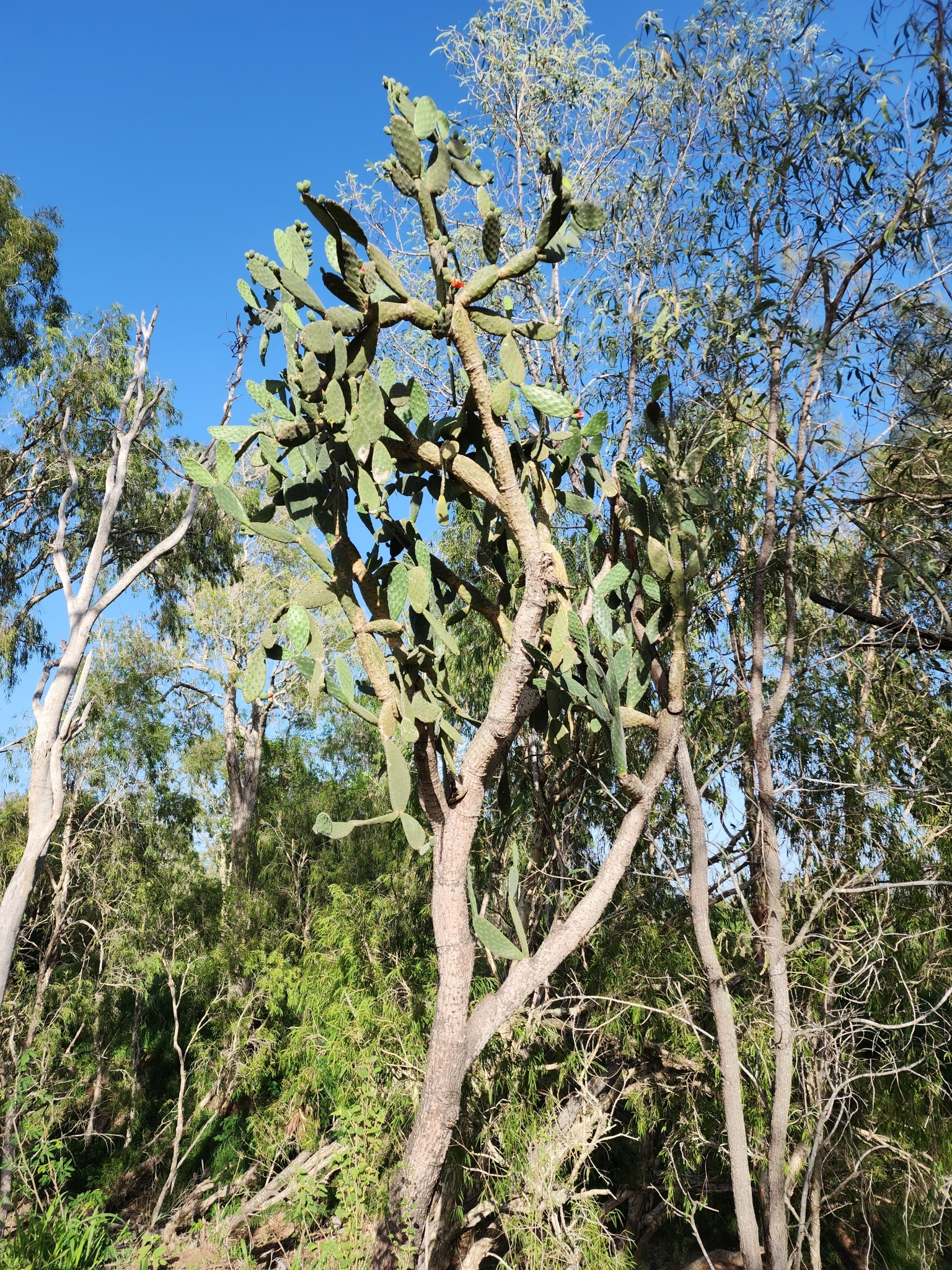
This plant grows the stacked, flattened pads typical of the flat-Opuntia group, with each new pad forming atop the last. Its pads carry spines and barbed bristles, and its funnel-shaped flowers ripen into spiny, fleshy fruit, the same structure that gives prickly pears their edible pads and colorful pear-shaped fruits.
Source: RHS
Scale, Beetles, and Moths
Cochineal scale shows up as cottony white tufts on pads that reveal deep red fluid when crushed, and can be washed off or treated with insecticidal soap. Cactus longhorn beetles feed along pad margins and their larvae tunnel through stems and roots, though hand-picking the active adults usually brings them under control. The cactus moth, used historically as a biological control against invasive prickly pear, has larvae that burrow into and hollow out pads, leaving the plant open to secondary infection, though this species is not found in North America.
Source: Epic Gardening
Overwatering Is the Usual Culprit
Root rot is the most frequent issue, arising when soil stays wet too long, so letting soil dry fully between waterings and ensuring good drainage matters most. Underwatered pads, by contrast, wilt, yellow, and brown before eventually dying. Sunscald can appear as tan patches on plants moved too quickly from greenhouse shade into full sun, and frost or hail can damage cold-sensitive types unless they are covered or brought indoors in a cold snap.
Source: Epic Gardening
Care recipe
The species record — the baseline every cultivar inherits unless it says otherwise.
Care notes are early — not yet verified
- Light
- ai:claude-opus-4-8
- Water
- ai:claude-opus-4-8 (range 14-30d)
- Humidity
- ai:claude-opus-4-8
- Soil
- ai:claude-fable-5
- Care
- ai:claude-fable-5
Direct sun
≈ every 30 days
Low — average room
7–35 °C
Gritty, well-draining cactus and succulent mix
Root a callused pad in dry, free-draining mix
Light cactus feed once or twice per growing season
Moderate
Orange-red flowers on mature plants outdoors; uncommon indoors
Not yet documented
This is where toxicity lives — every cultivar of this species inherits it and none can override it.
Reference images
Every image credited. Licenses link to their deeds.
PrimarySources: ai:claude-opus-4-8 · ai:claude-opus-4-8 (range 14-30d) · ai:claude-fable-5
Kept true by its growers
Every fact here carries its source. Grow Woollyjoint Pricklypear yourself? What you’ve observed — how it drinks, how it holds its color, a name that’s off — and a clear photo of your plant are exactly what keep this page honest. Contributions are reviewed before anything changes.
Sign in to add what you know →