Species · genus Opuntia · Cactaceae
Wheel Cactus
Opuntia robusta H.L.Wendl.
Also known as: Silver Dollar Cactus · Dinner Plate Prickly Pear · Camuesa · Nopal Tapón
Cultivars of O. robusta
The named forms growers keep — each with its own page, each honest about how much we know.
No named cultivars catalogued under O. robusta yet. When growers document a stable, named form, it earns its own page here.
Guide
The species-level account. Cultivar pages build on this and say where they differ.
A robust prickly pear
Opuntia robusta is a shrubby to tree-like cactus, part of the wide-ranging prickly pear genus grown for its paddle-like stems. In its native ground it can reach around two metres, though as a pot-grown plant in cooler climates it stays far more modest.
Source: RHS
Out of Mexico
This species comes from Mexico, where it grows into a shrubby or tree-like form. The wider prickly pear genus it belongs to has long been tied to Mexican and southwestern American culture, even appearing on Mexico's flag as part of the nation's founding story.
Source: Epic Gardening
Sun, drought, restraint
Grow this cactus in sharply-draining, loam-based compost with added sharp sand, or a proprietary cactus mix, and give it full light at all times. Let the compost dry out before watering through the growing period of spring, summer and early autumn, feeding three or four times with a balanced liquid fertiliser, then withhold both water and feed once the plant is dormant in winter.
Source: RHS
Root a fallen pad
The RHS recommends propagating by seed in spring, or by separating and rooting stem sections, handling the plant with folded newspaper for safety. For the wider genus, cuttings are the faster route: a mature pad is twisted free, left to callus for about a day, then set with its cut edge just into dry soil and misted rather than watered until roots take hold. Seed propagation is possible too, but germination is slow and unpredictable, so cold stratification and scarifying the tough seed coat first improves the odds.
Source: Epic Gardening
Thick grey-blue pads
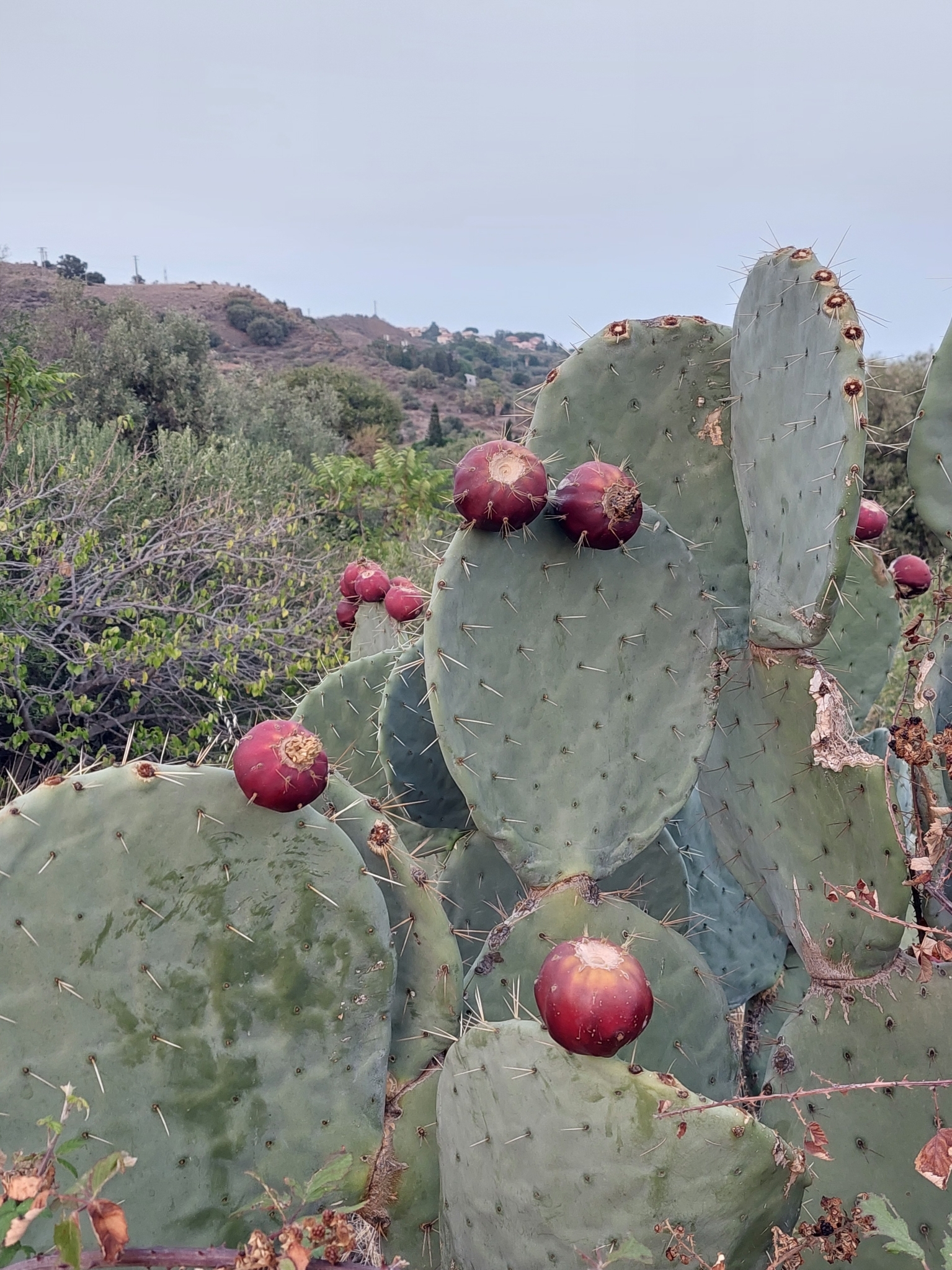
The stems are made of thick, flat, rounded segments up to 40cm across, greyish or bluish in tone, with two to twelve spines rising from each areole. Mature plants can produce shallow, bowl-shaped yellow flowers to 7cm across in summer, followed by round red fruits, though in the UK neither flower nor fruit is likely to appear.
Source: RHS
Scale and mealybug watch
Watch for scale insects and mealybugs, which are the main pests likely to trouble this cactus. The plant is otherwise generally disease-free.
Source: RHS
Overwatering is the risk
The most frequent trouble with prickly pears comes from overwatering, which leads to root rot when soil stays wet too long. Underwatered pads will wilt, yellow, and brown, while sun-related scald can leave tan patches on plants moved too abruptly into full sun.
Source: Epic Gardening
Little pruning needed
This cactus asks for no routine pruning. When handling it, use protective gloves and equipment, since the spines and areoles are a skin and eye irritant to people and to dogs alike.
Source: RHS
Care recipe
The species record — the baseline every cultivar inherits unless it says otherwise.
Care notes are early — not yet verified
- Light
- ai:claude-opus-4-8
- Water
- ai:claude-opus-4-8 (range 14-30d)
- Humidity
- ai:claude-opus-4-8
- Soil
- ai:claude-fable-5
- Care
- ai:claude-fable-5
Direct sun
≈ every 30 days
Low — average room
7–35 °C
Very gritty cactus mix with generous pumice and sand
Callus a cut pad, then root in dry, well-draining mix
Light cactus feed once or twice during active growth
Slow
Large yellow flowers outdoors; rare on indoor plants
Not yet documented
This is where toxicity lives — every cultivar of this species inherits it and none can override it.
Reference images
Every image credited. Licenses link to their deeds.
PrimarySources: ai:claude-opus-4-8 · ai:claude-opus-4-8 (range 14-30d) · ai:claude-fable-5
Kept true by its growers
Every fact here carries its source. Grow Wheel Cactus yourself? What you’ve observed — how it drinks, how it holds its color, a name that’s off — and a clear photo of your plant are exactly what keep this page honest. Contributions are reviewed before anything changes.
Sign in to add what you know →