Species · genus Opuntia · Cactaceae
Arborescent Pricklypear
Opuntia leucotricha DC.
Also known as: Aaron's-beard Prickly-pear
Cultivars of O. leucotricha
The named forms growers keep — each with its own page, each honest about how much we know.
No named cultivars catalogued under O. leucotricha yet. When growers document a stable, named form, it earns its own page here.
Guide
The species-level account. Cultivar pages build on this and say where they differ.
A White-Haired Prickly Pear
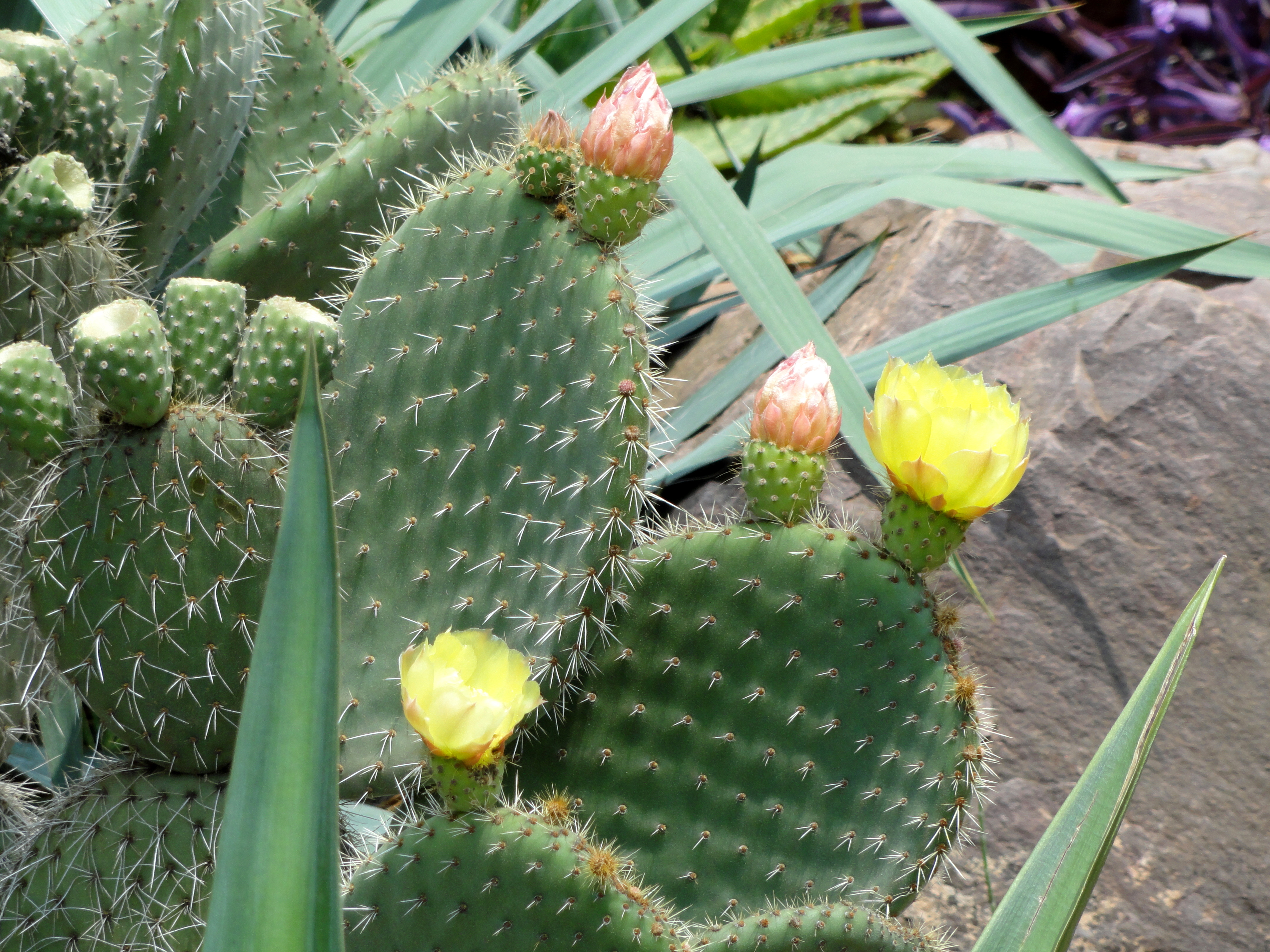
Opuntia leucotricha is a member of the cactus family, Cactaceae, one of the many prickly pears in the sprawling genus Opuntia. Like its relatives it carries the flattened, pad-like stem segments typical of the group, armed with spines and barbed bristles, and it produces funnel-shaped flowers followed by spiny, fleshy fruits.
Source: RHS
Out of Mexico's Drylands
This species is native to northeastern, northwestern and southwestern Mexico, where it grows as a succulent shrub or small tree in desert and dry shrubland. It has since been introduced well beyond that range, turning up in places such as the Canary Islands, Spain, Portugal, Italy, South Africa's Free State and even the Galápagos. It was first described and published in 1828, and over the years it has accumulated numerous synonyms, a sign of how often it was renamed and reclassified as botanists studied it.
Source: Kew
Rooting Pads or Seed
Prickly pears like this one are propagated from paddle cuttings or from seed, with cuttings being the faster and more reliable route. A mature, healthy top paddle is twisted free with its base intact, left to dry for at least a day until the wound calluses over, then part-buried cut-side down in well-draining soil and misted rather than watered until roots take hold. Seed propagation is slower and less certain: seeds need their tough coat scratched, a soak, then a cold spell before sowing shallowly in warm, moist soil, where germination can take anywhere from days to months.
Source: Epic Gardening
Pads, Spines, and Flowers
As a member of Opuntia, this plant grows as a creeping, bushy or tree-like cactus built from flattened, pad-like stem segments. Those pads carry spines and barbed bristles, and the plant flowers in funnel shapes before setting spiny, fleshy fruit.
Source: RHS
Care recipe
The species record — the baseline every cultivar inherits unless it says otherwise.
Care notes are early — not yet verified
- Light
- ai:claude-opus-4-8
- Water
- ai:claude-opus-4-8 (range 14-28d)
- Humidity
- ai:claude-opus-4-8
- Soil
- ai:claude-fable-5
- Care
- ai:claude-fable-5
Direct sun
≈ every 28 days
Low — average room
7–30 °C
Gritty, fast-draining cactus mix with pumice
Root a callused pad in dry, gritty mix
Dilute low-nitrogen cactus feed once or twice in the growing season
Slow
Rarely flowers indoors
Not yet documented
This is where toxicity lives — every cultivar of this species inherits it and none can override it.
Reference images
Every image credited. Licenses link to their deeds.
PrimarySources: ai:claude-opus-4-8 · ai:claude-opus-4-8 (range 14-28d) · ai:claude-fable-5
Kept true by its growers
Every fact here carries its source. Grow Arborescent Pricklypear yourself? What you’ve observed — how it drinks, how it holds its color, a name that’s off — and a clear photo of your plant are exactly what keep this page honest. Contributions are reviewed before anything changes.
Sign in to add what you know →