Species · genus Opuntia · Cactaceae
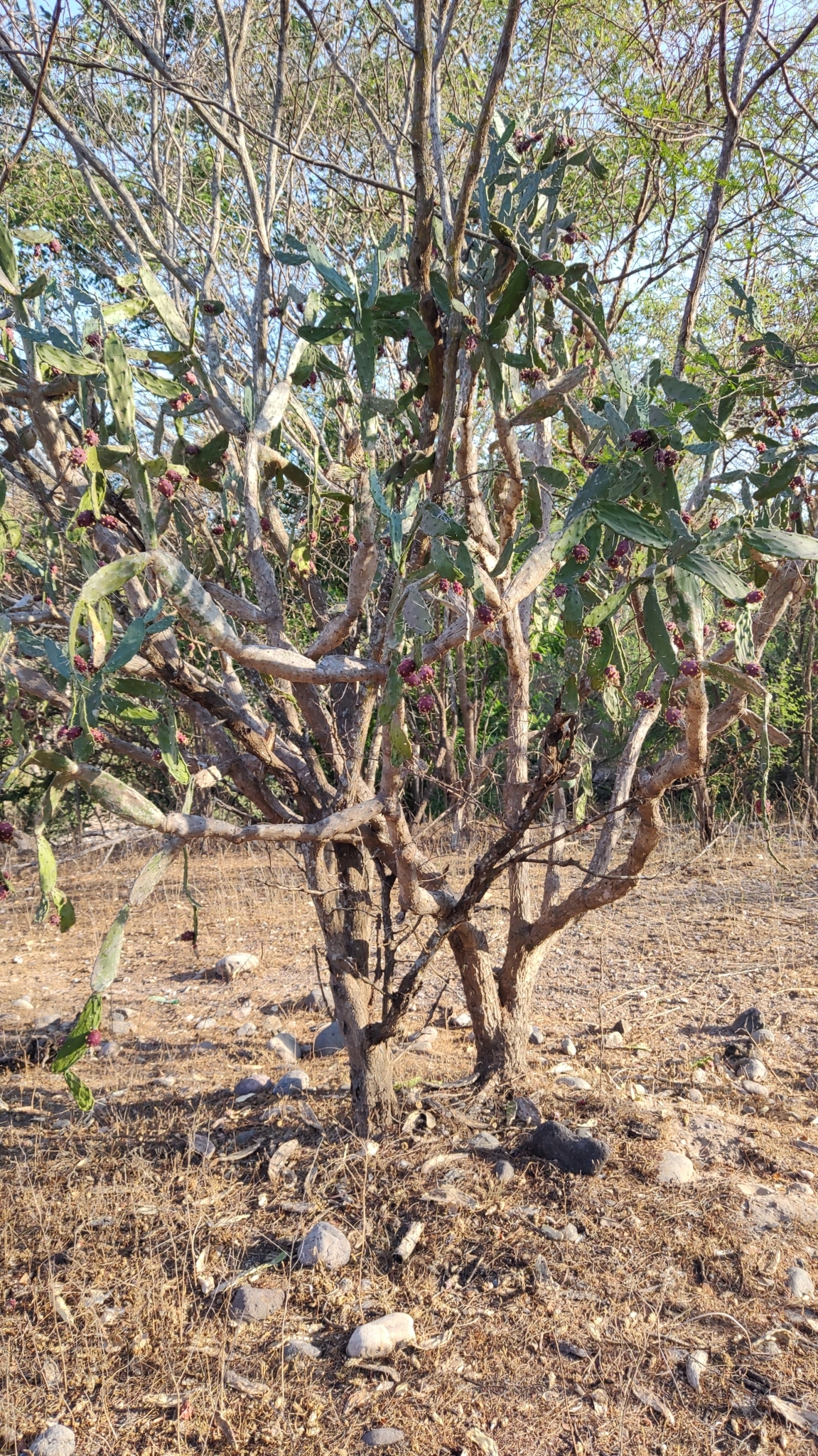
Opuntia karwinskiana
Opuntia karwinskiana Salm-Dyck
Cultivars of O. karwinskiana
The named forms growers keep — each with its own page, each honest about how much we know.
No named cultivars catalogued under O. karwinskiana yet. When growers document a stable, named form, it earns its own page here.
Guide
The species-level account. Cultivar pages build on this and say where they differ.
An Unplaced Prickly Pear
Opuntia karwinskiana is a name given to a prickly pear cactus first described by Salm-Dyck in 1850, though its standing among botanists is unresolved. Kew's own reference lists it as a name that can neither be accepted outright nor filed away as a synonym of something else. It sits, then, in a kind of taxonomic limbo, a reminder that not every plant name arrives with a tidy conclusion.
Source: Kew
Rooted in Mexico
This cactus is native to Mexico, recorded across its central, gulf, northeast, northwest, southeast, and southwest regions. It was published in Cactaceae in Horto Dyckensi in 1850, and has also been known under the names Nopalea karwinskiana and Opuntia nopalilla. The breadth of its native range across so many parts of Mexico suggests a plant well suited to the varied dry landscapes of that country.
Source: Kew
A Working Cactus
Like its relatives, this plant belongs to the Opuntia group, the prickly pears and chollas, whose flattened pads, or cladodes, are the part most often put to use. Those cladodes are the source of what is called Nopal, a material valued for compounds with moisturizing, anti-microbial, wound-healing, anti-inflammatory, and even analgesic and anti-aging properties. It is one among several named Opuntia and Nopalea species, including Opuntia ficus indica and Opuntia streptacantha, grouped together for their comparable cladode chemistry.
Source: Google Patents
Care recipe
The species record — the baseline every cultivar inherits unless it says otherwise.
Care notes are early — not yet verified
- Light
- ai:claude-opus-4-8
- Water
- ai:claude-opus-4-8 (range 14-28d)
- Humidity
- ai:claude-opus-4-8
- Soil
- ai:claude-fable-5
- Care
- ai:claude-fable-5
Direct sun
≈ every 28 days
Low — average room
10–30 °C
Gritty, fast-draining cactus mix with coarse sand
Root a callused pad in dry mix
Dilute low-nitrogen cactus feed once or twice in the growing season
Moderate
Rarely flowers indoors
Not yet documented
This is where toxicity lives — every cultivar of this species inherits it and none can override it.
Reference images
Every image credited. Licenses link to their deeds.
PrimarySources: ai:claude-opus-4-8 · ai:claude-opus-4-8 (range 14-28d) · ai:claude-fable-5
Kept true by its growers
Every fact here carries its source. Grow Opuntia karwinskiana yourself? What you’ve observed — how it drinks, how it holds its color, a name that’s off — and a clear photo of your plant are exactly what keep this page honest. Contributions are reviewed before anything changes.
Sign in to add what you know →