Species · genus Opuntia · Cactaceae
Eastern Prickly-pear
Opuntia cespitosa Raf.
Also known as: Eastern Prickly-pear Cactus
Cultivars of O. cespitosa
The named forms growers keep — each with its own page, each honest about how much we know.
No named cultivars catalogued under O. cespitosa yet. When growers document a stable, named form, it earns its own page here.
Guide
The species-level account. Cultivar pages build on this and say where they differ.
A Tussocked Prairie Cactus
Opuntia cespitosa is a succulent subshrub in the cactus family, a low, spreading plant rather than a towering one. It belongs to Opuntia, the prickly pear genus, and is accepted as its own distinct species by Kew's Plants of the World Online.
Source: Kew
Rooted in Eastern North America
This prickly pear's native range runs from southeastern Canada through the east-central and eastern United States, with confirmed native populations stretching from Ontario down through states such as Michigan, Missouri, Texas, and Georgia, and east to Massachusetts and Maryland. It grows chiefly in the temperate biome, a cooler-climate niche than many of its desert-dwelling relatives. It has also been introduced into southeast China. First described by Rafinesque in 1830, it carries a long list of historical synonyms, a sign of how often botanists have puzzled over where it fits among the eastern prickly pears.
Source: Kew
Sun, Drought, and Patience
Like other prickly pears, this plant wants full sun and well-draining, gravelly to sandy soil, and it tolerates poor soil without complaint. Water only every ten to fourteen days, checking that the soil has dried a couple of inches down before watering again, and stop watering altogether once nighttime temperatures drop below 60°F. Fertilizer is generally unnecessary outdoors; if pushing pad growth is the goal a nitrogen-rich feed helps, while a low-nitrogen or 0-10-0 fertilizer favors flowers and fruit instead.
Source: Epic Gardening
Pads, Seeds, or Grafts
The easiest and most common way to propagate a prickly pear is by pad cuttings: snip a healthy pad, let the cut wound dry for a few days, then set it cut-side down in soil and water well, and roots and new pads will follow within weeks. Growing from seed is possible but slow and unreliable, since germination rates are low and the tough seed coat needs scarifying and soaking first. Grafting onto hardier rootstock is a third method, used mainly by commercial growers rather than home gardeners.
Source: Epic Gardening
Pads, Spines, and Fruit
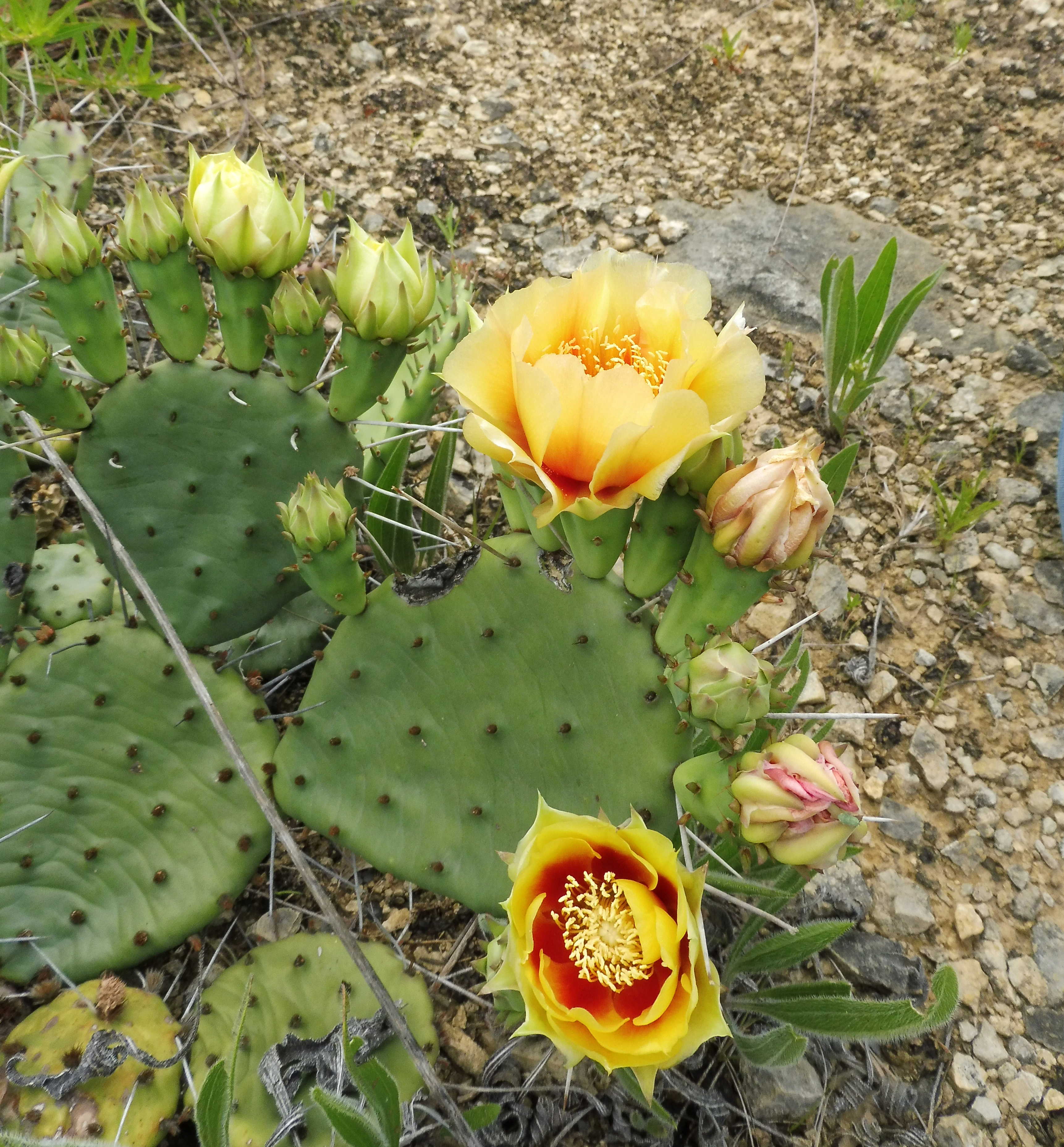
As a member of the flat-padded Opuntia group, this plant grows in stacked, fleshy pads that develop new joints atop the old ones. Those pads are typically covered in spines and range from green to blue in color, and in season the plant produces showy pink, orange, red, or yellow flowers that give way to edible, pear-shaped fruit. Its close eastern relative, the eastern prickly pear, is known for tolerating cold well enough to reach as far north as Ontario, dying back and shriveling in winter before regreening in spring.
Source: Epic Gardening
Scale, Beetles, and Moths
Cochineal scale shows up as cotton-like white tufts on pads and stems, and the crushed insects bleed deep red, the same dye once harvested commercially; strong water sprays or insecticidal soap knock it back. The cactus longhorn beetle, a shiny black beetle over an inch long, feeds along pad margins while its larvae tunnel through stems and roots, and hand-picking active beetles in early morning or evening is usually enough to control it. Cactus moth larvae, used elsewhere as biological control against invasive prickly pears, burrow into pads and hollow them from within, though this particular moth is not established in North America.
Source: Epic Gardening
Overwatering Is the Usual Culprit
The most frequent trouble with prickly pears is overwatering, which leads to root rot when soil stays wet too long; letting the soil dry fully between waterings and ensuring good drainage prevents this. Underwatered plants, especially houseplants, will instead wilt, yellow, and brown over time. Sunscald can appear as tan patches on plants moved too quickly from greenhouse shade into full sun, and frost or hail can damage cold-sensitive types, so acclimating plants gradually and covering or moving them indoors during cold spells helps avoid both.
Source: Epic Gardening
Care recipe
The species record — the baseline every cultivar inherits unless it says otherwise.
Care notes are early — not yet verified
- Light
- ai:claude-opus-4-8
- Water
- ai:claude-opus-4-8 (range 14-30d)
- Humidity
- ai:claude-opus-4-8
- Soil
- ai:claude-fable-5
- Care
- ai:claude-fable-5
Direct sun
≈ every 30 days
Low — average room
5–32 °C
Gritty, free-draining cactus mix
Rooting callused pads
Weak cactus feed once or twice in the growing season
Slow
Bright yellow to orange blooms in early summer under strong light
Not yet documented
This is where toxicity lives — every cultivar of this species inherits it and none can override it.
Reference images
Every image credited. Licenses link to their deeds.
Sources: ai:claude-opus-4-8 · ai:claude-opus-4-8 (range 14-30d) · ai:claude-fable-5
Kept true by its growers
Every fact here carries its source. Grow Eastern Prickly-pear yourself? What you’ve observed — how it drinks, how it holds its color, a name that’s off — and a clear photo of your plant are exactly what keep this page honest. Contributions are reviewed before anything changes.
Sign in to add what you know →