Species · genus Opuntia · Cactaceae
Bakersfield Beaver-tail Cactus
Opuntia basilaris Engelm. & J.M.Bigelow
Also known as: Beaver-tail Cactus · Beaver-tail Prickly-pear · Beavertail Prickly-pear · Beavertail Pricklypear · Branching Beaver-tail Cactus
Cultivars of O. basilaris
The named forms growers keep — each with its own page, each honest about how much we know.
No named cultivars catalogued under O. basilaris yet. When growers document a stable, named form, it earns its own page here.
Guide
The species-level account. Cultivar pages build on this and say where they differ.
The Beaver Tail Cactus
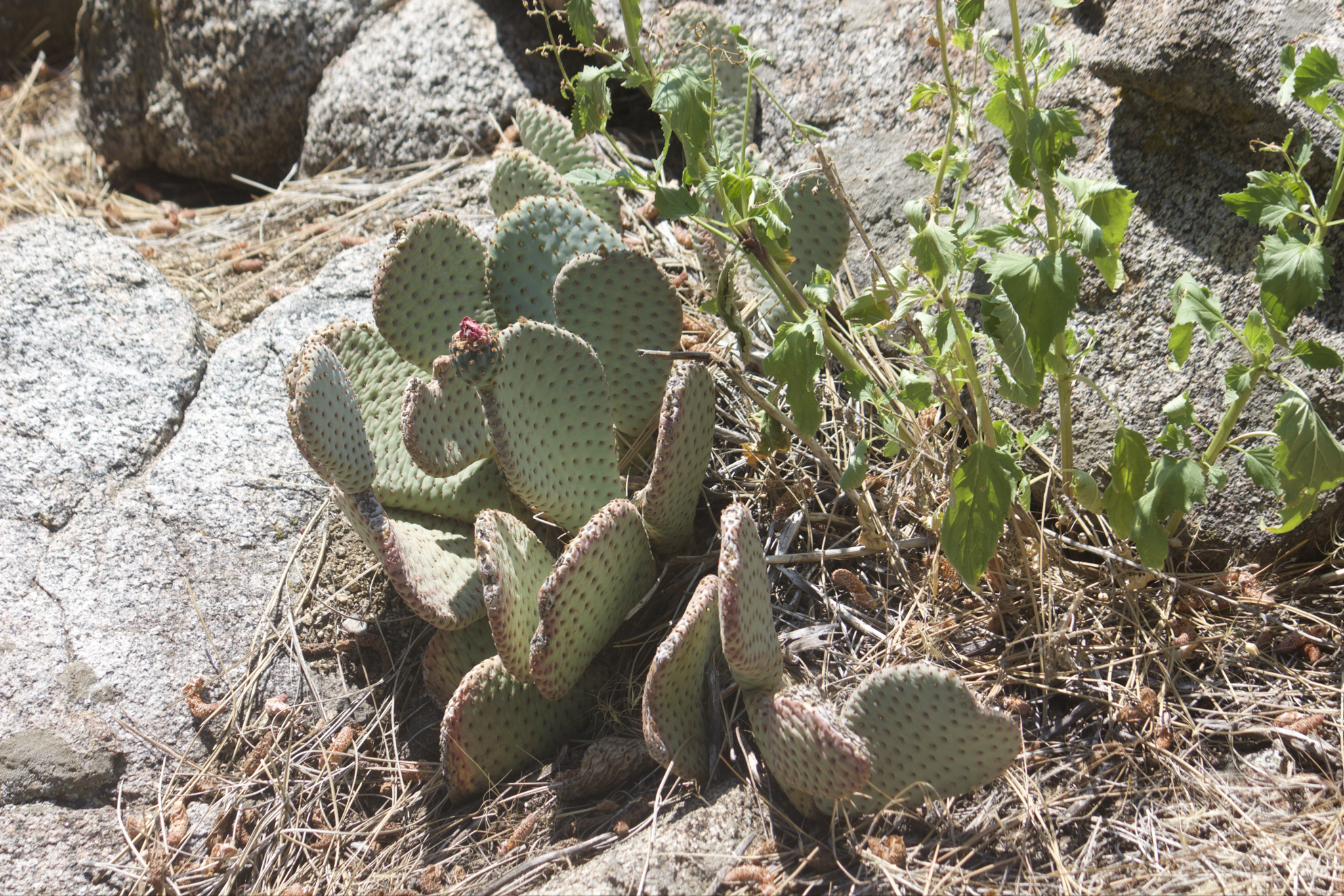
Opuntia basilaris, known as the beaver tail cactus, is a member of the Cactaceae family and carries the common name for the flattened, paddle-shaped pads that give the plant its look. The RHS lists it under this name, with var. cordata recorded as a related form.
Source: RHS
A Desert Native
This cactus is native to the southwestern United States, found in Arizona, California, Nevada and Utah, extending into northwest Mexico including Baja California Norte and Sonora. It grows primarily in desert and dry shrubland settings, and has also become introduced in the Canary Islands. It was first described by Engelmann and Bigelow, published in 1857.
Source: Kew
Pads, Spines and Flowers
As with other Opuntia, this species carries flattened, pad-like stem segments armed with spines and barbed bristles called glochids. Funnel-shaped flowers appear on the pads, followed by spiny, fleshy fruits. The RHS also notes a number of botanical varieties and synonyms, including var. ramosa and var. brachyclada, reflecting the natural variation seen within the species.
Source: RHS
Care recipe
The species record — the baseline every cultivar inherits unless it says otherwise.
Care notes are early — not yet verified
- Light
- ai:claude-opus-4-8
- Water
- ai:claude-opus-4-8 (range 14-30d)
- Humidity
- ai:claude-opus-4-8
- Soil
- ai:claude-fable-5
- Care
- ai:claude-fable-5
Direct sun
≈ every 30 days
Low — average room
7–32 °C
Gritty, very fast-draining cactus mix
Rooting detached pads after callusing
Dilute low-nitrogen cactus feed once or twice in summer
Slow
Large rose-pink flowers in spring given a bright, dry rest
Not yet documented
This is where toxicity lives — every cultivar of this species inherits it and none can override it.
Reference images
Every image credited. Licenses link to their deeds.
PrimarySources: ai:claude-opus-4-8 · ai:claude-opus-4-8 (range 14-30d) · ai:claude-fable-5
Kept true by its growers
Every fact here carries its source. Grow Bakersfield Beaver-tail Cactus yourself? What you’ve observed — how it drinks, how it holds its color, a name that’s off — and a clear photo of your plant are exactly what keep this page honest. Contributions are reviewed before anything changes.
Sign in to add what you know →